

More donors choose anonymity in year of crises
More donors choose anonymity in year of crises
Posted December. 30, 2025 09:14,
Updated December. 30, 2025 09:14
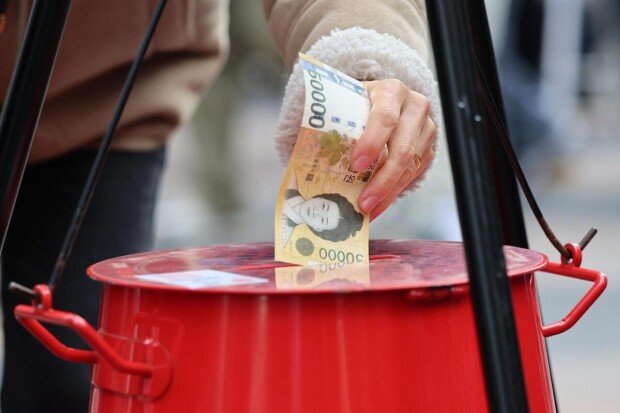
As recovery efforts continued in April following the worst wildfire damage on record in North Gyeongsang Province, an elderly woman in her 80s visited a volunteer group in Buk-gu, Ulsan. In her hands was an envelope containing 100,000 won. A recipient of basic livelihood assistance, she explained that she had saved the money by setting aside small portions of her basic pension and senior employment allowance. “I saw the news and felt compelled to help,” she said, before leaving quietly without disclosing her name.
Cases like hers are becoming increasingly common. Anonymous donations have surged this year. According to data from the Korean Red Cross obtained through a public information request and released on Dec. 28, anonymous donations reached 36.7 billion won this year as of Dec. 10. That compares with 12.9 billion won a year earlier, marking an increase of nearly 2.8 times. Their share of total donations also rose sharply over the same period, climbing from 10.3 percent to 19.2 percent, the highest level recorded in the past five years. Anonymous donations are defined as contributions made without providing a donor’s name, resident registration number or business registration number.
“Quiet giving” has also taken hold among major donors. Over the past five years, 586 people have anonymously contributed at least 100 million won each to the Community Chest of Korea, widely known as the Fruit of Love, accounting for about 15 percent of all major donors. During the same period, 31 high-net-worth individuals at the Korean Committee for UNICEF donated a combined total of more than 1.4 billion won without disclosing their identities.
The rise in such giving is widely attributed to repeated large-scale disasters, alongside a growing inclination to express generosity discreetly. Kang Tae-hoon, head of the Digital Fundraising Team at the Korean Red Cross, said the spirit of mutual aid appears to have deepened as major disasters struck in succession. He pointed to last year’s Jeju Air passenger plane crash at Muan International Airport on Dec. 29, the March wildfires in North Gyeongsang Province described as the worst since the founding of the government, and nationwide landslides caused by so-called monster rainfall in July.
Jeong Jin-kyung, a professor of public administration at Kwangwoon University and deputy head of the Beautiful Foundation’s Donation Culture Research Institute, said that while donating was once largely a collective endeavor, it has increasingly become a personal practice shaped by individual reflection on the meaning of giving.
서지원 기자 wish@donga.com








 About Dong-A Ilbo