

Record crowds attend Gwanghwamun media art show
Record crowds attend Gwanghwamun media art show
Posted December. 29, 2025 08:29,
Updated December. 29, 2025 08:29
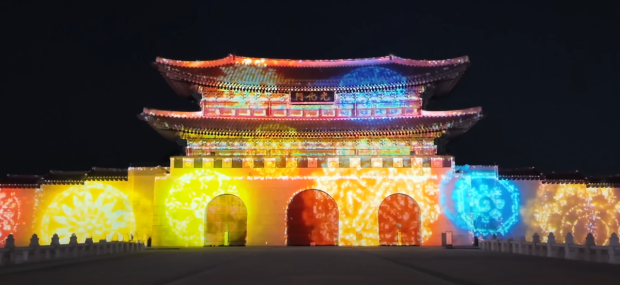
On the afternoon of Dec. 28, a steady stream of visitors gathered around Gwanghwamun Square in Seoul’s Jongno District to watch a media art exhibition projected onto the exterior walls of Gwanghwamun. Families holding children by the hand and foreign tourists snapping photos reacted with admiration to the vivid, colorful display. Some visitors lingered even after a screening ended, remaining on site to wait for the next showing. The Seoul Metropolitan Government said cumulative attendance at the 2025 Seoul Light Gwanghwamun event, which opened on Dec. 12, exceeded 1.97 million as of Dec. 25. That figure is more than double the 750,000 visitors recorded during the 24-day run last year.
City officials attributed the surge in attendance to the site’s central location and programming designed to encourage longer nighttime visits. The exhibition is free and does not require reservations, allowing people to stop by easily after work or on weekend evenings. Analysts said the chance to experience large-scale media art in the symbolic setting of Gwanghwamun has struck a strong chord with the public.
This year’s Seoul Light Gwanghwamun spotlights K-media art, centering on a media facade show that reinterprets traditional Korean aesthetics through a contemporary lens. The program features works by internationally renowned media artist Doug Aitken, alongside South Korean and international artists and groups including TZUSOO, A Plan Company and The First Gate. As images are projected across the vast exterior of Gwanghwamun, which functions as a massive screen, visitors are often seen lingering for long periods.
Amid the global popularity of the Netflix animated series “K-pop Demon Hunters,” light installations inspired by traditional motifs such as dancheong decorative patterns and the Irworobongdo painting have also drawn attention. The Seoul Metropolitan Government said content blending traditional imagery with modern media technology has circulated widely through photos and videos, reaching overseas audiences via social media platforms including YouTube and Instagram.
The centerpiece of the event will be the New Year countdown scheduled for Dec. 31. The city plans to broadcast large-scale countdown media art simultaneously through digital signages installed across the Gwanghwamun outdoor advertising free-display zone. Media screens on nine buildings will take part, including Lux, the country’s largest media signage at the Dong-A Media Center, as well as the Sejong Pavilion, the National Museum of Korean Contemporary History, the KT headquarters and the Ilmin Museum of Art. The initiative is designed to turn downtown buildings into a single, integrated screen.
The countdown program will run from 10:50 p.m. on Dec. 31 through 12:30 a.m. on Jan. 1. Events will include performances that combine traditional Korean music with media art, a fashion show reinterpreting hanbok in a contemporary style, and stage performances by artists. At midnight on New Year’s Day, media art will be presented alongside a New Year message.
Expecting large crowds, the Seoul Metropolitan Government said it will deploy 50 safety personnel at anticipated congestion points, including major pedestrian routes and crosswalks. A coordinated response system involving police, fire and medical authorities will also be activated. In addition, the city plans to operate a comprehensive control center to ensure a swift response to any emergencies.
송진호 기자 jino@donga.com






 About Dong-A Ilbo