

Paradis, “Fusion K-Food Meal Kits That Are Both Familiar and New”
Paradis, “Fusion K-Food Meal Kits That Are Both Familiar and New”
Posted December. 15, 2025 09:45,
- Paradis, led by CEO Eun-bo Shim, is a startup specializing in fusion K-Food meal kits that blend traditional Korean flavors with global culinary techniques, focusing on health and convenience by using only fresh ingredients and no chemical additives.
- After initial success with its restaurant and meal kits, Paradis shifted its focus to large-scale meal kit production, securing distribution through department stores, duty-free shops, and online marketplaces, and is now expanding into overseas markets such as Hong Kong and China.
- The company plans to reopen its physical store in 2026 with a new concept, continue developing innovative products, and eventually grow into a franchise both domestically and internationally.
Paradis is a startup that offers fusion K-Food meal kits. CEO Eun-bo Shim, who studied culinary arts in South Korea and France and gained experience in Korean, Japanese, and Western restaurants, launched the fusion K-Food meal kits based on his extensive background in fine dining. Paradis’s goal is to provide a familiar yet new gastronomic experience by incorporating novel elements into traditional Korean sauces and cooking methods.
Paradis's meal kits are health-focused products—high in dietary fiber and low in sugar and fat—made only with fresh ingredients and no chemical additives, allowing them to be enjoyed conveniently anytime, anywhere. Since launching its first product in 2023, the brand has entered major domestic department stores, duty-free shops, and online marketplaces, and has expanded into overseas markets like Hong Kong. Paradis plans to open physical stores in 2026 to increase customer interaction and accelerate its global push.
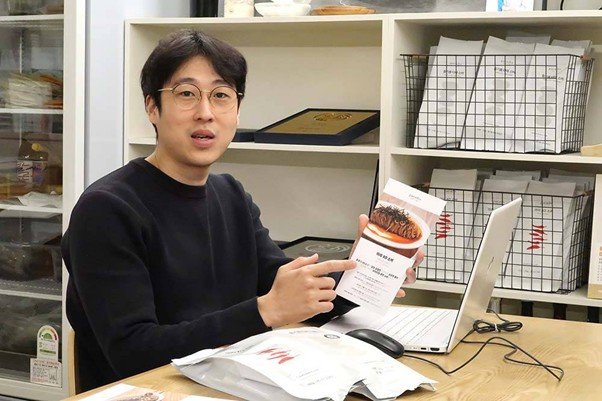
We met with CEO Eun-bo Shim to discuss Paradis and its innovative meal kits.
Paradis: Offering a New Gastronomic Experience
Could you please introduce yourself?
I'm Eun-bo Shim of Paradis. I studied culinary arts at Le Cordon Bleu, a French culinary education institution. After returning to South Korea in 2016, I worked as a chef in various restaurants and hotels, specializing in Korean, Japanese, and Western cuisine. I also served as an R&D chef, developing menus for a Michelin-Guide-listed restaurant. Then, in November 2021, I opened Paradis, a fusion dining bar. Currently, as the owner-chef, I oversee menu development, meal kit product commercialization, and consulting.
What motivated you to open Paradis?
Every chef aspires to run their own establishment. I wanted to fully showcase the menus I wished to create in my own space, and opening Paradis was the realization of that goal.
What kind of cuisine do you aim to feature through Paradis?
Observing the domestic dining market at the time, I felt there was a lack of diversity. Korea is highly susceptible to trends, so when one dish gains popularity, numerous related restaurants quickly pop up. Therefore, I aimed to offer a familiar yet new gastronomic experience through fusion cuisine that encompasses various national dishes, including Korean, Western, and Japanese.
Could you tell us more about the name Paradis?
Paradis means 'paradise' in French. While studying in France, I saw a phrase that read, 'Heaven is not far from you.' That phrase came to mind while brainstorming the restaurant's name, and I chose Paradis to convey the meaning: 'We provide a gastronomic experience like being in heaven, anytime and anywhere.' It also reflects our commitment to creating a sanctuary-like space where people can enjoy good food and drinks in the city.
At Paradis, we minimize chemical additives by utilizing fermented foods rich in umami and flavor, and fresh, locally sourced ingredients. Our menu is primarily Korean-based fusion cuisine, and our customer base is diverse, ranging from those in their 30s to their 60s.
Meal Kits Implemented with Only Fresh Ingredients and No Chemical Additives
What inspired you to develop meal kits?
Paradis received positive feedback and satisfactory sales even during the COVID-19 pandemic, when operating hours were restricted. However, with consumer spending shrinking, I felt a change would be necessary in the long term. This led me to explore the food business of developing meal kits. I was considering the idea of turning one of our popular menu items, buckwheat noodles (memil guksu), into a meal kit so customers could enjoy the restaurant experience at home or outdoors.
Ultimately, I dedicated myself to R&D and launched the first product in late 2023, which received a better-than-expected response. At a food exhibition, we even received an offer to enter a major department store. This confirmed the product's marketability and growth potential, prompting us to focus more seriously on the meal kit segment starting in 2024 to scale the business.
If you are focusing on meal kits, how is the physical restaurant currently being managed?
The restaurant is temporarily closed for renovation. Initially, I tried to run both the restaurant and the meal kit business simultaneously, but it wasn't feasible due to limitations in space, time, and other factors. Therefore, we decided to concentrate on the meal kit business first while reorganizing the menu and restaurant concept. We are currently planning a Noodle Bar concept specializing in convenient noodle dishes. We also intend to dedicate a section where customers can directly purchase our meal kits. The new store is scheduled to open in mid-2026.
Please introduce the meal kits developed by Paradis.
We create fusion K-Food meal kits that incorporate new elements based on traditional Korean sauces and cooking methods. We apply the same cooking methods used in the restaurant, achieving flavor solely through fresh ingredients. We use no chemical additives, instead grinding garlic, onions, and fruits ourselves to make the sauces. As a result, the products naturally become healthy food, high in dietary fiber and low in sugar and fat. They are low in calories and require only a short cooking time of 2 minutes and 30 seconds, making them convenient and easy to enjoy.
The first product we introduced was the 'Perilla Oil Tare Soba'. It's a fusion menu combining Korean perilla oil buckwheat noodles with Japanese tare sauce. Initially, it was produced as a refrigerated product. However, this presented challenges with distribution and required extensive packaging materials. Consequently, we re-launched it in August 2024 as a shelf-stable product for room-temperature distribution. Last April, we also introduced the 'Mala XO Soba', which combines perilla oil buckwheat noodles with Hong Kong-style XO sauce.
Securing Distribution Channels by Developing Meal Kit Recipes and Participating in Exhibitions and Pop-up Stores
Did you develop the meal kit recipes yourself?
Meal kits cannot use the exact recipes from the restaurant. Ingredients must be substituted with ones that are easily sourced, and a separate recipe must be created to allow for large-scale production processes. Although I have experience developing various recipes, they were primarily for restaurant use. Consequently, I had no understanding of the food manufacturing process. It was also challenging to find a suitable manufacturing facility. I had to learn about the food manufacturing sector from scratch, seek out and consult with industry professionals, and eventually complete the recipes. The development of the first product alone took about a year. Thanks to this legwork, we now have facilities capable of producing approximately 5,000 units per day.
How did you secure distribution channels after product development?
Securing distribution channels was arguably the most difficult part. I believed we had created a great product, but I didn't know how to distribute it. I also lacked any knowledge or network related to food distribution. Therefore, my initial strategy was to publicize the product as much as possible, participating in everything from exhibitions and local markets to pop-up stores to promote the brand and product.
Until early this year, sales primarily targeted individual consumers. Unable to connect with major distributors, we focused on sales through social media, influencers, and our own online mall. Then, through a local government support program, we secured an opportunity to participate in a pop-up store at a major department store. About 30 companies participated, and we recorded the highest on-site sales. This led to connections with other department stores, and we have now secured diverse distribution channels, including major department stores, duty-free shops, and online marketplaces. We are steadily building a fan base by securing the premium customer segment we initially targeted.
You are currently receiving support from the SBA Seoul Startup Hub Gongdeok. What kind of support was provided?
We participated in the '2024 Kitchen Incubator Franchiser 1st Class,' run by the Seoul Business Agency (SBA) in September 2024. This program supports the scale-up of Seoul-based food and beverage (F&B) businesses by helping them establish a franchise headquarters. Through the program, we gained practical information necessary for developing a franchise business. I had no prior knowledge in this area, and the support was extremely helpful in planning the expansion of our stores. We plan to develop Paradis into a franchise after the store renovation in 2026, and this knowledge will be highly valuable then.
Finally, could you share your future plans and goals?
For the domestic market, we are preparing a physical store to communicate with more customers. We plan to showcase Paradis's special fusion noodle dishes and allow customers to purchase the meal kits directly at the location. Eventually, we aim to increase the number of stores to expand our customer touchpoints.
We are also preparing for international market entry. Following a suggestion from an overseas buyer, we held a two-week pop-up store at a major department store in Hong Kong last October, where we also achieved the highest sales volume. This success led to our entry into that department store in early December. We are currently in discussions regarding entry into a major supermarket chain in China. Starting with these initiatives, we plan to gradually expand our markets and increase export volumes.
We will also continue to develop new menus. We are currently working on a seafood-based soup dish, and we will strive to provide new gastronomic experiences through unique dishes in the future. Through this, we aim to offer fusion K-Food that can be conveniently enjoyed anywhere in the world.
By Man-hyuk Han (mh@itdonga.com)
* This article was written with support from SBA and Seoul City
- After initial success with its restaurant and meal kits, Paradis shifted its focus to large-scale meal kit production, securing distribution through department stores, duty-free shops, and online marketplaces, and is now expanding into overseas markets such as Hong Kong and China.
- The company plans to reopen its physical store in 2026 with a new concept, continue developing innovative products, and eventually grow into a franchise both domestically and internationally.
Paradis is a startup that offers fusion K-Food meal kits. CEO Eun-bo Shim, who studied culinary arts in South Korea and France and gained experience in Korean, Japanese, and Western restaurants, launched the fusion K-Food meal kits based on his extensive background in fine dining. Paradis’s goal is to provide a familiar yet new gastronomic experience by incorporating novel elements into traditional Korean sauces and cooking methods.
Paradis's meal kits are health-focused products—high in dietary fiber and low in sugar and fat—made only with fresh ingredients and no chemical additives, allowing them to be enjoyed conveniently anytime, anywhere. Since launching its first product in 2023, the brand has entered major domestic department stores, duty-free shops, and online marketplaces, and has expanded into overseas markets like Hong Kong. Paradis plans to open physical stores in 2026 to increase customer interaction and accelerate its global push.
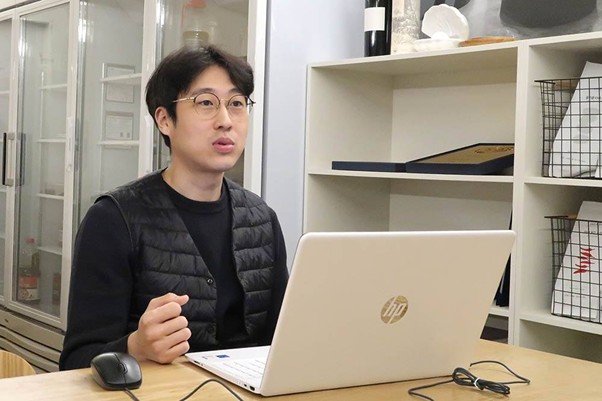
Eun-bo Shim, CEO of Paradis / source=IT dongA
We met with CEO Eun-bo Shim to discuss Paradis and its innovative meal kits.
Paradis: Offering a New Gastronomic Experience
Could you please introduce yourself?
I'm Eun-bo Shim of Paradis. I studied culinary arts at Le Cordon Bleu, a French culinary education institution. After returning to South Korea in 2016, I worked as a chef in various restaurants and hotels, specializing in Korean, Japanese, and Western cuisine. I also served as an R&D chef, developing menus for a Michelin-Guide-listed restaurant. Then, in November 2021, I opened Paradis, a fusion dining bar. Currently, as the owner-chef, I oversee menu development, meal kit product commercialization, and consulting.
What motivated you to open Paradis?
Every chef aspires to run their own establishment. I wanted to fully showcase the menus I wished to create in my own space, and opening Paradis was the realization of that goal.
What kind of cuisine do you aim to feature through Paradis?
Observing the domestic dining market at the time, I felt there was a lack of diversity. Korea is highly susceptible to trends, so when one dish gains popularity, numerous related restaurants quickly pop up. Therefore, I aimed to offer a familiar yet new gastronomic experience through fusion cuisine that encompasses various national dishes, including Korean, Western, and Japanese.
Could you tell us more about the name Paradis?
Paradis means 'paradise' in French. While studying in France, I saw a phrase that read, 'Heaven is not far from you.' That phrase came to mind while brainstorming the restaurant's name, and I chose Paradis to convey the meaning: 'We provide a gastronomic experience like being in heaven, anytime and anywhere.' It also reflects our commitment to creating a sanctuary-like space where people can enjoy good food and drinks in the city.
At Paradis, we minimize chemical additives by utilizing fermented foods rich in umami and flavor, and fresh, locally sourced ingredients. Our menu is primarily Korean-based fusion cuisine, and our customer base is diverse, ranging from those in their 30s to their 60s.
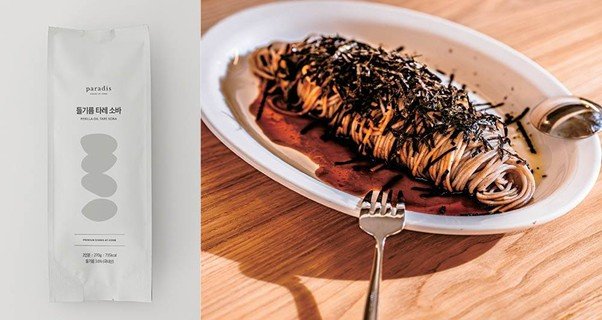
Paradis Meal Kit, 'Perilla Oil Tare Soba' / source=Paradis
Meal Kits Implemented with Only Fresh Ingredients and No Chemical Additives
What inspired you to develop meal kits?
Paradis received positive feedback and satisfactory sales even during the COVID-19 pandemic, when operating hours were restricted. However, with consumer spending shrinking, I felt a change would be necessary in the long term. This led me to explore the food business of developing meal kits. I was considering the idea of turning one of our popular menu items, buckwheat noodles (memil guksu), into a meal kit so customers could enjoy the restaurant experience at home or outdoors.
Ultimately, I dedicated myself to R&D and launched the first product in late 2023, which received a better-than-expected response. At a food exhibition, we even received an offer to enter a major department store. This confirmed the product's marketability and growth potential, prompting us to focus more seriously on the meal kit segment starting in 2024 to scale the business.
If you are focusing on meal kits, how is the physical restaurant currently being managed?
The restaurant is temporarily closed for renovation. Initially, I tried to run both the restaurant and the meal kit business simultaneously, but it wasn't feasible due to limitations in space, time, and other factors. Therefore, we decided to concentrate on the meal kit business first while reorganizing the menu and restaurant concept. We are currently planning a Noodle Bar concept specializing in convenient noodle dishes. We also intend to dedicate a section where customers can directly purchase our meal kits. The new store is scheduled to open in mid-2026.
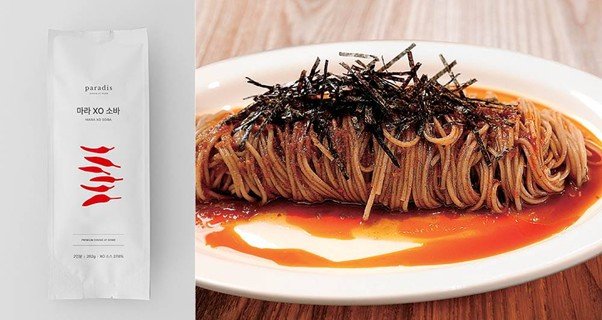
Paradis Meal Kit, 'Mala XO Soba' / source=Paradis
Please introduce the meal kits developed by Paradis.
We create fusion K-Food meal kits that incorporate new elements based on traditional Korean sauces and cooking methods. We apply the same cooking methods used in the restaurant, achieving flavor solely through fresh ingredients. We use no chemical additives, instead grinding garlic, onions, and fruits ourselves to make the sauces. As a result, the products naturally become healthy food, high in dietary fiber and low in sugar and fat. They are low in calories and require only a short cooking time of 2 minutes and 30 seconds, making them convenient and easy to enjoy.
The first product we introduced was the 'Perilla Oil Tare Soba'. It's a fusion menu combining Korean perilla oil buckwheat noodles with Japanese tare sauce. Initially, it was produced as a refrigerated product. However, this presented challenges with distribution and required extensive packaging materials. Consequently, we re-launched it in August 2024 as a shelf-stable product for room-temperature distribution. Last April, we also introduced the 'Mala XO Soba', which combines perilla oil buckwheat noodles with Hong Kong-style XO sauce.
Securing Distribution Channels by Developing Meal Kit Recipes and Participating in Exhibitions and Pop-up Stores
Did you develop the meal kit recipes yourself?
Meal kits cannot use the exact recipes from the restaurant. Ingredients must be substituted with ones that are easily sourced, and a separate recipe must be created to allow for large-scale production processes. Although I have experience developing various recipes, they were primarily for restaurant use. Consequently, I had no understanding of the food manufacturing process. It was also challenging to find a suitable manufacturing facility. I had to learn about the food manufacturing sector from scratch, seek out and consult with industry professionals, and eventually complete the recipes. The development of the first product alone took about a year. Thanks to this legwork, we now have facilities capable of producing approximately 5,000 units per day.
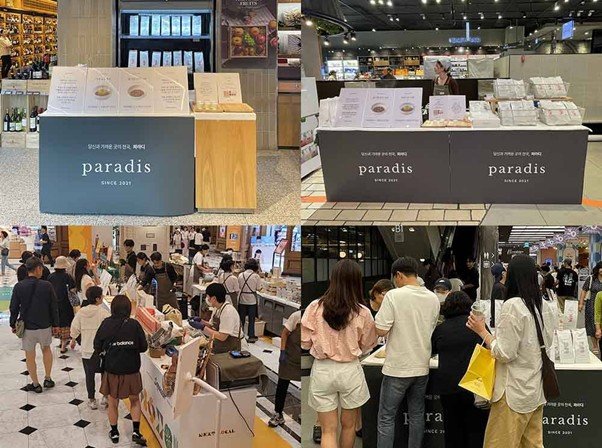
Paradis Pop-up Store in Department Store. Over 10 pop-up stores have been held since June / source=Paradis
How did you secure distribution channels after product development?
Securing distribution channels was arguably the most difficult part. I believed we had created a great product, but I didn't know how to distribute it. I also lacked any knowledge or network related to food distribution. Therefore, my initial strategy was to publicize the product as much as possible, participating in everything from exhibitions and local markets to pop-up stores to promote the brand and product.
Until early this year, sales primarily targeted individual consumers. Unable to connect with major distributors, we focused on sales through social media, influencers, and our own online mall. Then, through a local government support program, we secured an opportunity to participate in a pop-up store at a major department store. About 30 companies participated, and we recorded the highest on-site sales. This led to connections with other department stores, and we have now secured diverse distribution channels, including major department stores, duty-free shops, and online marketplaces. We are steadily building a fan base by securing the premium customer segment we initially targeted.
You are currently receiving support from the SBA Seoul Startup Hub Gongdeok. What kind of support was provided?
We participated in the '2024 Kitchen Incubator Franchiser 1st Class,' run by the Seoul Business Agency (SBA) in September 2024. This program supports the scale-up of Seoul-based food and beverage (F&B) businesses by helping them establish a franchise headquarters. Through the program, we gained practical information necessary for developing a franchise business. I had no prior knowledge in this area, and the support was extremely helpful in planning the expansion of our stores. We plan to develop Paradis into a franchise after the store renovation in 2026, and this knowledge will be highly valuable then.
Shim explains Paradis and its meal kits / source=IT dongA
Finally, could you share your future plans and goals?
For the domestic market, we are preparing a physical store to communicate with more customers. We plan to showcase Paradis's special fusion noodle dishes and allow customers to purchase the meal kits directly at the location. Eventually, we aim to increase the number of stores to expand our customer touchpoints.
We are also preparing for international market entry. Following a suggestion from an overseas buyer, we held a two-week pop-up store at a major department store in Hong Kong last October, where we also achieved the highest sales volume. This success led to our entry into that department store in early December. We are currently in discussions regarding entry into a major supermarket chain in China. Starting with these initiatives, we plan to gradually expand our markets and increase export volumes.
We will also continue to develop new menus. We are currently working on a seafood-based soup dish, and we will strive to provide new gastronomic experiences through unique dishes in the future. Through this, we aim to offer fusion K-Food that can be conveniently enjoyed anywhere in the world.
By Man-hyuk Han (mh@itdonga.com)
* This article was written with support from SBA and Seoul City






 About Dong-A Ilbo