

Willog Sets Sights on Global Market with IoT and AI-Powered Logistics Visualization System
Willog Sets Sights on Global Market with IoT and AI-Powered Logistics Visualization System
Posted December. 03, 2025 15:34,
Updated December. 03, 2025 16:37
- The company differentiates itself by integrating in-house hardware and software, enabling tailored solutions and actionable insights for clients in pharmaceuticals, manufacturing, and government sectors.
- Supported by organizations like the Seoul CCEI, Willog is leveraging partnerships and local subsidiaries to enhance supply chain efficiency and compete internationally.
According to data compiled by market research firm Market Research Future, the global Logistics Visualization System Market is estimated to be worth $6.817 billion (approximately 10.387 trillion KRW) in 2024. Market Research Future forecasts a compound annual growth rate (CAGR) of 8.41% through 2035, driven by the persistent dominance of supply chain management (SCM) and the rapid industrialization of Asian markets, which are quick to adopt new technologies. By 2035, the market is projected to reach $16.57 billion (approximately 24.4009 trillion KRW). This growth could accelerate further due to advancements in sensor technology, the integration of Artificial Intelligence (AI) and Machine Learning (ML), and global efforts toward achieving carbon neutrality.
Despite the surging market, no single company has yet emerged as a powerful market leader. The complexity of the logistics visualization system itself is the primary hurdle, requiring a comprehensive set of capabilities: AI and ML-based software development, data infrastructure expertise, a highly refined visualization program, and the performance and manufacturing capacity of the underlying Internet of Things (IoT) sensors (hardware). Most contenders tend to focus on either the hardware or the software component. Willog, in contrast, was built from the ground up to excel in both.
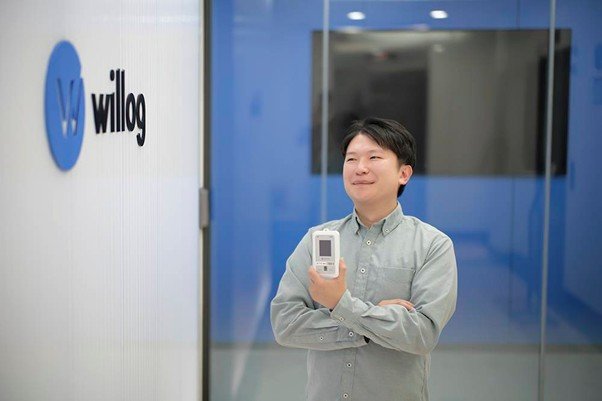
Chi-guk Sung, Head of Willog’s Japan branch / source=IT dongA
COVID-19 Validated Business Model, Now Poised for Global Expansion
Established in May 2021, Willog began as a developer of cold chain solutions and cold chain monitoring devices. The massive demand from pharmaceutical and distribution companies for reliable cold chain management, particularly for COVID-19 vaccine distribution, fueled Willog's rapid early growth. The company has since sophisticated its solution, now offering a comprehensive logistics visualization system based on IoT devices and AI. By attaching IoT sensors to warehouses and delivery trucks, Willog collects real-time data on location, temperature, humidity, and shock. This data is used to provide insights into product quality, trace movement paths, and, critically, offer predictive maintenance (PdM) to mitigate risks throughout the distribution process.
The pandemic was a critical catalyst for Willog’s acceleration. The urgent need for real-time temperature management in vaccine logistics coincided with the legislative shift in South Korea. In July 2022, the 'Revised Regulations on Manufacturing and Sales Management of Biological Products' legally mandated real-time cold chain management. Collaborations with pharmaceutical companies on vaccine distribution secured early adoption cases for Willog and validated its business viability both domestically and internationally.
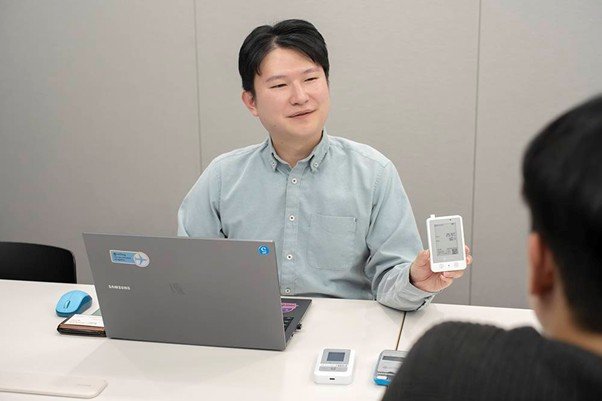
Sung is introducing ‘Willog Safe’, which includes various sensors and communication devices / source=IT dongA
Now entering its fourth year, Willog has expanded beyond its initial base to become a global player, operating in the U.S., Japan, Singapore, and further afield. Chi-guk Sung, Head of the Japan Branch, explained, "Tracking global logistics requires a complex, multifaceted system that must address numerous stakeholders and diverse on-site conditions. For example, if a shipment moves from Korea to an overseas destination via air or sea, and then continues via local truck or rail, you must consider the specific regulations and environmental factors of each country and operator involved."
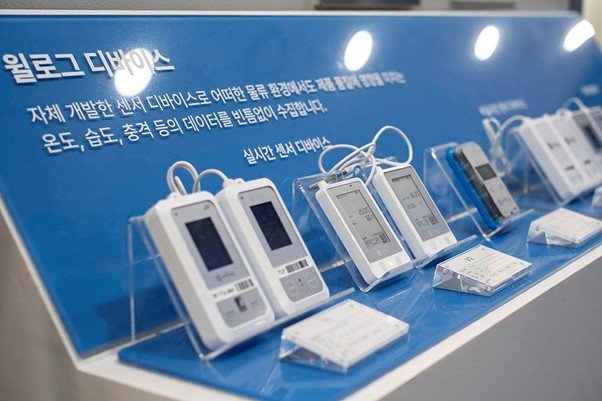
Willog Safe is attached to containers and other logistics assets, where it collects various data before transmitting it to the Willog Control Tower for visualization / source=IT dongA
"Willog’s solution utilizes proprietary IoT sensors for real-time communication, ensuring that data is collected and visualized consistently from the start to the end point," he continued. "This allows for immediate identification of where a problem occurred, who was responsible, and what the issue was. While five years ago we had virtually no competitors, the success of our service means the market is now seeing a growing number of rivals both domestically and abroad."
Differentiation Through In-House Hardware and Software Integration
Sung asserts that Willog’s core competitiveness lies in its technical expertise and operational know-how. "We designed and manufactured the hardware ourselves from the beginning, and then developed the corresponding Willog Control Tower and intelligent software to achieve a high degree of completeness. The ability to modify the solution according to specific client requirements is a key differentiator," he stated.
"Our team structure heavily concentrates on software development," he added. "While device completeness is important, the real value lies in using the data to provide tangible profits to the customer. The core mission is to ensure that previously occurring problems do not reoccur, and to present this insight to t
he customer through powerful visualization."
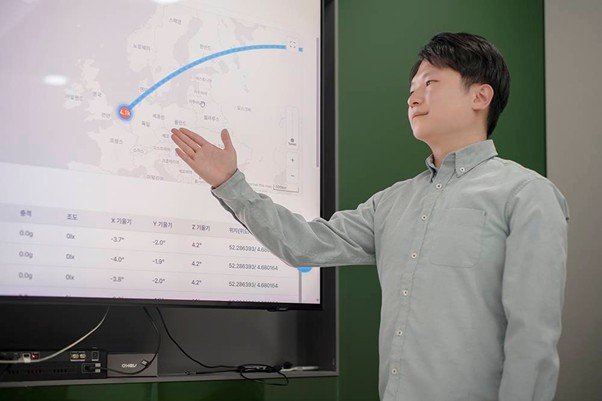
Willog Control Tower provides data related to the entire logistics journey, from the initial warehouse stage through international transportation, in the form of visual materials / source=IT dongA
How does the solution work in practice? Sung elaborated, "For instance, our system immediately flags previously problematic routes or current real-time weather and natural disaster risks. By collecting data on road vibration and impact, we can predict rough driving or road damage, suggesting alternative routes or proposing specific packaging adjustments for certain environments. It can recommend alternative ports or flights to meet shipping schedules and help prevent breaches of contract or losses associated with the delivery."
In one real-world example, a precision materials component manufacturer had been routinely factoring product damage into its operational costs. After adopting Willog’s service, they discovered the damage was not occurring during the sea transport from Korea or the subsequent land transport from the port, but specifically during the rail segment of the local distribution. By identifying this precise point, the company was able to select alternative methods and resolve the issue. "The service provides data collection across the entire distribution process, allowing for a quality assessment of specific stakeholders, which clearly establishes legal accountability," Sung noted.
Willog's flagship client is Yongma Logistics, South Korea's number-one pharmaceutical logistics company. "Yongma Logistics' specialized medical transport trucks are now managing quality using Willog products. The devices are ready for use simply by attaching them to the existing cargo," said Sung. Beyond the medical sector, Willog's solution is used for manufacturing products like precision components, chemicals, and semiconductors, as well as in areas like defense and government agencies. The primary users are those dealing with high-unit-cost products that require stringent temperature or vibration control, where the cost of re-production and re-transportation after a delivery issue is exceptionally high.
Global Expansion Aided by Government and Agency Support
Willog currently maintains local subsidiaries in the U.S., Japan, and Singapore, with a strong focus on the Japanese market. Mr. Sung mentioned, "Willog's Japan branch is housed in a co-working space for logistics startups operated by Prologis, the U.S. logistics REIT, a relationship we are in the process of building." Willog plans to compete by leveraging its Asian roots, adapting its services effectively to the varied logistics characteristics across different markets and borders, and emphasizing the accuracy of its data and robust local support.
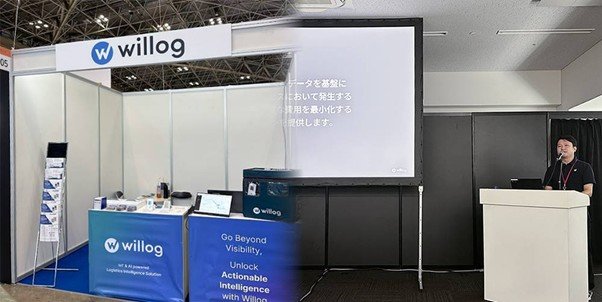
Sung participated in the Tokyo Logistics Exhibition held last September, where he hosted an exhibition booth and delivered a seminar presentation / source=Willog
Various organizations are actively supporting Willog’s competitive edge. The Seoul Center for Creative Economy & Innovation (CCEI) is sponsoring their participation in ILS 2025, Asia’s largest open innovation event hosted by the Japanese Ministry of Economy, Trade and Industry, taking place from December 1st to 4th in Japan. For Willog, this is a prime opportunity to seek collaboration with major corporations. Sung stated, "It's difficult for startups to budget and plan for these major events. Seoul CCEI stepped forward to provide that initial crucial support."
The Seoul CCEI is also assisting with global corporate promotion, while the Busan CCEI is supporting their attendance at Startup Japan 2025 in Osaka from December 17th to 18th. Previously, the Seoul Business Agency (SBA) sponsored their participation in Sushi Tech Tokyo 2025, and the National IT Industry Promotion Agency (NIPA) supported their attendance at KOOM 2025 in New York, demonstrating broad institutional commitment to Willog’s global ambitions.
Contributing to Efficiency Across the Entire Supply Chain
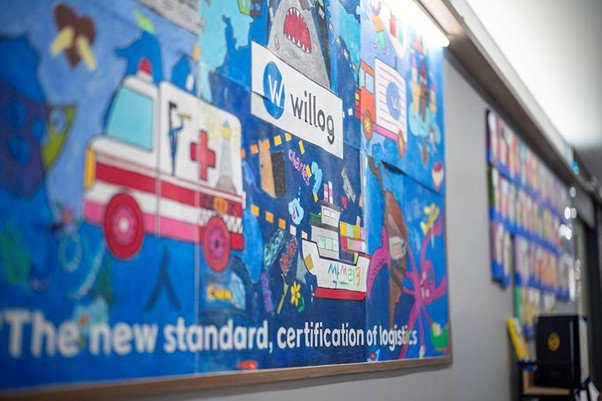
Willog's business objective is to enhance the efficiency of the entire supply chain / source=IT dongA
Willog’s ultimate objective is to optimize the efficiency of the entire supply chain. The company believes that any logistics flow can be optimized and streamlined with sufficient data. Mr. Sung concluded, "Many countries, not just South Korea, are sensitive to logistics costs. Furthermore, the industry is currently facing a general labor shortage even as shipping volume increases. The solution to this problem is ultimately IT technology, and Willog has a significant role to play here. We will continue to propose and expand our business with solutions that enhance efficiency across the entire supply chain and the complete logistics process."
By Si-hyeon Nam (sh@itdonga.com)




![연금 개시 가능해지면 年 1만 원은 꼭 인출하세요[은퇴 레시피]](https://dimg.donga.com/c/138/175/90/1/wps/NEWS/IMAGE/2026/02/20/133390850.4.jpg)



 About Dong-A Ilbo