

Political polarization continues a year after martial law
Political polarization continues a year after martial law
Posted December. 02, 2025 08:31,
Updated December. 02, 2025 08:31
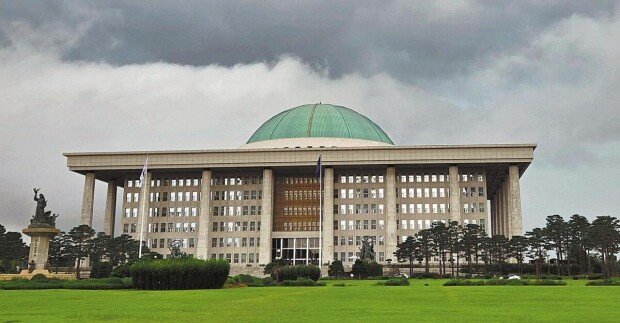
The Constitutional Court criticized former President Yoon Suk-yeol in its ruling dismissing him over the Dec. 3 martial law declaration, saying, "He gravely betrayed the trust of the people, the sovereigns of the democratic republic.” While clearly placing responsibility for the overall political failures on Yoon, the court also issued a strong warning to the political establishment for failing to resolve political issues that should have been coordinated and settled according to the principles of democracy.
However, even a year after the martial law declaration, critics say the tolerance and restraint and the persuasion of the public to ensure responsible politics highlighted by the court remain absent from South Korea’s political sphere. Despite facing a democratic crisis under the martial law, political renewal and self-reflection have vanished, while politics that rely on hardline support bases have become increasingly polarized.
The People Power Party remains mired in the aftermath of impeachment and has not undertaken the party reforms needed to persuade the public. On Dec. 1, a year before the anniversary of the Dec. 3 martial law, party leader Jang Dong-hyuk told a public rally in Incheon’s Michuhol District that the only way to revive the economy and protect people’s livelihoods is the early removal of the Lee Jae-myung administration, adding, “The party that should be dissolved is the Democratic Party.”
The Democratic Party has been criticized for emphasizing numerical superiority rather than tolerance and restraint. Party leader Jung Chung-rae told a Supreme Council meeting on the same day, “The French Republic was not built on tolerance,” and stressed the need for a “complete purge of the insurrection.”
The failure of both ruling and opposition parties to move beyond the martial law crisis and the absence of functional politics are harming the public. While party leaders continue to clash over issues of dictatorship, rebellion, and impeachment, bills needed to address the damage and wounds caused by the martial law have been pushed to the back of the legislative agenda.
“One of the most important functions of politics is to resolve conflict, but currently, situations are repeating in which the other side is demonized and denied rather than coexisting,” said Lee Hyun-woo, a political science professor at Sogang University. “Politics should exist for the benefit of all citizens, not the interests of individual parties.”
Jun-Il Kim jikim@donga.com





 About Dong-A Ilbo