

U.S., Ukraine agree on framework to end war
U.S., Ukraine agree on framework to end war
Posted November. 25, 2025 08:19,
Updated November. 25, 2025 08:19
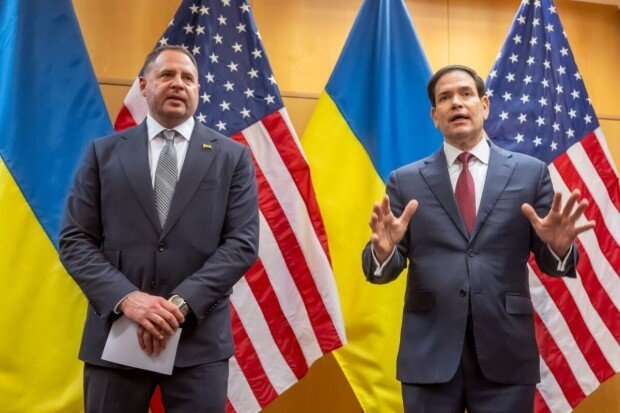
The United States and Ukraine held a high-level meeting in Geneva, Switzerland, on Nov. 23 and established a “peace framework” aimed at ending the war in Ukraine. In a joint statement after the talks, the two sides said they “agreed that the consultations were highly productive.” They also reaffirmed that “any future agreement must fully guarantee Ukraine’s sovereignty and ensure a durable and just peace.”
Analysts said the meeting created a turning point toward ending the conflict that has continued for three years and nine months since Russia invaded Ukraine in February 2022. Two days earlier, U.S. President Donald Trump urged Ukrainian President Volodymyr Zelenskyy to agree to a cease-fire proposal by Nov. 27.
However, the cease-fire proposal drafted by the United States contains many elements unfavorable to Ukraine, and key European countries, including the United Kingdom, France and Germany, have expressed concern and requested revisions. Attention is now focused on how much of their input will be reflected in the final plan to be developed by a potential second Trump administration.
● Rubio and Zelenskyy call meeting constructive
U.S. Secretary of State Marco Rubio and Ukraine's Presidential Chief of Staff Andriy Yermak met in Geneva to negotiate the peace plan. The two sides said the talks produced a more refined peace framework than earlier versions and added that final decisions under the framework would be made by the presidents of both countries.
The high-level meeting followed the potential second Trump administration’s delivery of a 28-item peace plan and its pressure on Ukraine to accept it. Rubio said there were a few remaining issues, but none that are insurmountable, expressing confidence, “We will eventually reach an agreement.” President Volodymyr Zelenskyy wrote on Telegram, "Talks with the U.S. delegation are ongoing, and it is important that President Trump’s team is showing signs of listening to our position.”
Dissatisfaction in Ukraine and Europe over the proposal’s details remains substantial. According to the Financial Times, the U.S. draft includes language recognizing Ukraine’s southern Crimea, which Russia forcibly annexed in 2014, and the eastern Donbas region, most of which Russia has occupied since the war began, as “de facto Russian.” The wording is far more favorable to Russia than the earlier phrase, “areas under de facto Russian control,” which the United States previously used.
Meanwhile, security guarantees for Ukraine were not clearly defined. Ukraine and European partners have proposed negotiating based on the current front lines rather than accepting the complete loss of Donbas. They also argue that Ukraine must maintain an armed force of 800,000 troops, rather than the 600,000 proposed by the United States. They stress that even if Ukraine does not join NATO, it must receive U.S. security guarantees equivalent to NATO-style collective defense.
● Zelenskyy faces a difficult choice
President Donald Trump wrote on Truth Social the same day, “Ukraine showed 'zero gratitude' for U.S. peace efforts,” signaling pressure ahead of a possible Ukrainian refusal to accept the unfavorable cease-fire terms.
President Volodymyr Zelenskyy is facing challenges both domestically and internationally. His political position has been weakened by a major corruption scandal in which his former comedy-business partner, Timur Mindich, allegedly pocketed $100 million in kickbacks from government contracts. Many Ukrainians also view the complete abandonment of Donbas as tantamount to surrender.
Analysts are divided over Zelenskyy’s next move. Some believe he may resist yielding to a potential second Trump administration or to Russia in order to deflect corruption allegations. Others argue that Ukraine cannot realistically continue the war without additional U.S. support, making it likely he will accept Trump’s demands this time.
Jin-Woo Shin niceshin@donga.com





 About Dong-A Ilbo