

Israel increases deployment of Iron Beam defense system
Israel increases deployment of Iron Beam defense system
Posted November. 20, 2025 08:18,
Updated November. 20, 2025 08:18
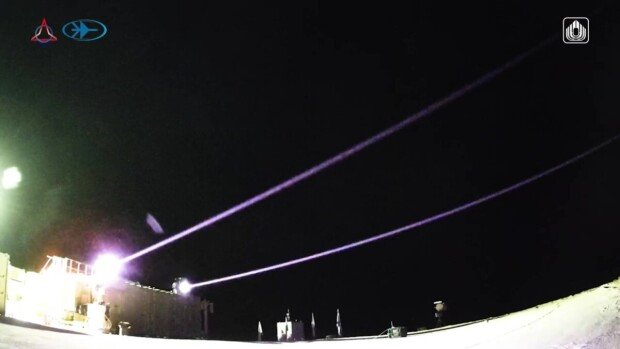
“Iron Beam is real. It is not something out of science fiction.”
A Rafael representative, from the state-owned defense company that manufactures Iron Beam, Israel’s latest laser-based interception system, made the comment to South Korean journalists visiting the company’s headquarters in Haifa on Nov. 12. That day, Rafael opened its showroom featuring self-developed advanced weapons to the South Korean media for the first time. The representative said Iron Beam had already begun deployment with the Israeli military and added that the system is expected to become a game changer in air defense.
Iron Beam is considered to be significantly different from Iron Dome, which has long been a core element of Israel’s air defense network by intercepting missiles, drones and rockets. Unlike Iron Dome, which uses interceptor missiles, Iron Beam disables incoming threats by firing a high-power laser.
This gives Iron Beam a major cost advantage. Iron Dome can cost up to $50,000 per interceptor, and some analyses estimate the total cost can reach as high as $150,000 when radar power and personnel are included. By contrast, Iron Beam requires only about $5 worth of electricity per firing. Rafael said the system has no limit on the number of shots and can operate continuously. According to foreign media reports, its success rate in intercepting missiles and drones reaches 86 percent and 99.9 percent, respectively.
Iron Beam and Iron Dome function as complementary systems. When severe weather occurs or terrain conditions prevent the use of lasers, Iron Dome is automatically launched instead of Iron Beam based on assessments by the artificial intelligence–based command and control system.
Rafael says it has also overcome several shortcomings of conventional laser beams. When lasers are fired at long-range targets, dust and moisture in the atmosphere can scatter or bend the beam. To address this, the company advanced technologies that combine multiple lasers into a single powerful beam and that concentrate light on an extremely small target.
Rafael says the system has also overcome several shortcomings of conventional laser beams. When lasers are fired at long-range targets, dust and moisture in the atmosphere can scatter or deflect the beam. To address this, the company developed technologies that combine multiple lasers into a single powerful beam and concentrate light on a very small target.
The smaller versions of Iron Beam, called Mobile and Lite, offer high mobility because they can be mounted on transport vehicles such as trucks and armored carriers used by infantry units. The systems allow forces to more easily protect troops and strategic assets from enemy attacks.
During a visit on Nov. 11 to Sderot in southern Israel, about 1.3 kilometers from the Gaza Strip, the sound of shelling was constant. An Israeli military official said provocations involving rockets and other weapons from Hamas continue and added that Israel has no choice but to keep investing in the construction and reinforcement of advanced air defense systems.
Keun-Hyung Yoo noel@donga.com








 About Dong-A Ilbo