

WSJ: Trump demands ally investments that are unrealistic
WSJ: Trump demands ally investments that are unrealistic
Posted October. 23, 2025 07:52,
Updated October. 23, 2025 07:52
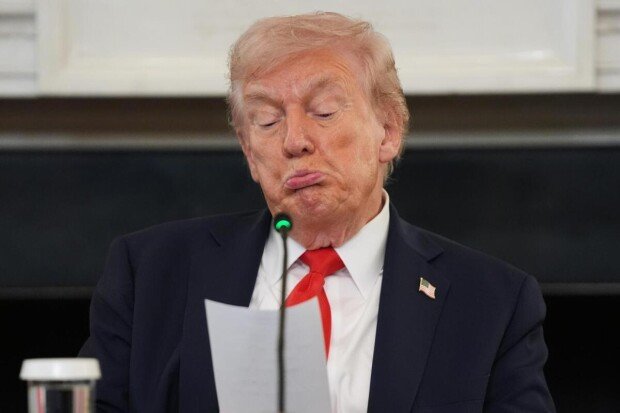
The Wall Street Journal criticized U.S. President Donald Trump’s demand for large investment contributions from South Korea and Japan, calling the sums unrealistic and prone to misuse. The newspaper noted that the $350 billion Trump has sought from South Korea would equal about 6.5 percent of the country’s gross domestic product even if paid over three years, an amount Seoul could not reasonably bear. That The Wall Street Journal, generally less critical of Trump than The New York Times, The Washington Post, or CNN, has raised concerns highlights the controversy over his push for allied investment in the United States.
In an editorial titled “On President Trump’s Foreign Investment Fund,” The Wall Street Journal called Trump’s claims that he could secure $350 billion from South Korea and $550 billion from Japan unprecedented and highly improbable. The newspaper warned that letting the president spend such funds without congressional oversight would spark serious controversy.
The newspaper said there is no precedent for a sitting president to control hundreds of billions of dollars in investments. It added that U.S. Commerce Secretary Howard Lutnick and U.S. Treasury Secretary Scott Bessent, who would oversee the fund, could face political pressure to favor companies aligned with Trump and the Republican Party. The publication said it would be inappropriate for South Korea’s and Japan’s contributions to be allocated at the discretion of senior administration officials without congressional approval.
The newspaper noted that South Korea already spends 2.3 percent of its GDP on defense. Requiring Seoul to provide the equivalent of 6.5 percent of GDP over three years, nearly triple its current defense budget, is effectively unfeasible. It added that Japan’s proposed $550 billion contribution would similarly equal about 4.4 percent of its GDP annually if paid over the same period.
The newspaper also cautioned that South Korean and Japanese officials are accountable to voters. It said new Japanese Prime Minister Sanae Takaichi, heading a minority coalition, is unlikely to secure approval for a $550 billion payment amid domestic opposition. The report added that if Democrats had attempted a similar measure, Republicans would have demanded congressional hearings.
Despite the criticism, President Trump reiterated that allied investments would be secured. At the White House the same day, he said the administration had done well with Korea and Japan and suggested tariffs helped achieve the outcome.
Seong-Mo Kim mo@donga.com







 About Dong-A Ilbo