

Starship explosion scatters debris across turtle habitat
Starship explosion scatters debris across turtle habitat
Posted July. 04, 2025 07:10,
Updated July. 04, 2025 07:10
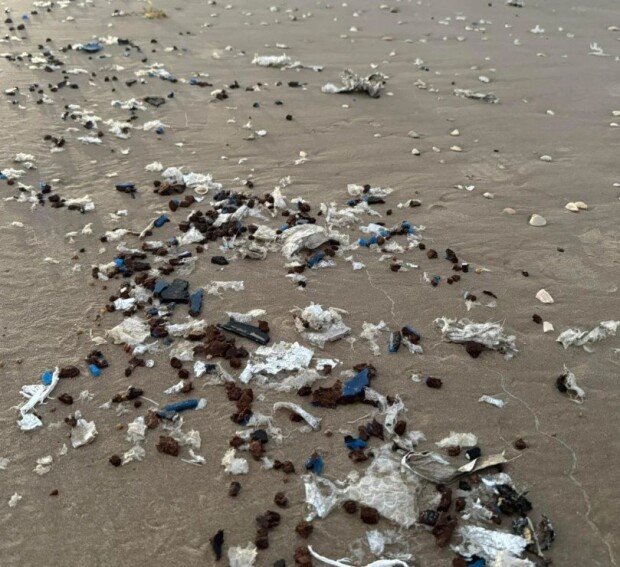
At around 11 p.m. on June 18 local time, a massive fireball lit up the night sky near SpaceX’s launch site at Boca Chica Beach in southern Texas. The Starship spacecraft, designed for future missions to Mars, exploded during its 10th test flight. SpaceX later said all safety protocols were followed and no injuries were reported.
However, the explosion’s impact did not stop at the test site. Debris from the blast reached as far as Bagdad Beach in northeastern Tamaulipas, Mexico, just across the border from the launch site. The beach is a known nesting habitat for the critically endangered Kemp’s ridley sea turtle, which can grow up to 60 to 70 centimeters in length as an adult.
On July 2, the Mexican environmental and animal protection group KoncienBio Global raised concerns that the turtles could ingest fragments from the Starship explosion. The organization reported collecting more than one ton of debris along a 500-meter stretch of coastline following the blast, including sponge-like plastics, cork-textured rubber, aluminum pieces labeled with SpaceX markings, and various types of plastic packaging.
Jesús Elías Ibarra, a veterinarian and founder of KoncienBio Global, said vibrations from the rocket may have disrupted the hatching process. He noted that the sand had become compacted, leaving an estimated 300 hatchlings unable to emerge from their nests.
SpaceX, founded by Tesla CEO Elon Musk to advance human settlement on Mars in preparation for potential extinction-level events, now faces criticism for threatening a species already at risk of extinction. The Mexican government announced last month that it is considering legal action against SpaceX under international law.
Seong-Mo Kim mo@donga.com


![콩·두부 먹으면 ‘이 질병’ 예방…하루 60~80g 섭취해야 [노화설계]](https://dimg.donga.com/c/138/175/90/1/wps/NEWS/IMAGE/2026/05/08/133884322.3.jpg)
![“아빠 나 이렇게 잘 컸어요”…무료 사진 복원이 만든 기적 [따만사]](https://dimg.donga.com/c/138/175/90/1/wps/NEWS/IMAGE/2026/05/08/133884397.3.jpg)



 About Dong-A Ilbo