

Animal hoarding rises in Korea amid legal gaps
Animal hoarding rises in Korea amid legal gaps
Posted June. 07, 2025 07:04,
Updated June. 07, 2025 07:04
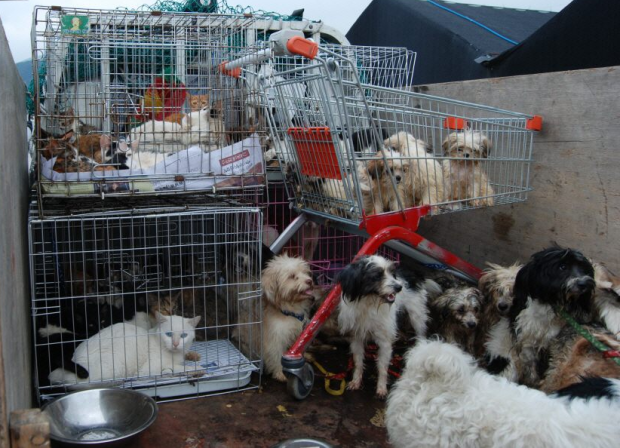
Between May 5 and 7, a total of 19 dogs believed to have been kept by a single household were found abandoned over three days in the Daechi-dong and Yeoksam-dong neighborhoods of Seoul’s Gangnam District. The dogs, of various breeds, had been so severely neglected that their fur was matted over their eyes and mouths. Authorities suspect someone adopted them all at once and later abandoned them after being unable to manage their care.
As pet ownership rises in South Korea, so have cases of “animal hoarding,” in which individuals keep more animals than they can properly care for. Experts say that under current civil law, which classifies animals as property, it remains difficult to prevent such neglect or intervene in cases of abuse.
Animal hoarders often accumulate large numbers of pets, treating them like possessions rather than living beings. In one case last February, a man in his 40s left 21 dogs behind when he moved out of his apartment in Dongdaemun District. Three dogs died of starvation before an animal welfare group intervened. The surviving dogs were rescued and relocated to a shelter, and the man was investigated under the Animal Protection Act.
However, even in cases of clear abuse, investigations can be obstructed if the owner refuses access. In December, authorities were alerted to a home in Gwangjin District where a man was reportedly neglecting more than 30 dogs. Despite complaints from neighbors about loud barking and a strong stench, municipal officials were forced to retreat after a 20-minute standoff when the owner denied them entry.
“Even when you can hear animals dying behind the door, if the owner refuses entry, we can do nothing but walk away,” said Kim Yeong-hwan, head of education and rescue at the animal welfare organization Korea Animal Rights Advocates, who was present during the incident.
South Korea’s civil law, which grants strong protections to personal property, limits the government’s ability to intervene in such cases. Even when abuse is proven, sentences are often light. The man in the Dongdaemun case received a suspended sentence.
Meanwhile, reports of animal abuse continue to climb. According to a recent report by the Ministry of Agriculture, Food and Rural Affairs, the number of registered pet dogs and cats reached a record 3,491,607. Violations of the Animal Protection Act also rose to a record 1,293 in 2024, up 12.8 percent from the previous year. Animal welfare groups say animal hoarding cases are increasing in parallel with these trends.
Experts argue that animals should be granted legal status as “living beings” to reduce the protection afforded by property rights and allow stronger intervention. “Mistreatment of animals can reflect how society treats its vulnerable,” said Professor Kim Sung-ho of the Department of Social Welfare at Korean Bible University. “Animal hoarding can also threaten the health and hygiene of nearby residents.” Kim added that stricter enforcement of pet registration laws would help local governments identify and regulate animal hoarders more effectively.
임재혁 기자 heok@donga.com








 About Dong-A Ilbo