

The Convergence of Art and Science
The Convergence of Art and Science
Posted January. 21, 2006 03:01,
Former French Prime Minister George Clemenceau once praised Claude Monets Rouen Cathedral series as a revolution in cathedral [paintings]. Monets achievement was the result of setting up multiple canvases in front of Rouen Cathedral, which kept changing color depending on the sunlight, and painting them by moving from canvas to canvas. Monet painted about 40 pieces in this manner.
He also captured the effects of changing light in his painting, Grain Stack, Snow Effect. To do so, he had to go out in the snow and severe cold and focus on making brush strokes in a brief few moments to trace the impression of light, which often disappeared in a flash.
Sunlight is not conspicuous in space; it brightens the atmosphere because it disperses in the air. Nitrogen and oxygen, two main elements of the atmosphere, help blue rays of light disperse further. Sunlight looks red in the morning or at night since its blue rays scatter to a great extent while it comes diagonally across the atmosphere for a longer time. But it looks transparent at noon because it lies vertical to the atmosphere and does not disperse. This is one reason why Rouen Cathedral changes colors so many times a day.
This book is written in the form of a conversation among four major scientists who majored in physics, biology, chemistry and geology, including Kim Je-wan, professor emeritus of physics at Seoul National University, and Lee Myung-ok, the director of Savina Museum and an adjunct professor at the School of Fine Arts at Kookmin University.
In the book, the five figures talk about science related to well-known paintings, according to theme.
The book offers the pleasure of reading anecdotes from art masters, and rich scientific stories connected to famous paintings. It also helps one understand that famous paintings were produced not solely by the inspiration or passions of a genius artist, but in the process of the artists continuous observation of nature, scientific insight, and movement against the established customs of the arts community.
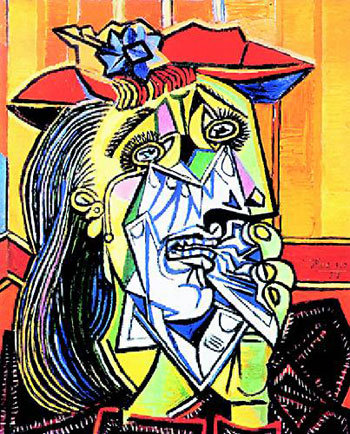
A prime example is Pablo Picasso, who pointed out that traditional perspective drawing is contradictory and boldly introduced cubist paintings influenced by Einsteins principle of relativity, photography, and x-rays.
Georges Pierre Seurat, a master of pointillism, successfully produced the same effect painters do through his method of blending colors with many densely painted points on canvas, which he developed through his understanding of color science.
Ki-Tae Kwon kkt@donga.com


![젊은층 대장암 급증…전문의가 꼽은 ‘치명적 실수 5가지’[건강팩트체크]](https://dimg.donga.com/c/138/175/90/1/wps/NEWS/IMAGE/2026/04/06/133681018.3.jpg)





 About Dong-A Ilbo