

Fuel surcharges drive airfare changes
Fuel surcharges drive airfare changes
Posted June. 27, 2026 08:25,
Updated June. 27, 2026 08:25
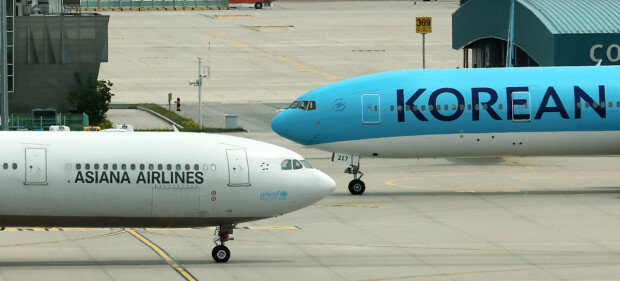
As the summer travel season approaches, airfare is once again drawing close attention. Travelers are also taking a closer look at fuel surcharges, one of the least understood components of an airline ticket. South Korean airlines are required to display the total amount passengers pay, including the base fare, fuel surcharge and taxes and fees such as airport charges. The base fare covers the cost of transporting passengers, while the fuel surcharge allows airlines to recover part of the additional expense when jet fuel prices rise. In practice, travelers shoulder a portion of higher fuel costs through the surcharge.
Fuel surcharges are determined by the average price of jet fuel traded on the Singapore spot market, or MOPS, during the period from the 16th of two months earlier through the 15th of the previous month. For example, surcharges on tickets issued in July are based on average fuel prices between May 16 and June 15. South Korean airlines use a 33-tier pricing system and announce the surcharge for the following month on the 16th of each month. Tier 1 applies when the average MOPS price exceeds 150 cents per gallon, while Tier 33, the highest level, takes effect once the average price rises above 470 cents.
Countries take different approaches to fuel surcharges. Airlines in South Korea, Japan and many other Asian markets list the surcharge separately from the base fare. Most carriers in the United States and Europe instead fold fuel costs into the overall ticket price, typically under carrier-imposed surcharges or similar fees rather than as a standalone charge. As a result, passengers may not see a separate fuel surcharge even though higher fuel costs are already reflected in the fare.
Fuel surcharges became common in the late 1990s as swings in global oil prices grew more pronounced. Airlines argued that linking surcharges to jet fuel prices was necessary to help absorb rising fuel costs. South Korea first adopted the system for air cargo in 2003 before extending it to international passenger services in 2005. The original framework set different surcharge levels by destination. Authorities introduced the current 33-tier structure in 2008 and added a distance-based formula in 2017 that reflects actual flight length. The current system combines both approaches.
Fuel surcharges have also drawn regulatory scrutiny. During the 2000s, major airlines around the world were accused of coordinating when to introduce fuel surcharges and how much to raise them. Fifteen carriers, including Korean Air and Asiana Airlines, became embroiled in the global price-fixing scandal. In 2010, South Korea's Fair Trade Commission imposed fines totaling about 120 billion won on Korean Air, Asiana Airlines and several other airlines after concluding they had colluded while introducing and revising fuel surcharges between 1999 and 2007.
The current system is also facing renewed calls for reform. Critics argue that surcharges should better reflect differences in aircraft type and fuel efficiency, since aircraft flying the same route can consume markedly different amounts of fuel. After the surcharge reached the maximum Tier 33 in May, some in the aviation industry proposed expanding the pricing scale or adding more tiers to better track market conditions. Consumer groups, meanwhile, say the current formula reacts quickly when fuel prices rise but more slowly when they fall because it is based on fuel prices from two months earlier.
The Ministry of Land, Infrastructure and Transport has been reviewing possible changes to the fuel surcharge system since 2024. The review includes ways to reflect differences in aircraft fuel efficiency, refine the tier structure and allow fluctuations in global oil prices to be incorporated into ticket prices more quickly.
변종국 bjk@donga.com

![[단독]“서강대교 넘지말라” 조성현 대령, 내란 피의자 수사](https://dimg.donga.com/c/138/175/90/1/wps/NEWS/IMAGE/2026/06/27/134192351.1.jpg)





 About Dong-A Ilbo