

Hyundai union risks company's future
Hyundai union risks company's future
Posted June. 27, 2026 08:26,
Updated June. 27, 2026 08:26
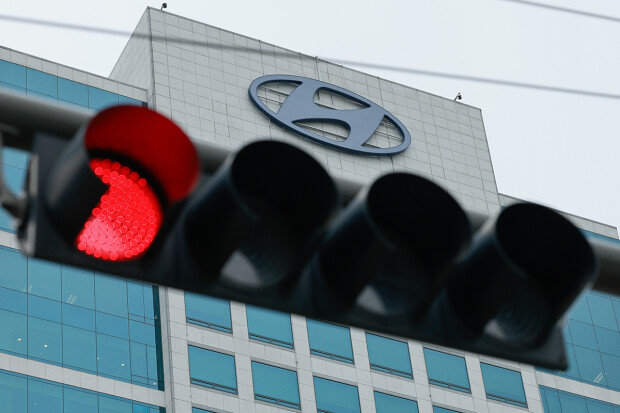
Hyundai Motor's labor union has moved a step closer to a strike. Union members voted overwhelmingly in favor of industrial action, with 92% backing the measure on June 24. A day later, the National Labor Relations Commission suspended mediation, giving the union the legal right to strike. The dispute carries the growing controversy over profit-based bonuses, already seen at SK hynix and Samsung Electronics, to Hyundai Motor, another key pillar of South Korea's economy.
In this year's wage and collective bargaining negotiations, the union demanded a base pay increase along with a performance bonus equal to 30% of Hyundai Motor's 2025 net profit. That would amount to 3.12 trillion won out of the company's 10.36 trillion won in net earnings last year. The demand comes despite a 22% decline in net profit from a year earlier, driven in part by U.S. tariffs. Hyundai Motor also faces an uncertain earnings outlook this year as the conflict in the Middle East weighs on global business conditions, leaving less room to fund investment in next-generation technologies. Agreeing to such a generous bonus package could divert resources from investments critical to the company's long-term competitiveness. Profit allocation, including investment and shareholder returns, is ultimately a matter of corporate management and should not become the subject of labor disputes.
Even more concerning is the union's attempt to constrain the company's adoption of artificial intelligence and robotics, technologies that will define the industry's future. It is demanding mandatory consultations before AI, robots or other advanced technologies can be introduced. The union also wants guarantees that jobs will be protected even as automation expands and is calling for a "full monthly wage" system that would maintain workers' pay even if working hours are reduced. The contrast with Toyota's labor union in Japan is striking. During this year's negotiations, Toyota's union worked with management to identify forms of value that only people can create, raise productivity and strengthen the company's long-term competitive position.
Competition across the global mobility industry has become fiercer than ever. Using strike action to force through excessive demands is an outdated tactic that no longer fits today's business environment. Once leadership in future technologies is lost, neither the company's survival nor its employees' livelihoods can be taken for granted. The union should look beyond immediate gains and adopt a broader perspective, one that recognizes the importance of Hyundai Motor's long-term strategy and the wider impact its decisions will have on South Korea's economy.








 About Dong-A Ilbo