

Samsung heirs complete record inheritance tax payment
Samsung heirs complete record inheritance tax payment
Posted May. 04, 2026 08:12,
Updated May. 04, 2026 08:12
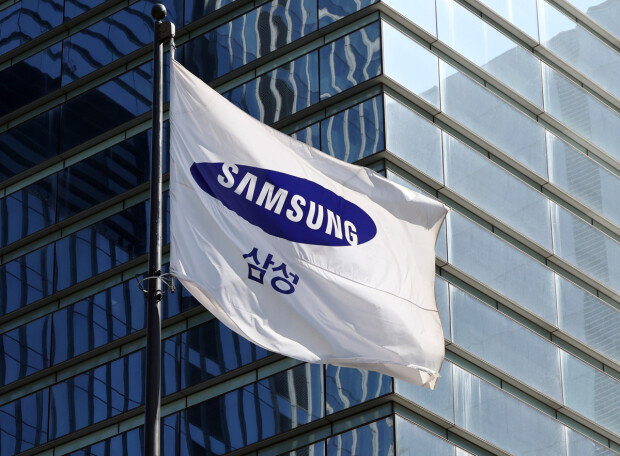
Samsung Electronics Chairman Lee Jae-yong and other members of the Samsung family have paid in full about 12 trillion won in inheritance taxes on the estate of the late Chairman Lee Kun-hee, the largest such payment in South Korea’s history. The taxes were settled over five years through an installment program, a process widely seen as a benchmark for transparency.
Samsung said May 3 that Lee and the other heirs, including Hong Ra-hee, Lee Boo-jin and Lee Seo-hyun, made the final payment at the end of last month. Lee Kun-hee, who died in 2020, left an estate valued at about 26 trillion won, including stakes in affiliates and real estate. The family began paying the tax in April 2021, completing six installments over five years.
The heirs used a two-track approach to raise the funds. Hong and her two daughters, who bore the largest share of the tax burden, sold stakes in key affiliates such as Samsung Electronics, Samsung SDS and Samsung C&T. In January, Hong signed a trust agreement to sell 15 million Samsung Electronics shares and later secured more than 3 trillion won through a block trade in April.
Lee chose not to sell shares in core affiliates, relying instead on dividends and bank loans to meet his tax obligations and maintain management control. Despite the heavy payments, his ownership stakes rose from 0.70 percent to 1.67 percent in Samsung Electronics common shares and from 17.48 percent to 22.01 percent in Samsung C&T, further strengthening his position.
The 12 trillion won payment exceeds South Korea’s total inheritance tax revenue of 8.2 trillion won in 2024 by about 50 percent. Kim Dae-jong, a business professor at Sejong University, said the case highlights how corporate success can feed into government revenue, adding that policies supporting business growth ultimately strengthen the national economy.
Analysts say the full payment also carries broader implications. Past succession practices at some conglomerates have fueled public distrust, but Samsung’s handling of a record tax bill may help ease negative perceptions surrounding wealth transfers.
Samsung said the public will be the primary beneficiary, as the tax revenue will support spending on welfare, healthcare and social infrastructure.
Separately, the family donated 1 trillion won to support infectious disease hospitals and pediatric cancer care, in line with Lee Kun-hee’s wishes. They also donated about 23,000 artworks to the state. The collection, sometimes valued at up to 10 trillion won, has drawn about 3.5 million visitors in South Korea and is now touring internationally.
Samsung said the late chairman stressed that companies should contribute not only to economic growth but also to society beyond expectations, adding that the group will continue to uphold that principle.
이동훈 기자 dhlee@donga.com

![금태섭 “李정부 지탱한 ‘내란 프레임’ 이제 깨졌다”[황형준의 법정모독]](https://dimg.donga.com/c/138/175/90/1/wps/NEWS/IMAGE/2026/06/23/134167619.1.jpg)
![한적한 시골 단위농협… 알고보니 ‘대포통장 발급 전국 2위’[히어로콘텐츠/히든②-下]](https://dimg.donga.com/c/138/175/90/1/wps/NEWS/IMAGE/2026/06/23/134161455.1.jpg)





 About Dong-A Ilbo