

K-beauty M&A surges to record amid investor demand
K-beauty M&A surges to record amid investor demand
Posted May. 04, 2026 08:11,
Updated May. 04, 2026 08:11
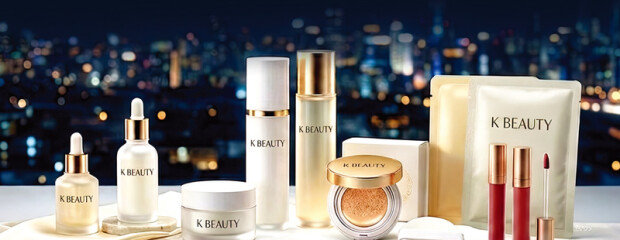
Mergers and acquisitions involving K-beauty companies reached record highs in both value and volume last year, as strong exports and rising share prices drew global investor interest. Companies across the sector are increasingly viewed as blue-chip assets, with deal activity expanding beyond brands to include manufacturing, packaging and beauty devices.
● Record deal value and volume
According to cosmetics industry M&A research released May 3 by advisory firm MMP, there were 29 deals involving South Korean cosmetics companies last year, totaling 3.5934 trillion won. That surpassed the previous record set in 2017, when Unilever acquired Carver Korea for about 3 trillion won, lifting total deal value that year to 3.3132 trillion won.
A notable shift is the rise in transactions targeting small and mid-sized brands, many of which have gained traction in overseas markets.
Data from the Ministry of SMEs and Startups showed that cosmetics exports by small and medium-sized enterprises reached a record $8.32 billion last year. The number of exporters exceeded 10,000 for the first time, up from 8,041 in 2022. First-quarter exports totaled $2.18 billion, the highest ever for that period.
Rising share prices have further supported valuations. APR shares closed at 424,500 won on April 30, up 82 percent from the start of the year. Korea Kolmar rose 35 percent, while Cosmax gained 18 percent over the same period.
● Buyers move across the value chain
As global demand for K-beauty grows, deep-pocketed buyers are moving aggressively. Gudae Global, which owns the Beauty of Joseon brand, acquired Tirtir and Skin1004 in 2024, followed by Skinfood and Round Lab last year. The company expanded annual revenue to 1.47 trillion won and in March acquired U.S.-based distributor Hansung USA to broaden its reach.
Private equity firm VIG Partners has also been active, acquiring the aesthetic filler brand Yvoire from LG Chem, along with medical device makers Viol and Ultra V.
Global private equity firms are widening their focus beyond individual brands to the broader K-beauty value chain, including manufacturing and packaging. Five deals were completed last year in the cosmetics ODM segment alone. In one notable case, Ascent Equity Partners acquired C&C International, the country’s fourth-largest ODM player, for 285 billion won.
In packaging, Samhwa, the leading domestic container maker, was sold to KKR for 733 billion won. Changshin, a manufacturer with 37 years of history, was also acquired by Ark & Partners for 180 billion won.
Momentum is expected to continue this year, with five deals completed in the first quarter alone. In a December report, the Samjong KPMG Economic Research Institute said more K-beauty brands are rapidly scaling into mega brands with annual sales exceeding 100 billion won, attracting growing investor interest. It added that differentiated concepts and strong brand value are enabling firms to expand globally and generate returns quickly, further boosting their appeal.
김다연 기자 damong@donga.com


![“1000만원 줄 테니 나가달라”…집주인 제안, 받아도 될까 [집과법]](https://dimg.donga.com/c/138/175/90/1/wps/NEWS/IMAGE/2026/06/19/134130634.3.jpg)




 About Dong-A Ilbo