

Hospice gap leaves many without end-of-life care
Hospice gap leaves many without end-of-life care
Posted May. 04, 2026 08:10,
Updated May. 04, 2026 08:10
“There are no more chemotherapy options. It’s time to consider hospice care.”
Park Jung-woo, 49, a pseudonym, heard that from his doctor in September last year as his condition rapidly declined after eight years with stomach cancer. Hospice care focuses on easing physical pain and emotional distress for patients nearing the end of life.
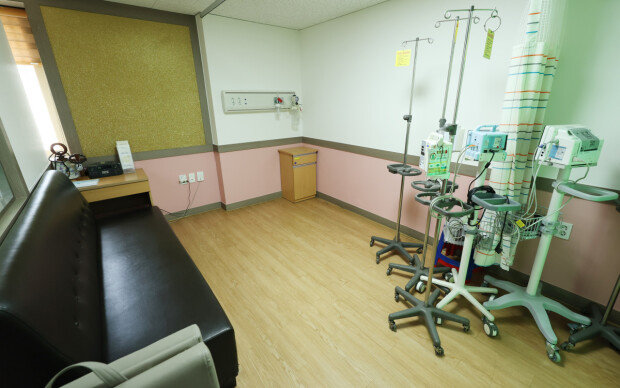
A hospice facility he visited the following month declined to admit him because he was still able to move on his own. He then considered home-based hospice care so he could spend his remaining time with his two children, one in middle school and the other in elementary school. That option also fell through. He could not eat without medical assistance, making it difficult to rely on home hospice services that do not provide continuous medical care.
After choosing to stop life-sustaining treatment, Park spent the next eight months moving between nursing hospitals, general hospitals, his home and emergency rooms. He has since returned to a nursing hospital, where access to specialized hospice care remains limited.
His experience underscores a broader gap. Nearly 60,000 people in South Korea died last year without timely access to hospice care, the highest level on record.
According to data the Ministry of Health and Welfare submitted to Rep. Kim Sun-min of the Rebuilding Korea Party, a member of the National Assembly’s Health and Welfare Committee, 81,220 patients discontinued life-sustaining treatment last year. Of those, 23,816 received hospice care before death.
That means 57,404 people died in nursing hospitals or at home without inpatient or home-based hospice support. The number is expected to surpass 60,000 this year as demand rises while hospice capacity expands more slowly. Kim Dae-kyun, who heads the palliative care center at Incheon St. Mary’s Hospital, said many patients hesitate to stop life-sustaining treatment out of concern they may be left to suffer without proper care. “The government needs to strengthen end-of-life services, including palliative care, so patients can die with dignity,” he said.
조유라 기자 jyr0101@donga.com







 About Dong-A Ilbo