

A dangerous drift toward US-Iran cold war
A dangerous drift toward US-Iran cold war
Posted April. 30, 2026 07:56,
Updated April. 30, 2026 07:56
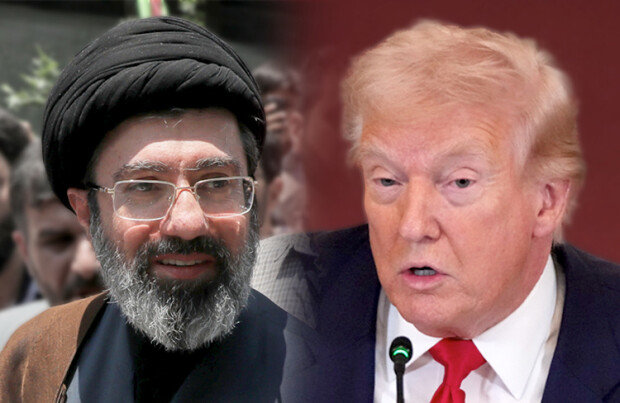
The standoff between the United States and Iran is increasingly viewed as slipping into a prolonged cold war phase, with no settlement in sight and no decisive military escalation. A scenario in which U.S. forces remain tied down around the Strait of Hormuz for months would pose a political burden for U.S. President Donald Trump ahead of the November midterm elections. A protracted impasse could also weigh heavily on South Korea’s economy, which relies on Middle Eastern supplies of crude oil, urea and aluminum.
U.S. political outlet Axios reported on April 28, citing multiple administration officials, that tensions between Washington and Tehran have entered a phase reminiscent of the Cold War. Financial sanctions and maritime blockades remain in place, while talks continue without meaningful progress. Both sides appear reluctant to escalate given the mounting costs, yet neither is willing to step back, leaving the confrontation deadlocked.
Iran has proposed reopening the Strait of Hormuz if the United States lifts its maritime blockade, with nuclear issues to be addressed in separate follow-up talks. The Trump administration, however, maintains that it cannot disengage without Iran abandoning its nuclear program, leaving little room for compromise. Some estimates suggest the cost of the conflict for the United States could reach as much as $1 trillion if the stalemate persists.
The prolonged tensions are already taking a toll on South Korea. Twenty-six vessels, including oil tankers, remain stranded near the Strait of Hormuz. The government said it plans to import 74.62 million barrels of crude oil in May through alternative routes. While that is more than 50 percent higher than April’s volume, it still falls more than 10 percent short of last year’s monthly average. Naphtha inventories, a key petrochemical feedstock, are sufficient for only about one month. At the same time, compensation to refiners under a fuel price cap program is rising by roughly 500 billion won each week, underscoring the urgency of an exit strategy.
Amid the uncertainty, the United Arab Emirates, a major Middle Eastern oil producer, said it will leave the Organization of the Petroleum Exporting Countries on May 1. Tankers are increasingly shifting toward U.S. crude, with shipments redirecting to the Gulf of Mexico. Norway is also moving to expand Arctic drilling for oil and natural gas.
Against this backdrop, South Korea’s government and energy companies face a broader challenge. Securing short-term supplies will not be enough. As global energy supply chains are reshaped, Seoul needs to recalibrate its strategy and define its role in a rapidly changing market.



![[단독]“신천지 신도 최소 5만6472명, 2021∼2024년 국힘 당원 가입”](https://dimg.donga.com/c/138/175/90/1/wps/NEWS/IMAGE/2026/06/22/134157752.1.jpg)



 About Dong-A Ilbo