

High-cost loans surge as economic strain deepens
High-cost loans surge as economic strain deepens
Posted April. 22, 2026 09:02,
Updated April. 22, 2026 09:02
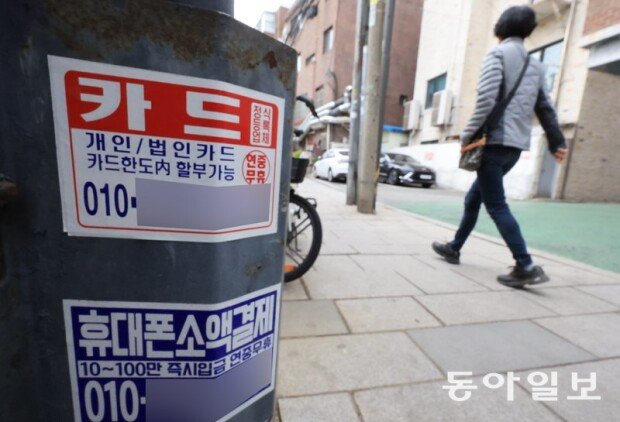
High-cost borrowing is gaining momentum in South Korea, with credit card cash advances and auto-backed loans rising as households contend with high oil prices, inflation and a weak currency. Many lower-income borrowers appear to be shifting to these options after being shut out of bank lending, trading higher interest rates for quick access to cash.
Such loans are easy to obtain and processed quickly, but falling behind on payments can effectively cut borrowers off from institutional credit, pushing them into delinquent status. That, in turn, makes it harder to maintain normal economic activity and raises the risk of broader social strain as financially vulnerable households increase.
According to data released on Monday by the Credit Finance Association, outstanding card loans at nine domestic issuers reached 42.9942 trillion won at the end of March, up 1.5 percent from a year earlier. The figure set a new record, surpassing the previous high recorded in February 2025 and marking the highest level in just over a year.
Auto-backed lending is also expanding. Outstanding balances at five capital firms stood at 2.8074 trillion won at the end of last year, a 46 percent increase from a year earlier. Adding 2.3 trillion won in similar loans extended by savings banks as of the end of February, based on data from the Financial Supervisory Service, the secondary financial sector’s auto-backed lending is expected to exceed 5.1 trillion won.
신무경 yes@donga.com

![대포통장 신고했더니 되레 소송… 피해자 90%가 패소[히어로콘텐츠/히든③-上]](https://dimg.donga.com/c/138/175/90/1/wps/NEWS/IMAGE/2026/06/24/134170034.1.jpg)

![28년 묵은 판례가 만든 면죄부… ‘그놈’은 웃으며 법정 떠났다[히어로콘텐츠/히든③-下]](https://dimg.donga.com/c/138/175/90/1/wps/NEWS/IMAGE/2026/06/24/134169639.1.jpg)




 About Dong-A Ilbo