

KAIST develops solution to foldable screen creases
KAIST develops solution to foldable screen creases
Posted April. 21, 2026 08:34,
Updated April. 21, 2026 08:34
A research team at KAIST has developed a technology that could remove the persistent creasing seen in foldable smartphone displays, a long-standing drawback of the design.
KAIST said Monday that a team led by professor Lee Pil-seung of the mechanical engineering department secured a domestic patent for the technology in September last year. The group has also filed patent applications in the United States, China and the European Union as it looks to expand its global reach.
Creases form at the point where the screen repeatedly folds, as stress builds up along a narrow line. This can leave the display looking uneven and may lead to damage over time. Despite heavy investment by major smartphone makers, fully eliminating the crease has remained a challenge.
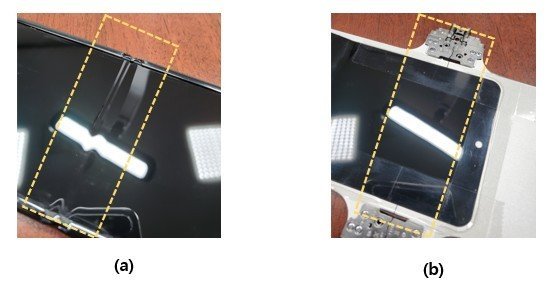
To address the issue, Lee’s team dismantled dozens of used foldable devices and conducted a series of tests. The researchers redesigned the adhesive layer between the display and its supporting plate so that stress from folding spreads more evenly instead of concentrating in one area. By redistributing the load, the design limits localized strain and prevents creases from forming.
In prototype tests, a straight LED beam directed at the folded section reflected back in a straight line, indicating the surface remained smooth without visible distortion.
The team said the technology has strong potential for commercial use and could be applied across a range of foldable display devices.
한채연 기자 chaezip@donga.com








 About Dong-A Ilbo