

USFK chief cautions on OPCON transfer timeline
USFK chief cautions on OPCON transfer timeline
Posted April. 23, 2026 08:47,
Updated April. 23, 2026 08:47
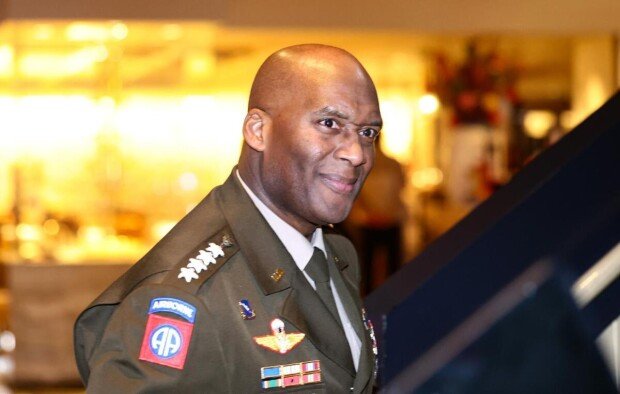
Gen. Xavier Brunson, commander of U.S. Forces Korea, told the U.S. Senate Armed Services Committee on Monday that “political expediency” must not override conditions in transferring wartime operational control.
His remarks were seen as a clear warning as the Lee Jae-myung administration aims to complete the transfer by June 2030 within its term, with the Donald Trump administration showing openness to that timeline.
Brunson emphasized that the process must remain conditions-based and cautioned against allowing political considerations to get ahead of agreed requirements. “Focusing on the conditions will make both South Korea and the United States safer,” he said.
He has repeatedly stressed that the transfer should proceed only after all agreed conditions are fully met, pointing to the growing North Korean nuclear threat. At a press briefing in August last year, he warned that taking a shortcut could undermine military readiness on the Korean Peninsula. In a December online seminar, he said conditions must not be diluted or overlooked to meet a timeline.
Even so, Seoul and Washington have accelerated preparations. At last year’s Security Consultative Meeting, the allies agreed to complete Phase 2 Full Operational Capability verification this year. If the FOC assessment is approved, the allies will hold follow-up consultations to set a target year for the transfer before moving to Phase 3 Full Mission Capability verification. Some observers say 2028, the final year of the Trump administration, could be proposed as the target at the next SCM in Washington in October.
Brunson has also been at the center of recent friction in South Korea-U.S. coordination, including disputes over the so-called DMZ law, notification of air drills over the West Sea, and controversy involving Unification Minister Chung Dong-young over an alleged leak of information on North Korean nuclear facilities.
Asked whether shifting the THAAD system from South Korea to the Middle East would affect deterrence against North Korea, Brunson said no THAAD battery had been moved. “We are sending munitions, and they are staged for movement,” he said. His remarks suggest the THAAD battery in Seongju remains in place, while stockpiled interceptor missiles have been redirected to the Middle East.
Sang-Ho Yun ysh1005@donga.com





 About Dong-A Ilbo