

Japan PM signals drive for constitutional change
Japan PM signals drive for constitutional change
Posted April. 13, 2026 08:32,
Updated April. 13, 2026 08:32
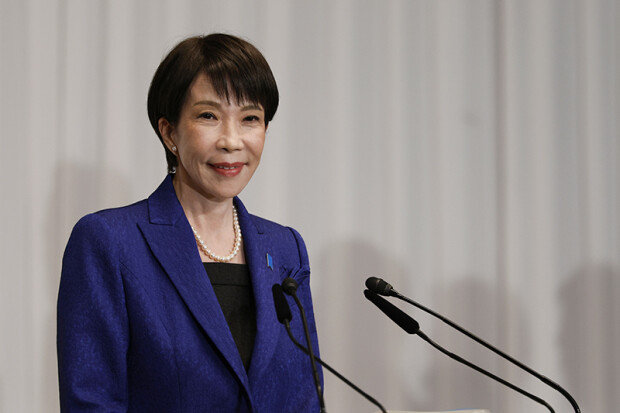
Japanese Prime Minister Sanae Takaichi said April 12 that the time has come to revise the Constitution, adding she aims to enter next year’s party convention with a clear path to formally proposing amendments. The remarks mark the first time she has outlined a timeline, signaling plans to advance debate this year and submit a revision bill next year.
Speaking at a Liberal Democratic Party convention in Tokyo, Takaichi said constitutional revision led by the Japanese people remains a core party policy, according to local media including the Asahi Shimbun. She urged lawmakers to move beyond procedural debate and focus on decisions that reflect public expectations. She also called for putting the issue to a national vote, making clear she favors a referendum rather than limiting the process to parliament.
Under Japan’s constitutional framework, any amendment requires approval by at least two-thirds of members in both the House of Representatives and the House of Councillors, followed by a majority vote in a public referendum.
The ruling Liberal Democratic Party secured a landslide victory in February’s general election, holding 316 of the 465 seats in the lower house, enough to initiate a revision bill. In the upper house, however, even with support from its coalition partner, the Japan Innovation Party, the bloc does not hold a majority. Still, some opposition lawmakers are open to constitutional revision, leaving open the possibility that a proposal could pass. Takaichi did not specify which provisions she intends to revise.
The party has also intensified its push. In a 70th anniversary vision released ahead of the convention, it described constitutional revision as an urgent priority and called for mobilizing its full efforts. Delegates also adopted a 2026 policy platform that includes submitting a draft amendment to the National Diet.
Analysts say the outcome will hinge on the details. While there is relatively broad support for measures such as emergency powers, electoral district changes and education reforms, revising Article 9 to explicitly recognize the Self-Defense Forces remains contentious.
Article 9, often described as the pacifist clause, renounces war and the use of force and bars the maintenance of land, sea and air forces, leaving the Self-Defense Forces without explicit constitutional recognition. Critics warn that enshrining the forces could accelerate Japan’s shift toward a more assertive military posture.
In-Chan Hwang hic@donga.com







 About Dong-A Ilbo