

War-driven shocks rattle South Korea’s economy
War-driven shocks rattle South Korea’s economy
Posted March. 31, 2026 09:14,
Updated March. 31, 2026 09:14
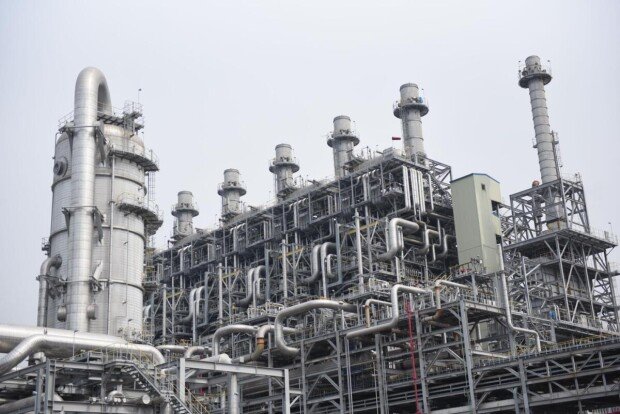
A prolonged conflict involving the United States, Israel and Iran is delivering a twin shock to South Korea’s economy, disrupting energy supplies and global supply chains as the war enters its second month.
The closure of the Strait of Hormuz, widely seen as a critical artery for global energy flows, has curtailed shipments of crude oil and petroleum products. The fallout is spreading beyond heavy industry into everyday life, with rising costs and supply disruptions beginning to affect essential goods.
President Lee Jae-myung warned of worsening conditions during a town hall meeting at the Jeju Halla Convention Center on March 30. “The situation is worse than it appears,” he said. “It is already difficult, and the outlook is becoming more unstable.”
The impact is rippling across industries, including refining and petrochemicals, as well as shipbuilding, steel, construction, biotechnology and cosmetics. Construction sites are facing higher costs for materials such as paint and insulation, while shortages of ethylene-based additives are starting to delay projects.
Unlike past crises, the current disruption is hitting both energy and supply chains at once. The 2020 COVID-19 pandemic strained global supply networks, while the 2022 Russia-Ukraine war drove up oil prices. This time, both pressures are unfolding simultaneously. With the Strait of Hormuz effectively blocked, imports of crude oil and liquefied natural gas have been constrained, while supplies of naphtha and ethylene, key petrochemical feedstocks, have been hit directly.
The breakdown in the petroleum value chain is now affecting not only industrial inputs but also everyday goods such as plastics, vinyl and diapers, as well as construction and agricultural materials. The crisis has exposed South Korea’s heavy reliance on imported energy and raw materials.
The Organisation for Economic Co-operation and Development recently lowered growth forecasts for major economies in response to the Middle East crisis. South Korea saw one of the largest downward revisions, at 0.4 percentage points, second only to the United Kingdom, reflecting its dependence on Middle Eastern energy.
Experts warn that a prolonged conflict could weigh heavily on growth, putting the government’s 2.0 percent target for this year at risk. Kim Dae-jong, a professor of business administration at Sejong University, warned that if the war continues for more than a year, economic growth could fall to around zero.
The ruling Democratic Party of Korea and the government said they are reviewing export restrictions on synthetic resins, following earlier measures on naphtha, in an effort to stabilize domestic supply as concerns grow over rising plastic prices.
Meanwhile, the Korean won weakened sharply, with the won-dollar exchange rate rising to 1,521.1 in after-hours trading, surpassing the 1,520 level for the first time since March 2009 during the global financial crisis.

![“14번 승진해 회장 돼…아침 6시 출근, 샌드백 200번 루틴”[초대석]](https://dimg.donga.com/c/138/175/90/1/wps/NEWS/IMAGE/2026/03/31/133647808.4.jpg)
![46년 만에 ‘서열 2위’ 복귀한 국방차관[횡설수설/김창덕]](https://dimg.donga.com/c/138/175/90/1/wps/NEWS/IMAGE/2026/03/31/133650165.1.jpg)



 About Dong-A Ilbo