

South Korea pursues premium strategy to counter China
South Korea pursues premium strategy to counter China
Posted March. 21, 2026 09:26,
Updated March. 21, 2026 09:26
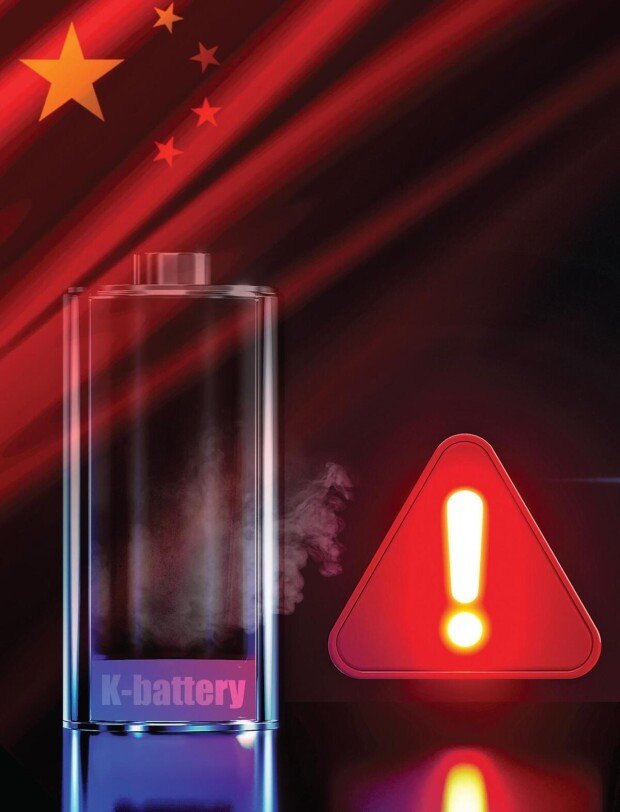
China is rapidly narrowing the gap with South Korea across most of its core industries, including batteries, steel and petrochemicals. Faced with this intensifying pressure, South Korea has worked to sustain its competitiveness in sectors such as automobiles and shipbuilding by moving upmarket and diversifying its portfolio.
In the electric vehicle sector, the Chinese government has also deployed massive subsidies. With price competition becoming increasingly difficult, South Korean automakers have turned to a premium strategy. By improving product quality and strengthening brand positioning, they aim to raise added value while applying their expertise in internal combustion engine technology to eco-friendly vehicles. Unlike China, which is heavily concentrated in electric vehicles, South Korean manufacturers are targeting the market with a broader range of powertrains, including hybrids and hydrogen fuel cell electric vehicles.
A clear example is Hyundai Motor’s high-performance “N Line” electric vehicles. In 2023, the company unveiled the Ioniq 5 N, delivering 650 horsepower and accelerating from zero to 100 kilometers per hour in just 3.4 seconds. Online reviews by overseas YouTubers have drawn attention to the car’s ability to maintain a stable battery temperature of around 40 degrees Celsius even under extreme driving conditions on Germany’s Nürburgring circuit, widely known among racing enthusiasts as the “Green Hell.”
Hyundai Motor has continued this push, launching the Ioniq 6 N in July last year and Genesis’s high-performance GV60 Magma in January this year. These releases underscore its determination to widen the technological gap with Chinese electric vehicles.
As product quality gains recognition in overseas markets, sales have steadily risen. When Genesis first entered the U.S. market in 2016, it sold 6,948 vehicles. That figure climbed to 82,331 units last year, an increase of nearly twelvefold. In 2021, golf legend Tiger Woods was involved in a rollover crash while driving a GV80 but suffered only minor injuries, drawing attention to the vehicle’s safety. More recently, Son Heung-min, who plays for Los Angeles FC in Major League Soccer, was seen driving a GV80 Coupe, reinforcing its image as a premium vehicle associated with celebrities.
Hybrid offerings are also expanding. At an investor day event held in New York last year, Hyundai Motor President Jose Munoz said the company plans to increase its hybrid lineup from eight models to 18 by 2030 and raise the share of eco-friendly vehicles in total sales to 59 percent.
The shipbuilding industry is pursuing a similar strategy, seeking to stay ahead of China by focusing on high-value, eco-friendly vessels. Gas carriers, including those used for liquefied natural gas, are a prime example. These ships require advanced technology, as they must maintain ultra-low temperatures below minus 100 degrees Celsius while preventing any leakage.
South Korean shipbuilders continue to win global orders, reflecting strong market confidence. HD Korea Shipbuilding & Offshore Engineering recently secured contracts for two liquefied carbon dioxide carriers, while Samsung Heavy Industries won orders for three LNG carriers.
An official at HD Korea Shipbuilding & Offshore Engineering said the company will sustain its global competitiveness through differentiated technologies, including eco-friendly LNG dual-fuel propulsion systems and ice-class design capabilities that enable stable operations even in polar regions.
Won-Joo Lee takeoff@donga.com



![“아빠 나 이렇게 잘 컸어요”…무료 사진 복원이 만든 기적 [따만사]](https://dimg.donga.com/c/138/175/90/1/wps/NEWS/IMAGE/2026/05/08/133884397.3.jpg)
![콩·두부 먹으면 ‘이 질병’ 예방…하루 60~80g 섭취해야 [노화설계]](https://dimg.donga.com/c/138/175/90/1/wps/NEWS/IMAGE/2026/05/08/133884322.3.jpg)


 About Dong-A Ilbo