

Drug addiction cases surge in South Korea
Drug addiction cases surge in South Korea
Posted March. 09, 2026 07:53,
Updated March. 09, 2026 07:53
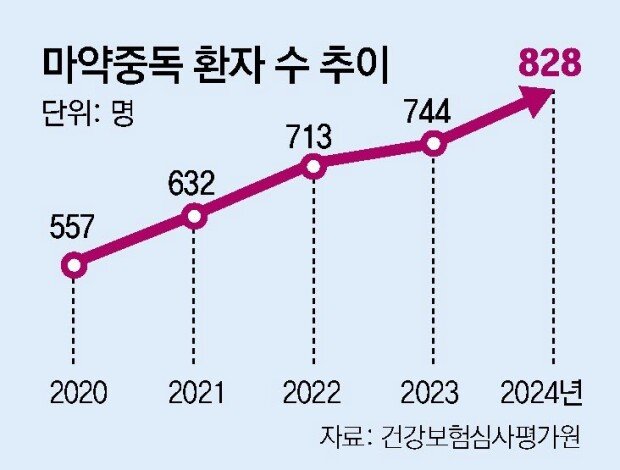
The number of drug addiction patients in South Korea has risen by about 1.5 times over the past four years, surpassing 800. A majority of those affected are young adults in their 20s and 30s.
According to the “2025 Statistics on Diseases and Medical Services in Daily Life,” released Saturday by the Health Insurance Review and Assessment Service, the number of drug addiction patients increased from 557 in 2020 to 713 in 2022 and climbed further to 828 in 2024. Drug addiction patients refer to individuals diagnosed with mental or behavioral disorders caused by narcotics use, including stimulants such as cocaine and amphetamines that increase central nervous system activity, opioids such as heroin and morphine that suppress the central nervous system, and substances such as cannabis.
By age group, young adults in their 20s and 30s accounted for the largest share. The number of patients in their 20s rose from 115 in 2020 to 272 in 2024, while those in their 30s increased from 112 to 210 during the same period. As of 2024, people in their 20s and 30s made up 61.0 percent of all patients. Teenagers recorded the fastest growth, with cases rising from nine in 2020 to 28 in 2024. Other age groups either saw declines in 2024 or remained at levels similar to those in 2020.
Experts have voiced concern that drug addiction is increasingly concentrated among young people. According to a study commissioned last year by the National Center for Mental Health and conducted by a research team from the Industry-Academic Cooperation Foundation at the Catholic University of Korea, in-depth interviews with 29 drug users between February and March last year found that 58.6 percent first used drugs in their 20s.
By gender, male patients outnumbered female patients by more than two to one. As of 2024, there were 606 male patients and 266 female patients. However, the rate of increase was steeper among women. The number of male patients rose from 427 in 2020 to 606 in 2024, a 41.9 percent increase, while female patients increased from 164 to 266 during the same period, a 62.2 percent rise.
Medical expenses related to drug treatment doubled from 500 million won in 2020 to 1 billion won in 2024. The Health Insurance Review and Assessment Service warned that methamphetamine, one of the most widely known narcotics, can cause paranoid delusions, auditory and visual hallucinations, and severe impulsive aggression. Opioid drugs such as heroin can lead to death from respiratory paralysis during acute intoxication. The agency added that addictive substances can trigger severe depression and anxiety and, in extreme cases, may lead to permanent psychosis or dementia.
조유라 기자 jyr0101@donga.com







 About Dong-A Ilbo