

Samsung showcases next-generation high-bandwidth memory
Samsung showcases next-generation high-bandwidth memory
Posted February. 12, 2026 07:59,
Updated February. 12, 2026 07:59
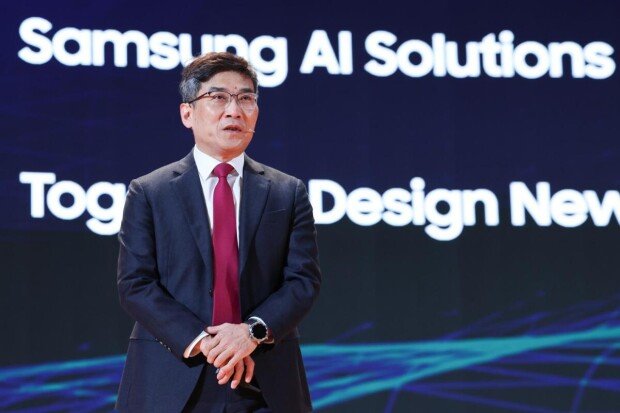
Samsung Electronics Chief Technology Officer Song Jae-hyuk on Feb. 11 praised the company’s sixth-generation high-bandwidth memory, or HBM4, which it supplies to major technology firms including Nvidia. Customer feedback has been “extremely positive,” he said, describing the chip as “the best in the industry.”
Song made the remarks at Semicon Korea 2026 at COEX in Seoul’s Gangnam district in response to a question about HBM4’s performance. “It demonstrates Samsung returning to its original standard of delivering the world’s best technology,” he said. The company expects to begin shipping HBM4 to Nvidia later this month, marking what it described as an industry first. The chip supports data transfer speeds of 11.7 gigabits per second, surpassing the 8 gigabits per second set by the JEDEC semiconductor standard.
Samsung’s integrated structure strengthens its competitiveness, Song said. “Samsung has in-house memory, foundry and packaging capabilities, creating an ideal environment for product development,” he said. He added that production yields are strong but declined to disclose specific figures. Asked whether Samsung intends to retain its lead in future HBM generations, Song replied, “That is our plan.”
Later, Song delivered a keynote address at Semicon Korea, outlining Samsung’s next-generation roadmap, including customized high-bandwidth memory. He said the company has achieved experimental results that reduce power consumption for custom HBM, or cHBM, by half. Samsung is also developing what he called “Samsung custom HBM,” a design in which the base die performs certain functions traditionally handled by the GPU.
Song pointed to a broader architectural shift as well. Instead of the conventional side-by-side configuration of GPUs and memory, Samsung is pursuing a vertically stacked structure. He said the approach is expected to deliver significant gains in processing speed and power efficiency, positioning the company for the emerging era of physical AI.
박현익 기자 beepark@donga.com








 About Dong-A Ilbo