

Office workers use apps to save small change
Office workers use apps to save small change
Posted February. 07, 2026 08:08,
Updated February. 07, 2026 08:08
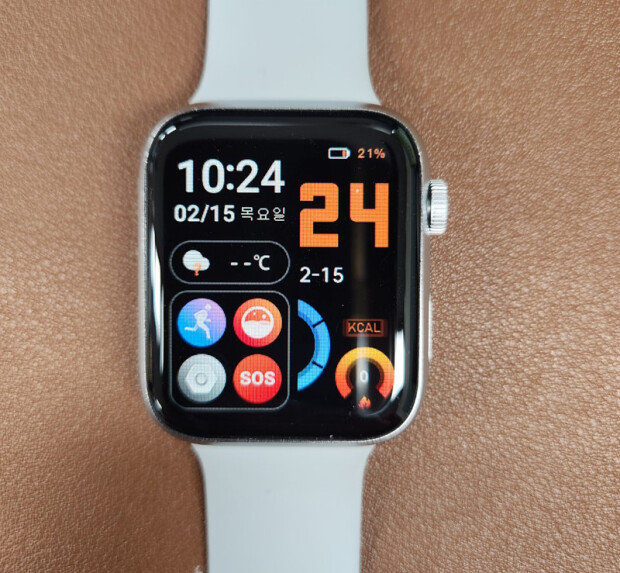
Office worker Kim Hae-jin, 40, has been making a conscious effort to walk more whenever possible. He saves small amounts through Seoul’s health app, Sonmok Doctor 9988, which pays up to 100 won for meeting daily step goals. On days he falls short, Kim deliberately takes extra laps around his neighborhood before heading home. By using this app alongside fintech platforms such as Toss, he has accumulated about 100,000 won over the past three years, which he mainly spends on convenience store meals and snacks.
“My company has not raised salaries, so I rely on app-based investing and other app technology to help cover living expenses,” Kim said.
In a high-inflation era, office workers are going to great lengths to cut food costs and save even the smallest amounts. They earn cash not only by tracking steps on smartphone apps but also by viewing advertisements to collect money in one-won increments. Some answer daily quizzes, earning about 1,000 won a day. The ways to build small savings are becoming increasingly diverse as fintech firms, telecom companies, and insurers launch new services aimed at micro-savings.
Internet-only banks are also rolling out unconventional money-making features with game-like elements. Lee Hyeong-seong, 39, who works at a public enterprise, starts his day by posting a K Bank link in a KakaoTalk open chat room. Each click on the link helps his “money tree” grow faster. By logging into the app or completing daily tasks such as watering the tree or shaking it to collect rewards, users can earn up to about 100,000 won. According to K Bank, the top earner from the money tree program in January received 130,486 won.
As small-change investing gains popularity, online communities increasingly share money-saving tips, similar to exam answer keys. Office worker Lee Wang-seo, 44, opens a major commercial bank’s app to answer quizzes and earns more than 100 points, worth about 100 won, each day. Incorrect answers yield no points, but the risk is low because correct answers are widely circulated online. He also earns lottery-style points for transferring at least 500,000 won in salary through the app each month. Using these methods, Lee accumulated 500,000 points, equivalent to 500,000 won, last year. “I used the money to pay interest on my mortgage with that bank,” he said.
Beyond app-based savings, trading mobile gift certificates has emerged as a practical way to stretch small sums. Because gifticons carry expiration dates, they are often sold below face value. A Starbucks Americano, for instance, is trading at 3,990 won, about 15 percent less than its regular price of 4,700 won.
Simply shopping around for mandatory annual auto insurance can also earn small amounts of cash. Apps such as OK Cashbag offer 5,000 to 9,000 won in cash, gift certificates, or points for requesting insurance quotes.
So-called credit card “windmill spinning” is another method often cited for earning a larger sum quickly. The strategy involves sequentially opening credit cards with multiple issuers, collecting sign-up points, and then canceling each card after receiving the rewards a month later. In online finance communities, users joke that with eight dedicated card issuers, it is possible to harvest about a year’s worth of income.
Lee Eun-hee, a professor of consumer studies at Inha University, said the combination of persistent inflation and a prolonged economic slowdown is driving office workers to pursue even small-scale side income.

신무경 yes@donga.com




![[오늘의 운세/7월 6일]](https://dimg.donga.com/c/138/175/90/1/wps/NEWS/IMAGE/2026/07/06/134241070.1.jpg)



 About Dong-A Ilbo