

Trump lowers U.S.-India tariffs after oil halt
Trump lowers U.S.-India tariffs after oil halt
Posted February. 04, 2026 09:01,
Updated February. 04, 2026 09:01
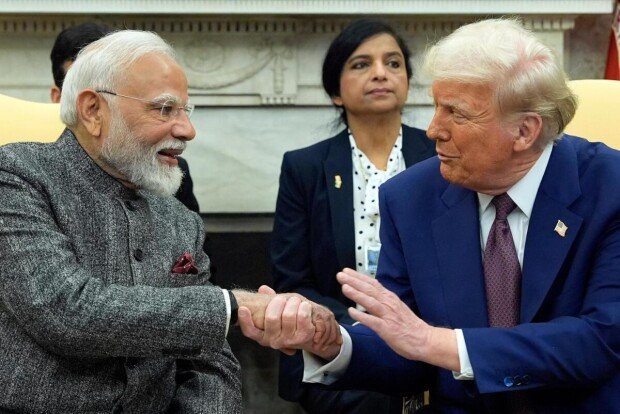
U.S. President Donald Trump on Feb. 2 announced that India will stop importing Russian crude oil, prompting the United States to reduce tariffs on Indian goods from 25% to 18%. The reduction sharply lowers total U.S. tariffs on India, including punitive duties on Russian oil imports that had pushed the overall rate to 50%. The move contrasts with Trump’s earlier surprise tariff hikes on ally South Korea, which he justified by delays in related legislation.
Trump said on his Truth Social account that he spoke with Indian Prime Minister Narendra Modi about trade, ending the war in Ukraine, and other issues, and announced the tariff reduction. “Prime Minister Modi has agreed to stop purchasing Russian crude and to buy far more from the United States, and potentially from Venezuela,” Trump said. “Based on friendship and respect for Modi, we agreed to a U.S.-India trade deal that takes effect immediately.” Under the deal, U.S. tariffs on Indian imports will drop from 25% to 18%, and the 25% punitive tariff on Russian crude imports will be lifted.
India is a key member of the U.S.-led Quad security framework, which aims in part to counter China. When the Trump administration imposed tariffs on India last year, diplomats expressed concern that the move could undermine efforts to check China. Trump appeared to address this concern, saying, “Our incredible relationship with India will only become stronger.”
Trump has also used tariffs as a political and diplomatic tool with other allies. He has previously announced an additional 10% duty on imports from eight European countries, including the United Kingdom, Germany and France, citing disputes over troop deployments to Greenland. He also imposed punitive tariffs of up to 200% on French wine.
Donald J. Budroe, a chair professor at George Mason University, wrote in a Washington Post opinion column that Trump’s tariff strategy “increases market uncertainty in the United States and fuels resentment among allies.”
장은지기자 jej@donga.com







 About Dong-A Ilbo