

Government eases renewable power rules for data centers
Government eases renewable power rules for data centers
Posted February. 04, 2026 09:00,
Updated February. 04, 2026 09:00
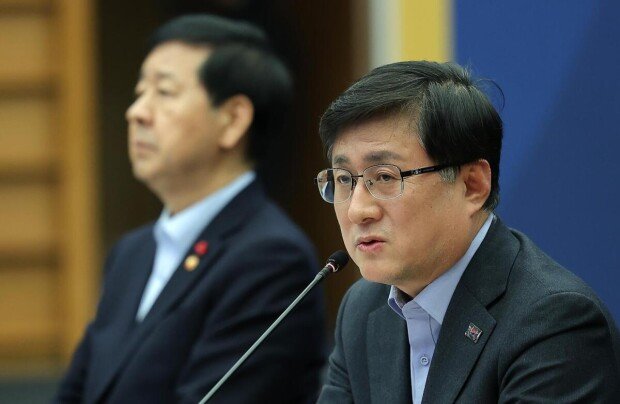
The South Korean government is revising regulations to allow data centers using distributed energy to purchase renewable electricity directly. On Feb. 3, the Ministry of Climate, Energy and Environment held the first meeting of a task force tasked with implementing the country’s distributed energy specialized zones.
Known as distributed energy special districts, these zones aim to establish a “produce locally, consume locally” system by generating and consuming electricity near demand centers, rather than relying on long-distance transmission networks. Seven locations were designated last year, including Busan, South Jeolla Province, Jeju Island, Ulsan, Uiwang in Gyeonggi Province, Pohang in North Gyeongsang Province, and Seosan in South Chungcheong Province.
Under the revised rules, data centers that currently receive power from zone electricity providers or distributed energy operators will be allowed to sign direct power purchase agreements, or PPAs, with renewable energy generators. Previously, such agreements were permitted only when electricity was supplied by Korea Electric Power Corporation. The change reflects growing demand under the RE100 initiative for full reliance on renewable energy and the government’s effort to attract data centers beyond the Seoul metropolitan area.
The government is also considering raising the capacity limit for generation facilities operated by zone electricity providers, which is currently capped at 35 megawatts, to accommodate the energy needs of large scale data centers. In addition, authorities are reviewing whether to ease regulations governing storage based electricity sales within distributed energy projects, including the requirement that 70% of user demand be met through self generation.
세종=김수연기자 syeon@donga.com







 About Dong-A Ilbo