

U.S. holds firm on tariffs for South Korea
U.S. holds firm on tariffs for South Korea
Posted January. 30, 2026 09:18,
Updated January. 30, 2026 09:18
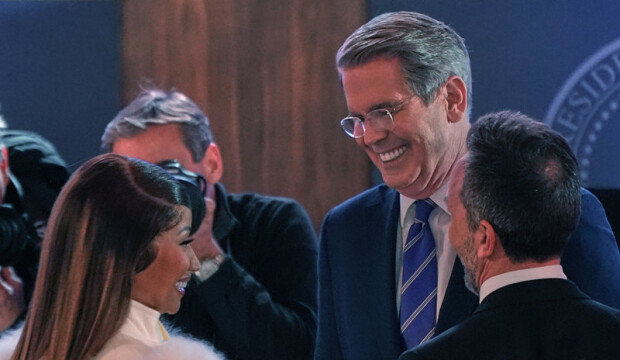
U.S. Treasury Secretary Scott Bessent said Jan. 28 local time that there is no trade agreement with South Korea until the National Assembly ratifies the deal, noting that lawmakers have not yet approved the measure.
He said Washington will move ahead with plans to reimpose a 25 percent reciprocal tariff on South Korea until a special bill on U.S.-bound investment passes the National Assembly, signaling a continued hard line toward Seoul.
Industry Minister Kim Jeong-kwan is scheduled to meet U.S. Commerce Secretary Howard Lutnick on Jan. 29 local time as additional South Korea-U.S. tariff negotiations enter a more intensive phase.
President Lee Jae-myung has instructed the negotiating team to respond calmly and steadily, officials said. Some government officials also warn that if the standoff persists, it could have negative spillover effects on non-tariff issues, including South Korea’s pursuit of nuclear-powered submarines and revisions to the South Korea-U.S. nuclear cooperation agreement.
● Bessent says tariff hike will help advance talks
Bessent said in a CNBC interview that President Donald Trump’s decision to raise tariffs would help move the situation forward.
His comments came a day after U.S. Trade Representative Jamieson Greer said South Korea had made no progress on commitments it had agreed to implement. The remarks add to a string of hard-line signals from key U.S. officials involved in the tariff negotiations.
Lutnick, a central figure in the South Korea-U.S. tariff agreement, attended a Washington gala for the Lee Kun-hee Collection exhibition but made no public comments on tariffs or other pending trade issues.
After completing a trip to Canada, Kim began a visit to the United States and is scheduled to meet Lutnick, his U.S. counterpart, on the afternoon of Jan. 29 local time.
Kim said he will clearly explain South Korea’s legislative progress to prevent misunderstandings. He added that the South Korean government’s position on cooperation and investment with the United States has not changed and that he plans to present that stance in detail.
Yeo Han-koo, head of trade negotiations at the Ministry of Trade, Industry and Energy, also departed for Washington on the evening of Jan. 29. He is expected to meet Greer to discuss South Korea’s non-tariff barriers, including regulations affecting digital and platform companies and agricultural products.
The United States is expected to press South Korea to remove non-tariff barriers on agricultural imports and ensure fair treatment for U.S. digital companies.
● Concerns grow over impact on nuclear submarines and nuclear pact
Foreign Minister Cho Hyun said at a Kwanhun Club forum at the Korea Press Center in central Seoul on Jan. 29 that the U.S. plan to reimpose tariffs is difficult to regard as a breakdown of the agreement and can be addressed through further explanation to the U.S. side.
A government official said authorities are preparing response strategies amid the possibility that the United States could argue South Korea’s investment progress has been too slow compared with Japan.
Still, some officials warn that if the U.S. position does not soften and the dispute persists, the fallout could broaden.
They say it could affect the broader South Korea-U.S. joint fact sheet covering security issues, including South Korea’s pursuit of nuclear-powered submarines and expanded authority over nuclear fuel enrichment and reprocessing.
A senior government official said the security and tariff negotiations are moving in parallel and that a setback in one area could undermine progress in the other. He said efforts are needed to ensure the two tracks support each other.
Another senior official said the potential spillover into security negotiations cannot be ignored, given that the U.S. side has explicitly mentioned tariff increases.
Within the government, some officials have also raised concerns about how the tariff negotiations with the United States have been managed.
They say that because the Donald Trump administration has promoted the tariff deal with South Korea as a major achievement, Seoul should have set up a centralized control tower to oversee implementation and assess the broader impact on South Korea-U.S. relations. Instead, responsibility was left to individual ministries after the agreement, resulting in gaps in follow-up measures.
A senior official said dissatisfaction is building across multiple channels on the U.S. side and involves several overlapping issues. He added that the management system for implementing the tariff agreement weakened after the deal and should be carefully reviewed going forward.
윤다빈 empty@donga.com






 About Dong-A Ilbo