

Trump expands Middle East deployment to pressure Iran
Trump expands Middle East deployment to pressure Iran
Posted January. 30, 2026 09:18,
Updated January. 30, 2026 09:18
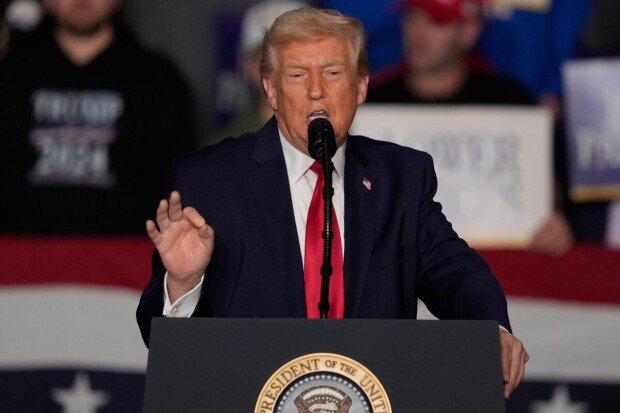
U.S. President Donald Trump has deployed a larger U.S. military presence to the Middle East than during the operation aimed at removing Venezuelan President Nicolas Maduro, intensifying pressure on Iran to immediately abandon its nuclear program. CNN reported on Jan. 28 that Trump is reviewing options that include strikes on Iran’s nuclear facilities and senior leadership, including Supreme Leader Ali Khamenei.
Trump wrote on Truth Social on Jan. 28 that a large naval fleet led by the aircraft carrier Abraham Lincoln is heading toward Iran, adding that the deployment exceeds the scale of forces previously sent in connection with Venezuela. He said U.S. naval forces are prepared to carry out their mission quickly and forcefully if needed, and urged Iran to return to negotiations and agree to what he described as a fair and balanced deal banning nuclear weapons. He warned that time is running out.
● Trump escalates pressure on Iran over nuclear program
Trump said the United States joined Israel in launching large-scale airstrikes on Iran in June last year. During the conflict often referred to as the “12-day war,” U.S. forces used B-2 stealth bombers and bunker-buster munitions to strike Iranian nuclear facilities. He said Iran’s refusal to reach an agreement resulted in widespread destruction and warned that any future attacks would be far more severe.
U.S. Secretary of State Marco Rubio told a Senate hearing the same day that anti-government protests in Iran that began Dec. 28 and continued until recently are different from previous waves of unrest. He said the protests are likely to resume because their core cause, economic collapse, is unlikely to be resolved. Rubio emphasized the need for preemptive defensive measures in response to signs of Iranian provocation and highlighted the importance of deploying a U.S. carrier strike group to the Middle East. He added that Washington must be prepared for the possibility that Tehran could target areas where between 30,000 and 40,000 U.S. troops are stationed.
The United States has recently concentrated naval and air assets near Iran. According to Reuters and the BBC, the nuclear-powered aircraft carrier Abraham Lincoln strike group, previously deployed in the Indo-Pacific, has entered Gulf waters. The group reportedly includes about 70 carrier-based aircraft, including F-35C stealth fighters, three destroyers equipped with Tomahawk cruise missiles, and a nuclear-powered submarine.
Air power in the region is also being reinforced. F-15 fighter jets and aerial refueling tankers have arrived in the Middle East. Flight tracking site Flightradar24 has reported activity by P-8 Poseidon maritime patrol aircraft and multiple drones near Iranian airspace. “With its current force posture, the United States could hit nearly all targets in Iran except the most deeply buried facilities,” said Matthew Savill, military sciences director at the Royal United Services Institute.
● CNN reports strikes on Iranian leadership under review
CNN, citing sources familiar with internal administration discussions, reported that Trump is considering large-scale strikes targeting Iranian command authorities, individuals accused of killing protesters, and nuclear facilities, as talks on limiting Iran’s nuclear and ballistic missile programs have made little progress.
The BBC reported that tighter security surrounding Khamenei and other Iranian leaders has made any decapitation-style operation more difficult than during the earlier conflict. Savill said the Iranian regime could ultimately collapse, but such a process could take months or even years.
Iran’s government said it is prepared to respond forcefully to any U.S. attack while also signaling that it remains open to nuclear negotiations. Iranian Foreign Minister Abbas Araghchi wrote on social media that Iran has consistently supported nuclear talks that are mutually beneficial, fair and equal.
However, Iran is unlikely to accept Washington’s demand to halt uranium enrichment. Tehran has long described its nuclear program as a symbol of resistance to the West, and abandoning it could undermine the regime’s foundation. “Iran’s supreme leader will not accept any compromise that threatens the core of the regime and will not give up uranium enrichment,” Danny Citrinowicz, a researcher at Israel’s Institute for National Security Studies, told The Wall Street Journal on Jan. 27.
Keun-Hyung Yoo noel@donga.com

![“고인 통장에서 장례비 꺼냈는데”…상속포기 무효될 수 있나 [상속리포트]](https://dimg.donga.com/c/138/175/90/1/wps/NEWS/IMAGE/2026/06/26/134181179.3.jpg)
![[단독]계엄때 “서강대교 넘지말라” 했던 대령도 내란수사](https://dimg.donga.com/c/138/175/90/1/wps/NEWS/IMAGE/2026/06/27/134192351.1.jpg)




 About Dong-A Ilbo