

Trump's tariff post rattles South Korean industries
Trump's tariff post rattles South Korean industries
Posted January. 28, 2026 09:24,
Updated January. 28, 2026 09:24
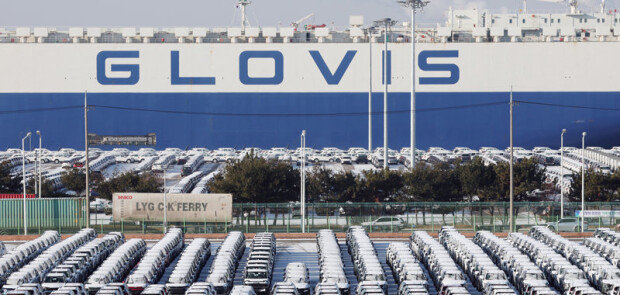
U.S. President Donald Trump threw South Korea’s business community into confusion on Jan. 27 by announcing on social media that he plans to raise tariffs on South Korean goods to 25%. Most companies had already finalized their business plans for this year on the assumption that tariffs would remain at 15%, following the government’s formal announcement of a reduction in U.S. tariffs in December last year. If an additional 10 percentage points are imposed, companies would once again be forced to grapple with heightened uncertainty, including the need to revise production volumes in South Korea. As concerns mount, calls are growing within the business community for the government to swiftly seek further negotiations with Washington to limit the disruption.
● Auto industry fears direct hit, additional burden of 3 trillion to 4 trillion won
Hyundai Motor Group was among the companies most alarmed by Trump’s Jan. 27 post. The group had already endured roughly seven months of strain in the U.S. market after reciprocal tariffs were raised to 25% in April last year, before being lowered to 15% in December. Hyundai Motor and Kia said that during the third quarter of last year, from July to September, when the higher tariff was in effect, the two companies incurred a combined additional cost of about 3 trillion won.
Investment firms estimate that if U.S. automobile tariffs rise again to 25%, Hyundai Motor Group’s additional burden could reach between 3 trillion and 4 trillion won. Daol Investment and Securities calculated that higher tariffs could push the extra cost to as much as 4.4 trillion won. NICE Credit Rating, in an automobile industry outlook report released last year, projected that an increase in the tariff rate from 15% to 25% would result in an additional burden of 3.1 trillion won for the group. Analysts broadly expect operating profit to decline by more than 20%, even if the automakers absorb some of the cost by holding down prices in the U.S. market to protect sales.
Hyundai Motor Group has yet to announce specific countermeasures. Chairman Chung Euisun and Vice Chairman Jang Jae-hoon are currently in Canada to support a bid for a next-generation submarine project, and the company has taken a cautious stance as uncertainty persists. A Hyundai Motor official said the group is closely monitoring developments.
● Pharmaceuticals also affected, calls for countermeasures
The bio industry has also been put on alert after Trump singled out pharmaceuticals, along with automobiles, as potential targets for tariff hikes. Companies such as Samsung Biologics and Celltrion have recently secured production facilities in the United States to mitigate tariff risks, but their U.S. output remains far lower than in South Korea. Samsung Biologics’ domestic production capacity stands at 784,000 liters, compared with just 60,000 liters at its U.S. plant, highlighting the limits of near-term relocation.
Industry officials say companies are being pushed to expand investment in the United States while still bearing the burden of higher tariffs. Europe and Japan have agreed to cap pharmaceutical tariffs at up to 15%, raising concerns that South Korean products would suffer a significant price disadvantage if a 25% tariff were applied solely to Korea.
The home appliance industry also expects that an additional 10 percentage point increase in U.S. tariffs would make production adjustments unavoidable, including shifting parts of supply chains outside South Korea. Battery makers, which have already established production bases in North America, are expected to face limited direct tariff impacts, but could be affected indirectly if South Korean automobile exports to the United States decline.
Economists warn that an actual tariff hike would deal a serious blow to the South Korean economy. The Korea Capital Market Institute estimated last year that South Korea’s real gross domestic product would shrink by about 1% if the United States were to impose a 25% tariff on South Korean imports. Citibank Korea likewise projected that real GDP would decline by 0.2% if Washington levied 25% tariffs on South Korean automobiles, semiconductors and parts.
Domestic companies are calling for swift government action. A business community official said uncertainty is intensifying as unverified market rumors spread amid continued ambiguity over whether the United States will move ahead with higher tariffs. The official stressed that it is critical for the government to quickly clarify the facts and take steps to contain uncertainty.
Won-Joo Lee takeoff@donga.com


![[단독]“서강대교 넘지말라” 조성현 대령, 내란 피의자 수사](https://dimg.donga.com/c/138/175/90/1/wps/NEWS/IMAGE/2026/06/27/134192351.1.jpg)


 About Dong-A Ilbo