

Lee says South Korea must lead its defense
Lee says South Korea must lead its defense
Posted January. 26, 2026 08:38,
Updated January. 26, 2026 08:38
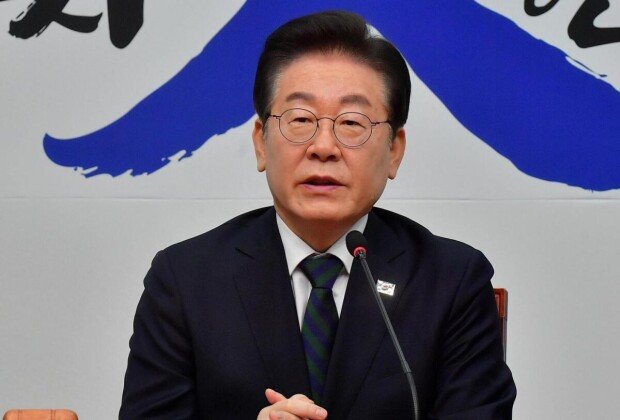
President Lee Jae-myung said on Jan. 24 that South Korea is fully capable of defending itself, noting that the country spends the equivalent of about 1.4 times North Korea’s gross domestic product on defense and fields the world’s fifth-largest military. He emphasized that self-reliant national defense is a fundamental principle amid an increasingly unstable international environment.
Lee made the remarks in a post on X, formerly Twitter, shortly after the Donald Trump administration released a new National Defense Strategy calling on South Korea to take a more leading role in deterring North Korea. “In an unstable global environment, self-reliant defense is fundamental,” Lee wrote. “Firm self-reliant defense and peace on the Korean Peninsula make sustained economic growth possible.”
The comments were widely seen as an effort to allay concerns that the new U.S. strategy, which places less emphasis on North Korea while prioritizing countering China, could lead to a reduction in U.S. Forces Korea or weaken readiness against North Korean threats. They were also interpreted as reinforcing the Lee administration’s push to pursue the transfer of wartime operational control.
A joint statement issued by South Korea and the United States after the Security Consultative Meeting in November said the allies would complete the Full Operational Capability assessment this year, the second stage in the three-step verification process for transferring wartime operational control. Once the FOC assessment is finished, the commanders in chief of both countries, the two presidents, will decide the specific target year for the transfer, known as “Year X.”
One or two years before that date, the allies are to conduct the final phase, the Full Mission Capability assessment. Some military officials say that because the U.S. government has explicitly called for stronger independent defense capabilities by South Korea in its top-level defense strategy, Seoul and Washington could set the target year immediately after the FOC assessment. Under that scenario, the allies could carry out the FMC assessment during combined South Korea-U.S. exercises in the first or second half of next year or the following year and then proceed with the transfer.
Against this backdrop, Elbridge Colby, the U.S. undersecretary of defense for policy and widely regarded as President Trump’s chief defense strategist, arrived in South Korea on Jan. 25 for a three-day visit. Colby has repeatedly argued that allies should bear greater security burdens and take more responsibility for their own defense. As Seoul and Washington appear to broadly align on the transfer of wartime operational control, some analysts say the timeline could be brought forward to a date earlier than 2030, when Lee’s term is set to end.
A government official said that even if the South Korean military has not fully secured all the surveillance and strike capabilities required to assume wartime operational control, an earlier transfer within two years would be possible if the United States formally commits to providing supplementary capabilities until South Korea’s forces are fully prepared.
Hyo-Ju Son hjson@donga.com


![국비 지원받아 무료로 중장비 면허 딴 60대 女농사꾼[은퇴 레시피]](https://dimg.donga.com/c/138/175/90/1/wps/NEWS/IMAGE/2026/06/13/134102134.5.jpg)



 About Dong-A Ilbo