

Trump presses allies for Hormuz mine sweepers
Trump presses allies for Hormuz mine sweepers
Posted March. 18, 2026 08:18,
Updated March. 18, 2026 08:18
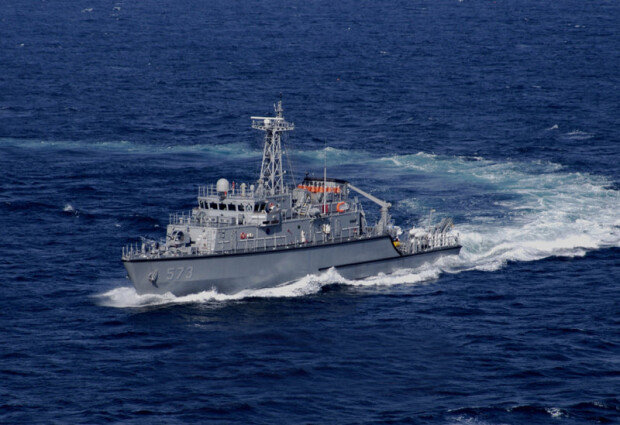
U.S. President Donald Trump has stepped up pressure on key allies, including South Korea, to deploy naval assets to the Strait of Hormuz, repeatedly singling out mine sweepers as a preferred contribution.
Speaking to reporters in the Oval Office on Sunday, Trump said, “We defend all of these countries,” referring to allies such as South Korea, Japan and Germany. He expressed frustration that when the United States asks whether those countries have mine sweepers, they respond hesitantly and question whether they should get involved.
Earlier in the day, ahead of a luncheon with the board of the Kennedy Center, Trump again criticized what he described as a lack of commitment from allies. “For a very long time, we have helped certain countries and protected them from terrible external threats,” he said. “But they are not very enthusiastic.” He added, “If we need their mine sweepers or whatever equipment they may have, they should step in to help us,” urging participation. His remarks point to an expectation that countries such as South Korea would take on the task of clearing mines laid by Iran as part of escort operations in the Strait of Hormuz.
For South Korea, however, the practical hurdles are substantial. The Navy operates 12 mine countermeasure vessels, but all are small ships of 700 tons or less, limiting their ability to operate in distant waters. A military official said such vessels are roughly one-sixth the size of a destroyer and would take more than a month to reach the Middle East. South Korea’s domestically developed mine countermeasure helicopter completed its first test flight last year and is not expected to enter service until around 2030 at the earliest.
Some officials also urge caution about expanding the deployment of the Cheonghae Unit, currently stationed in the Gulf of Aden off Somalia. Given the high risks and demanding mission conditions in the Strait of Hormuz, effectively an active conflict zone, a single destroyer would be insufficient. They say any deployment would require a task group with additional ships and personnel.
In that scenario, an Aegis-equipped destroyer would take the lead, providing air defense for the task group by detecting and intercepting ballistic and cruise missiles as well as explosive drones. At least two additional destroyers or frigates, such as the Chungmugong Yi Sun-sin-class, would be needed to counter fast attack craft, conduct escort operations and carry out anti-submarine missions. Military officials estimate such a deployment would involve 600 to 900 personnel, far exceeding the roughly 260 currently assigned to the Cheonghae Unit.
A large-scale overseas deployment of naval forces could also deepen concerns about a potential gap in readiness against North Korea. A military source said that if South Korean naval assets are deployed in significant numbers, following the redeployment of key U.S. Forces Korea assets such as the THAAD missile defense system based in Seongju, North Gyeongsang Province, a gap in deterrence against North Korea could become unavoidable.
Sang-Ho Yun ysh1005@donga.com








 About Dong-A Ilbo