

Democratic Party passes second special prosecution law
Democratic Party passes second special prosecution law
Posted January. 17, 2026 05:51,
Updated January. 17, 2026 05:51
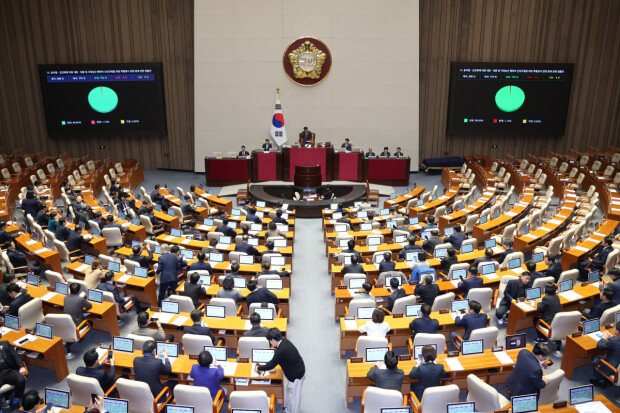
The Democratic Party of Korea on Friday pushed through the second comprehensive special prosecution law without opposition support. Following three previous special prosecutions, the measure will launch a large-scale investigation involving up to 251 personnel for as long as 170 days. The investigation is expected to continue through the June 3 local elections.
The National Assembly passed the bill during a plenary session with 172 votes in favor and two against. Conservative opposition lawmakers attempted to block the vote through a filibuster led by Cheon Ha-ram, floor leader of the Reform Party, who spoke for 18 hours and 56 minutes beginning Thursday afternoon. After the 24-hour limit expired, the Democratic Party and other ruling coalition parties moved to end the filibuster and pass the bill. The People Power Party abstained from the vote.
The second comprehensive special prosecution will cover 17 investigation targets. It will reexamine unresolved issues from an earlier special prosecution led by special prosecutor Cho Eun-seok, which investigated alleged insurrection and foreign exchange law violations linked to the Dec. 3 declaration of martial law, including the so-called Noh Sang-won notebook allegations. The new probe will also add allegations of political interference involving former President Yoon Suk Yeol and his wife, Kim Kun Hee, as well as the military counterintelligence command blacklist case. The investigation team will consist of 251 personnel. The initial investigation period of 90 days may be extended to a maximum of 170 days.
People Power Party floor leader Song Eon-seok criticized the law as an extension of three previous special prosecutions that he said were used for political retaliation against the opposition. Song urged President Lee Jae-myung to exercise his authority to request revisions to the bill and to seek renegotiation between the ruling and opposition parties.
구민기 koo@donga.com






 About Dong-A Ilbo