

Civilian drones raise questions over border surveillance
Civilian drones raise questions over border surveillance
Posted January. 12, 2026 09:32,
Updated January. 12, 2026 09:32
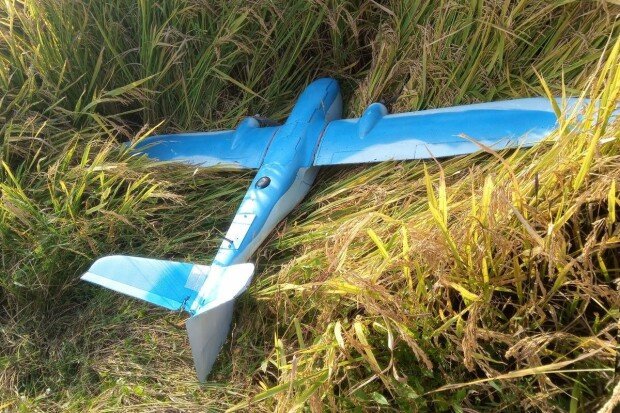
If it is confirmed that drones crossed the Military Demarcation Line, or MDL, and entered North Korea on Sept. 27 last year and again on Jan. 4, and that the flights were conducted by civilians, the South Korean military is likely to face difficulty avoiding responsibility for a failure in border surveillance.
Airspace near the inter-Korean border is strictly controlled as a no-fly zone known as P518. Only military drones are permitted to operate in the area, and civilian drone flights require prior approval from the military.
However, the military reportedly granted no such approval for civilian drone operations during either period. This raises the possibility that drones covertly flown by civilians crossed the MDL on two occasions without being detected by military surveillance.
North Korea has claimed that the drone launch sites in September last year and on Jan. 4 were in Paju, Gyeonggi Province, and in Ganghwa County, Incheon, including Ganghwa Island, respectively. In late 2022, North Korean drones also breached South Korea’s air defense network in those areas and flew as far as the vicinity of the presidential office in Yongsan.
Some civilian drone hobby groups in South Korea are reported to have filmed locations across North Korea for more than a decade using drones assembled from commercially available parts purchased online. In 2023, a member of one such group flew a drone built for less than 1 million won into North Korea, recorded footage of the Mount Kumgang area, and uploaded the video to YouTube. The drones were equipped with autopilot systems programmed in advance with GPS data and flight routes, from takeoff through return, allowing onboard cameras to capture images of North Korea’s ground and airspace.
A military official said drones operated by civilian hobbyists are extremely small and made of materials such as lightweight Styrofoam, making them difficult for radar to detect. The official added that when small drones measuring less than two meters in length fly at low altitudes below 150 meters, the current air defense network has inherent limitations in detecting all of them.
Sang-Ho Yun ysh1005@donga.com

![충분히 자도 계속 피곤한 이유?…뜻밖의 원인 찾았다[건강팩트체크]](https://dimg.donga.com/c/138/175/90/1/wps/NEWS/IMAGE/2026/05/29/134016517.3.jpg)
![[천광암 칼럼]노동 장관의 ‘위험한 불장난’](https://dimg.donga.com/c/138/175/90/1/wps/NEWS/IMAGE/2026/05/31/134025926.1.jpg)





 About Dong-A Ilbo