

U.S. may raise global tariffs to 15%
U.S. may raise global tariffs to 15%
Posted February. 27, 2026 08:44,
Updated February. 27, 2026 08:44
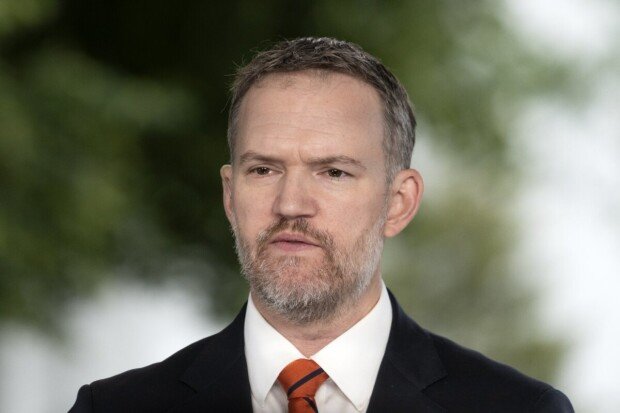
Jamieson Greer said Wednesday that the 10 percent global tariff recently imposed by U.S. President Donald Trump on all trading partners could be raised for certain countries.
In an interview with Fox Business, Greer said some countries could see tariffs increase to 15 percent, while others might face even steeper rates. His remarks highlight a policy of differentiated tariffs, under which countries that faithfully implement trade agreements with the United States would receive comparatively lower rates, while those that fall short could be subject to higher duties.
The comments are also being interpreted as a warning. Although the U.S. Supreme Court ruled on Feb. 20 that the Trump administration’s reciprocal tariff measures were unlawful, the administration has signaled that it will seek alternative legal avenues to maintain tariff pressure. Greer’s message suggests that countries hoping to avoid higher rates should refrain from defying U.S. demands.
Greer added that the Office of the United States Trade Representative would rely on investigations under Section 301 of the Trade Act to assess whether countries that have already concluded trade agreements with Washington are honoring their commitments, including promises to invest in the United States.
He described Section 301 as an enforcement tool intended to ensure that trading partners comply with the terms of their agreements. If a country backtracks on its commitments or persists in unfair trade practices, he said, the United States could respond with higher tariffs. Enacted in 1974, Section 301 authorizes the U.S. government to impose duties in response to unreasonable or discriminatory actions by foreign governments against U.S. companies, without requiring separate congressional approval. Greer has recently called on South Korea to ease certain digital regulations, among other steps.
Greer also underscored that Section 301 of the Trade Act and Section 232 of the Trade Expansion Act provide what he described as a durable legal foundation for tariffs. Section 232 grants the president authority to impose duties on specific industries on national security grounds, following an investigation by the Commerce Department.
Some analysts have pointed to Section 338 of the Tariff Act as another possible instrument. The provision allows tariffs of up to 50 percent on countries that discriminate against U.S. commerce, though it has never been used.
In a separate interview with Bloomberg Television, Greer said the White House is preparing a proclamation that would raise global tariffs to 15 percent where warranted.
김윤진 기자 kyj@donga.com




 About Dong-A Ilbo