

A bold U.S. action, lasting consequences
A bold U.S. action, lasting consequences
Posted January. 05, 2026 09:26,
Updated January. 05, 2026 09:26
The United States has abruptly ousted Venezuelan President Nicolas Maduro, who had been in power for 13 years, through a late-night arrest operation dubbed “Firm Resolve.” U.S. President Donald Trump reportedly watched the operation live from his Mar-a-Lago residence in Florida as Maduro and his wife were arrested and flown to New York. Following last June’s airstrikes on Iranian nuclear facilities, the operation again demonstrated Washington’s willingness and ability to use military force not only to confront adversarial states but also to remove their governments.
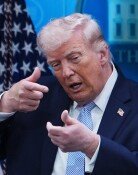
China and other countries condemned the operation as a serious violation of international law, but Trump appeared undeterred. At a news conference after the arrest, he defended the operation, saying Maduro and his wife would be brought to New York to stand trial. The United States indicted Maduro in 2020 on charges including drug trafficking and money laundering. The administration also released images showing Maduro blindfolded and dressed in a white tracksuit during his transfer, along with footage of him being led away in handcuffs at what appeared to be a Drug Enforcement Administration office in New York.
While Trump cited the removal of drug threats as justification for ousting Maduro, he also made clear his broader strategic intent. He said that under a new security strategy, U.S. dominance in the Western Hemisphere would no longer be questioned, underscoring Washington’s view of its authority in the region. Trump also openly vowed to protect the interests of U.S. oil companies that suffered losses after the Hugo Chavez government nationalized Venezuela’s oil fields, saying the United States had built the country’s oil industry only to see it taken by a socialist regime. China is Venezuela’s largest creditor.
Trump said he had inherited and gone beyond the Monroe Doctrine, referring to what he called the “Don-roe Doctrine,” a term combining his name with the historic policy. His remarks signaled an assertive America First approach, building on the 19th-century doctrine that opposed European interference in the Americas while seeking to limit the influence of China and other powers. He also warned that anti-American governments in Latin America, including Colombia and Cuba, could become future targets, accusing them of sending cocaine to the United States and labeling them failed states. The comments heightened fears of regime change across the region.
The United States will hold midterm elections in November, widely seen as a referendum on the sitting president. While domestic issues such as inflation typically dominate voter sentiment, foreign and security policy has broadened the political battlefield this year. Trump highlighted illegal immigration as a central issue in the 2024 presidential election. Political instability in Venezuela, which holds the world’s largest proven oil reserves, and across Latin America could increase volatility in global oil supplies and financial markets. As an assertive Don-roe Doctrine takes shape in the Western Hemisphere and the U.S.-China rivalry intensifies, careful preparation is needed to safeguard energy, resources, and financial stability.






 About Dong-A Ilbo