

Silicon Valley funding boosts construction robotics
Silicon Valley funding boosts construction robotics
Posted January. 03, 2026 09:02,
Updated January. 03, 2026 09:02
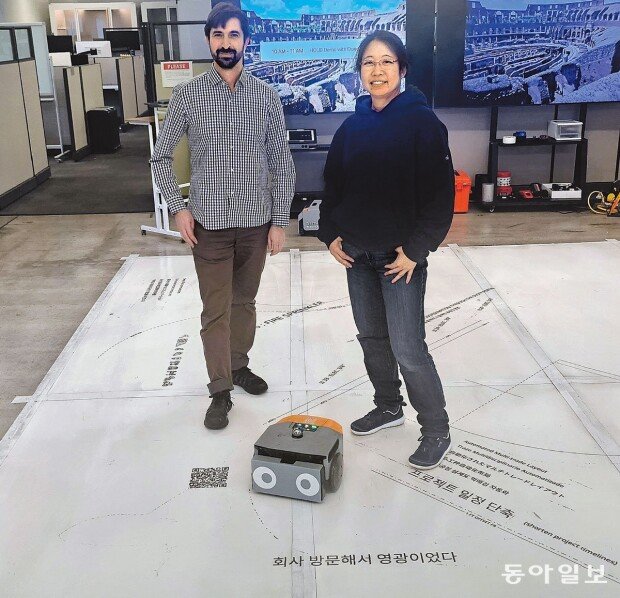
On Dec. 16 last year, local time, at robot startup Dusty Robotics in Mountain View near Silicon Valley in California, a small robot resembling a vacuum cleaner moved briskly across a white floor. As it traveled, the robot marked the surface with design plans showing a building’s layout and the locations of piping, overlaid with construction instructions in multiple languages, including English, Spanish and Korean. Workers of various nationalities on site were able to carry out their tasks without being hindered by language barriers.
The robot is used by major U.S. construction companies at sites such as data centers and apartment complexes. Developed to address labor shortages in the construction industry, the technology has boosted efficiency severalfold compared with traditional methods that required workers to draw floor plans by hand. “When robots draw the plans accurately, people can focus on construction,” said Jack Rice Davis, a senior director at Dusty Robotics.
Silicon Valley’s distinctive model of innovative finance has provided strong fuel for construction robotics to gain traction. Entrepreneurs there often say investors back startups for their first two or three years without demanding immediate profits. Within Silicon Valley’s financial ecosystem, a culture that tolerates 99 failures in pursuit of a single home run has long been firmly established.
Big Tech companies such as Google and Apple, which grew out of this fertile environment of innovative finance, have become pillars of the U.S. stock market. The market’s recent stretch of robust growth, with gains exceeding 20 percent for three consecutive years, is likewise attributed to the performance of innovative companies nurtured by this system. By contrast, in South Korea, where the foundation for innovative finance remains weak, entrepreneurs who have exhausted domestic support and financial institutions seeking investment opportunities alike are increasingly turning to Silicon Valley.








 About Dong-A Ilbo