

U.S. expresses caution over Korea's network law
U.S. expresses caution over Korea's network law
Posted January. 01, 2026 09:37,
Updated January. 01, 2026 09:37
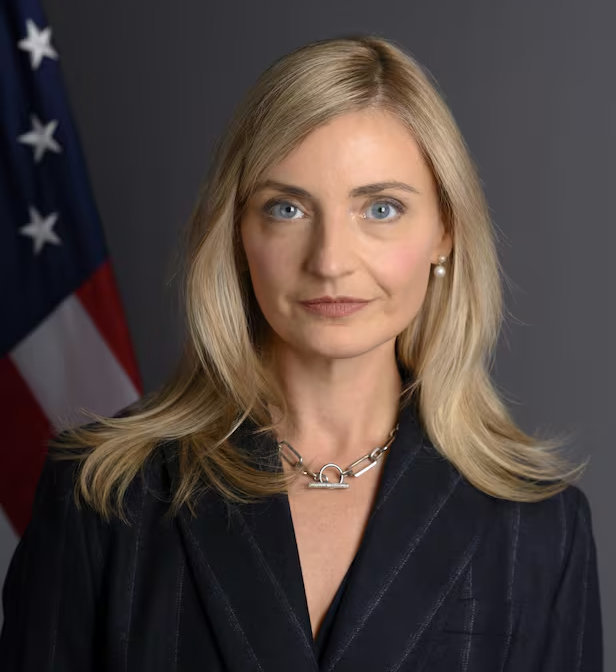
Sarah Rogers, the U.S. undersecretary of state for public diplomacy, has publicly raised concerns about South Korea’s law to eradicate false and manipulated information, an amendment to the Network Act that passed a Cabinet meeting on Dec. 30 last year. She warned that the legislation effectively grants censorship authority to regulators and threatens technological cooperation. The comments again underscore the stance of the Donald Trump administration, which has strongly opposed digital regulations in South Korea, the European Union and other jurisdictions, arguing that such measures place undue constraints on U.S. big tech companies.
In a post on the social media platform X on Dec. 30 local time, Rogers said, “South Korea’s amendment to the Network Act appears on the surface to focus on correcting deepfake-related problems, but in reality it carries far broader implications and puts technology cooperation at risk.” The amendment, which is scheduled to take effect in July, allows punitive damages to be imposed on media outlets and YouTubers found to have deliberately distributed false or manipulated information.
While acknowledging that deepfakes pose a legitimate challenge, Rogers argued that providing civil remedies to victims is more desirable than censorship from the perspective of regulatory authorities. Her remarks reflect the view that government regulators should avoid excessive intervention in matters related to freedom of expression. They are also widely interpreted as signaling concern that, once implemented, the amendment could adversely affect the platform businesses of U.S. technology companies such as YouTube and X.
The U.S. State Department barred entry on Dec. 23 last year to five current and former senior European Union officials, including Thierry Breton, the former EU commissioner for the internal market who spearheaded the bloc’s big tech regulatory legislation. U.S. Secretary of State Marco Rubio criticized the officials, accusing them of exerting systematic pressure on U.S. online platform companies through censorship and measures that restricted their ability to generate revenue. Observers noted that denying entry to senior officials from the EU, a core transatlantic ally of the United States, was an exceptionally rare move.
Washington has repeatedly expressed strong dissatisfaction with the EU’s Digital Services Act, which was enacted in 2022. U.S. officials argue that the law places an excessive burden on American technology companies by allowing regulators to impose hefty fines on large platform operators that fail to curb illegal content, hate speech and misinformation online. Breton and other senior EU officials played a leading role in drafting and advancing the legislation.
The South Korean law targeting false and manipulated information, cited by Rogers, shares notable similarities with the Digital Services Act. The original draft of the amendment explicitly referenced the EU law as its legislative model, stating that it sought to introduce a legal framework that, like the DSA, imposes specific legal obligations on major platform operators to ensure swift responses to illegal and false information.
장은지 기자 jej@donga.com


![“고인 통장에서 장례비 꺼냈는데”…상속포기 무효될 수 있나 [상속리포트]](https://dimg.donga.com/c/138/175/90/1/wps/NEWS/IMAGE/2026/06/26/134181179.3.jpg)




 About Dong-A Ilbo