

South Korea-U.S. move toward nuclear submarine fuel pact
South Korea-U.S. move toward nuclear submarine fuel pact
Posted December. 25, 2025 10:59,
Updated December. 25, 2025 10:59
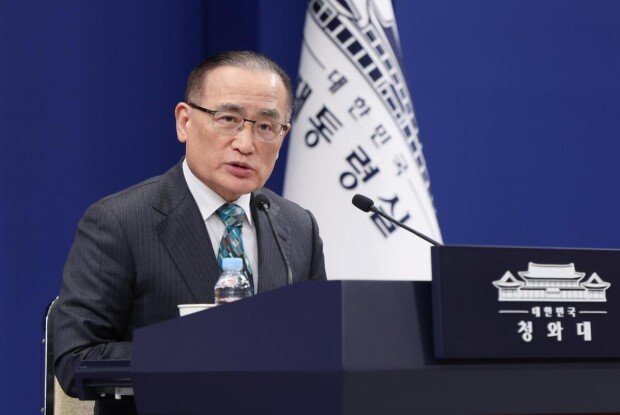
South Korea and the United States have agreed to pursue a separate agreement on nuclear-powered submarines, a move that would open the way for Seoul to receive fuel for such vessels. The plan envisions an exceptional accord allowing the transfer of military nuclear materials, which is otherwise prohibited, enabling South Korea to secure nuclear submarine fuel. Follow-up negotiations on the construction of nuclear-powered submarines, which had raised concerns about potential delays due to differences between the two allies and opposition within the United States, are expected to begin in earnest next year.
National Security Adviser Wi Sung-lac said at a news briefing on Dec. 24 at Chunchugwan, the presidential press room at Cheong Wa Dae, that both sides agreed a separate agreement is necessary for cooperation on nuclear-powered submarines and decided to move forward with it. Wi said he visited the United States, Canada and Japan from Dec. 16 to 22, during which he held talks with senior U.S. officials, including Secretary of State and National Security Adviser Marco Rubio and Energy Secretary Chris Wright.
Under U.S. atomic energy law, the overseas transfer of military nuclear materials is prohibited. However, the two sides plan to pursue a separate agreement that would establish an exception, allowing South Korea to receive fuel for nuclear-powered submarines. U.S. President Donald Trump approved the supply of nuclear submarine fuel during a summit with President Lee Jae-myung on Oct. 29. Australia, which is set to receive nuclear-powered submarines from the United States under the AUKUS agreement, also concluded a separate accord that permits the transfer of special military nuclear materials.
In parallel with negotiations on a separate nuclear submarine agreement, the two countries are expected to discuss revisions to the South Korea-U.S. nuclear cooperation agreement. The current pact, which remains in effect through 2035, prohibits the use of nuclear materials for military purposes. As a result, consultations are also likely to address expanding South Korea’s authority to enrich uranium and reprocess spent nuclear fuel.
Wi said that as early as possible next year, a U.S. working-level delegation will visit South Korea to begin full-scale, issue-by-issue discussions on security-related matters outlined in a joint factsheet.
Wi also said the two sides discussed ways to coordinate South Korea-U.S. policy toward North Korea, with the goal of resuming dialogue with Pyongyang. Regarding the possible lifting of the May 24 measures, South Korea’s unilateral sanctions that include the suspension of inter-Korean trade, he said that issue would likewise require close coordination between the allies.
Addressing controversy over perceived divisions within the South Korean government, Wi said differences between officials who prioritize inter-Korean relations and those who stress coordination under the South Korea-U.S. alliance are well known in the United States and Japan. He said officials in both countries have at times asked which view reflects the South Korean government’s official position. While acknowledging that differing perspectives can exist and may contribute to sounder policy decisions, Wi said it is preferable not to project a confusing image to the international community.
Hoon-Sang Park tigermask@donga.com

![“고혈압 치료? 요즘 세계는 더 빨리, 더 엄격하게 하라고 권장”[베스트 닥터의 베스트 건강법]](https://dimg.donga.com/c/138/175/90/1/wps/NEWS/IMAGE/2026/05/22/133976548.4.jpg)



 About Dong-A Ilbo