

Japan nuclear stance questioned amid regional tensions
Japan nuclear stance questioned amid regional tensions
Posted December. 20, 2025 09:08,
Updated December. 20, 2025 09:08
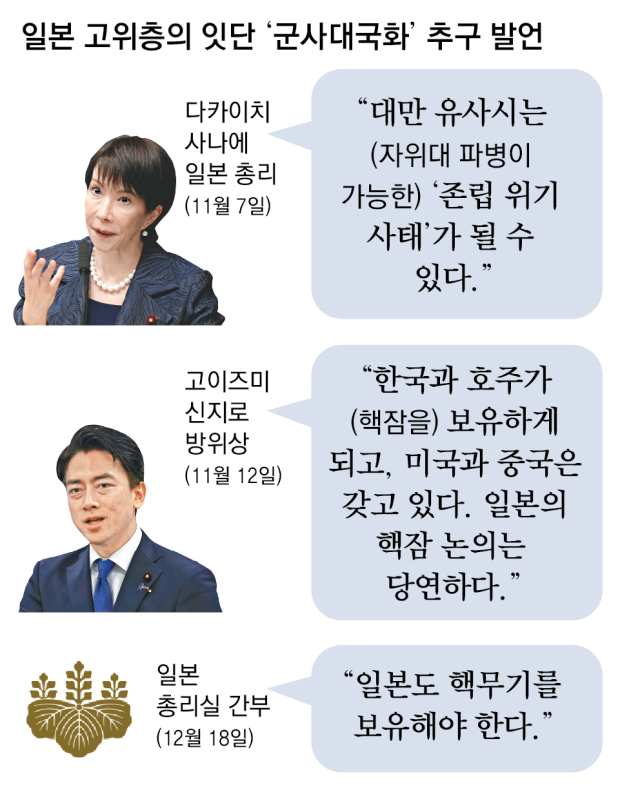
On Dec. 18, Japanese media outlets, including Kyodo News and the Asahi Shimbun, reported that a senior official in charge of security policy at the Japanese prime minister’s office said Japan should possess nuclear weapons. The remark has fueled speculation that Japan may be seeking the redeployment of U.S. tactical nuclear weapons, particularly as it followed last month’s suggestion by Japanese Prime Minister Sanae Takaichi that the country could reconsider its Three Non-Nuclear Principles, which pledge not to produce, possess or allow the introduction of nuclear weapons. Kyodo News said the comment marks a significant departure from the Japanese government’s long-standing position on denuclearization and could provoke backlash both domestically and internationally.
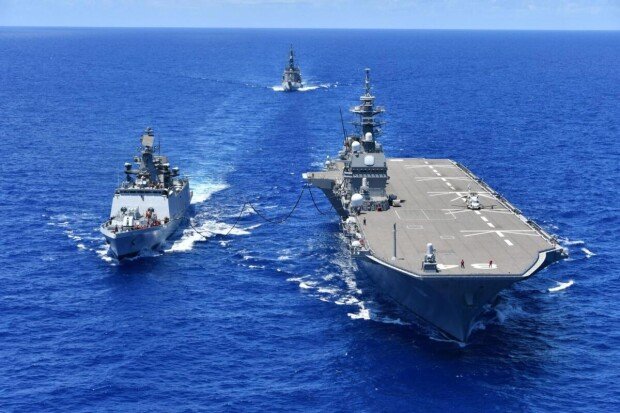
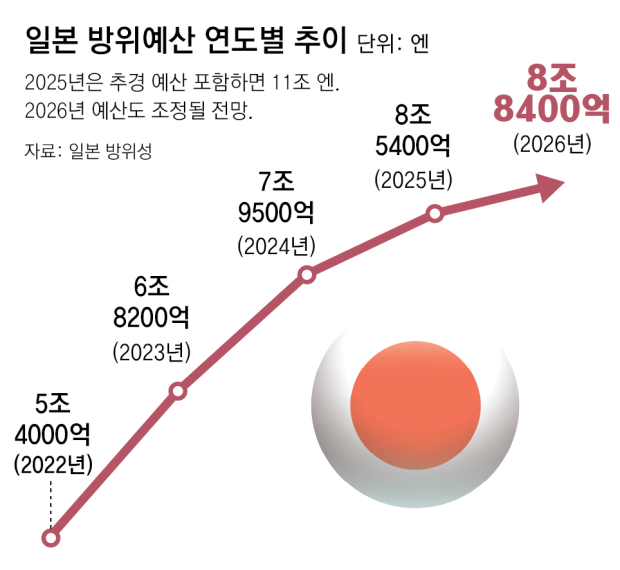
The remark is drawing particular attention because it followed Prime Minister Takaichi’s comments on Nov. 7 about possible intervention in a Taiwan contingency, which heightened military tensions between China and Japan. Citing the need to counter China, Japan has accelerated the deployment of radar systems and missiles near Okinawa and has continued efforts to strengthen its military posture. As part of that push, the government has allocated a record defense budget of about 9 trillion yen, or roughly 85 trillion won, for next year.
● 'Severe security environment surrounding China, Russia and North Korea'
According to Kyodo News and other outlets, the senior official responsible for security policy at the prime minister’s office told reporters, speaking on the condition that it reflected his personal view, “I believe we, meaning Japan, should possess nuclear weapons.” He cited a worsening security environment, including China’s expansion of its nuclear capabilities, nuclear threats from Russia and North Korea’s continued nuclear development. Under such circumstances, he said Japan cannot rely solely on U.S. nuclear deterrence and needs to discuss the option of possessing nuclear weapons. He stressed, however, that no such discussion is currently taking place within the government. The official is reported to be in a position that advises Prime Minister Takaichi on security policy.
Earlier, on Nov. 11, Prime Minister Takaichi responded to a question about the Three Non-Nuclear Principles during a House of Representatives Budget Committee session by saying, “The work will begin from now. It is not the stage to talk about wording,” signaling a possible review of the principle banning the introduction of nuclear weapons. She argued that allowing the introduction of U.S. tactical nuclear weapons would be necessary to strengthen the effectiveness of U.S. extended deterrence. This has led some observers to interpret the prime minister’s office official’s remarks as an attempt to prepare the ground for such a move. The Three Non-Nuclear Principles have remained Japan’s core nuclear policy since they were announced in 1967 by then Prime Minister Eisaku Sato.
Some observers do not rule out the possibility that Japan could pursue its own nuclear weapons development. Japan has operated nuclear fuel reprocessing facilities since revising the Japan-U.S. nuclear agreement in 1988. As a result, Japan is believed to possess about 46 tons of plutonium, an amount sufficient to produce roughly 6,000 atomic bombs.
However, the prevailing view is that Japan would face significant obstacles in possessing nuclear weapons, given the Nuclear Nonproliferation Treaty system, which recognizes only five nuclear-armed states, the United States, Russia, Britain, France and China, as well as strong anti-nuclear sentiment among the Japanese public as the world’s only country to have suffered atomic bombings. Kyodo News reported that “efforts to change Japan’s existing nuclear policy do not align with the sentiments of many citizens who cherish the postwar pacifist constitution,” noting that Shinji Nishimura, then parliamentary vice defense minister, was ultimately dismissed in 1999 after saying Japan should consider nuclear armament.
As the controversy over the remarks grew, the Japanese government moved quickly to contain the fallout. At a news conference, Chief Cabinet Secretary Minoru Kihara, the government’s top spokesman, said, “I will not comment on individual media reports,” while adding that “the government continues to adhere to the Three Non-Nuclear Principles as a matter of policy.”
● Japanese defense minister says nuclear submarine debate is natural
Since its launch in October, the Takaichi administration has focused on strengthening military capabilities. On Nov. 12, Defense Minister Shinjiro Koizumi said regarding the introduction of nuclear-powered submarines, “South Korea and Australia will possess them, and the United States and China already have them,” adding that “it is natural to discuss new propulsion systems for submarines if we are to enhance our deterrence and response capabilities.”
According to the Yomiuri Shimbun, Japan’s Defense Ministry has decided to establish a dedicated space division next year to prepare for the weaponization of satellites by China and Russia. It also plans to rename the Air Self-Defense Force as the Aerospace Self-Defense Force and to expand the Air Self-Defense Force’s Space Operations Squadron into a Space Operations Group within a year. Japan plans to raise its defense budget to a record 9 trillion yen next year to fund organizational restructuring at the Defense Ministry and the Air Self-Defense Force, as well as the expansion of long-range missiles and unmanned aerial vehicles, or drones.
In-Chan Hwang hic@donga.com





 About Dong-A Ilbo