

PiQuant: “Providing Versatile Spectroscopy Solutions That Scale Across Industries”
PiQuant: “Providing Versatile Spectroscopy Solutions That Scale Across Industries”
Posted December. 17, 2025 10:36,
- PiQuant specializes in miniaturizing advanced spectroscopy technology, making it accessible for applications in environmental monitoring, food safety, and healthcare.
- Their product lineup includes portable devices for air and water quality analysis, foreign object detection, and the innovative Turbidity Scanner, which enables remote, continuous water monitoring without complex infrastructure.
- Supported by the Seoul R&D Support Program and SBA, PiQuant aims for a global launch in 2026, striving to become a key player in quantifying substances for health and safety worldwide.
PiQuant is a solution provider specializing in spectroscopy—a technology that analyzes changes in light wavelengths to quantitatively measure the components and concentrations of substances. By shrinking high-end laboratory technology into portable devices, PiQuant is commercializing spectroscopy for diverse applications in environment, food safety, and healthcare.
The company’s portfolio includes AirQuant, an indoor air quality monitoring solution; Water Scanner, a portable microbial analyzer; stationary toxic gas detectors; and foreign object detection solutions. Most recently, through the "Seoul R&D Support Program" hosted by the Seoul Metropolitan Government and the SBA (Seoul Business Agency), PiQuant developed a "Turbidity Scanner" for water treatment facilities. The company plans to showcase these solutions at major international stages, including CES 2026. We sat down with CEO Do-yeon Pi to discuss the future of spectroscopy-based solutions.
Solving Real-World Problems Through Miniaturization
Could you start by introducing yourself and what led you to found PiQuant?
I spent 15 years as a hardware and software developer before founding PiQuant in July 2015. My goal was to create spectroscopy-based solutions that solve immediate field problems in environmental and health sectors.
For those unfamiliar, what exactly is spectroscopy?
It’s a technique that identifies the composition and concentration of a substance by analyzing how light interacts with it. Since it doesn’t require physical contact and doesn’t damage the sample, it’s ideal for non-destructive testing. We apply this to everything from air quality to food safety.
What inspired you to focus on this specific technology?
It started with smart farming. I realized we lacked precise data on plant health and mostly relied on internet searches rather than direct analysis. I wanted a way to "ask" the plant directly. I discovered spectroscopy, but at the time, the equipment was massive and expensive, confined to elite laboratories. I saw a massive market gap: if I could miniaturize this technology, anyone could use it anywhere. We were among the first globally to successfully commercialize a miniaturized software-hardware integrated spectroscopy solution.
A Growing Ecosystem of Analysis Solutions
Tell us more about the products you’ve developed.
Our name combines my surname 'Pi' with 'Quant' (quantitative analysis). It also plays on the French word piquant, meaning 'interesting' or 'stimulating.' Our core products include:
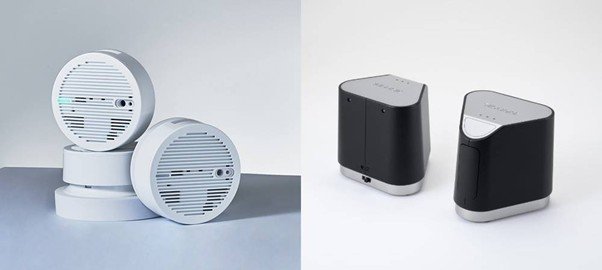
• AirQuant: Simultaneously measures 14 different factors, including harmful gases, fine dust, and CO2. It integrates with HVAC systems to optimize energy efficiency and sterilization.
• Water Scanner: A portable device that detects bacteria and viruses in water in under 10 seconds—a process that traditionally takes over 24 hours. This led to a partnership with the Bill & Melinda Gates Foundation for water improvement projects in developing nations.
• Foreign Object Detection: High-speed sensors for food production and semiconductor lines that detect contaminants without slowing down the conveyor belt.
Your latest innovation is the Turbidity Scanner. How does it differ from existing equipment?
Traditional turbidity meters require complex plumbing, pumps, or manual sampling in glass jars. Our scanner requires no additional infrastructure. It’s a "clamp-on" design that attaches like a clothespin to any existing pipe or tank. It provides lab-grade accuracy in flowing water, unaffected by debris or bubbles, and allows for remote monitoring via a dedicated app.
What were the biggest challenges in developing the Turbidity Scanner?
Since there was no existing reference for such a portable, continuous-measurement device, the design phase was difficult. Optical technology is extremely sensitive to noise. We overcame this by collaborating with professors from Gachon, Sejong, and Hanyang Universities to apply fluid dynamics to our noise-reduction design. We also refined the product through Proof of Concept (PoC) trials at actual water treatment plants provided by K-water (Korea Water Resources Corporation) and supported by the KEITI (Korea Environmental Industry & Technology Institute) and SBA.
How has the SBA influenced PiQuant’s growth?
Beyond R&D funding for the Turbidity Scanner, the SBA has been a vital matchmaker. They connected us with Mercedes-Benz for breathalyzer development and Hyundai Engineering & Construction for toxic gas detection at construction sites. Furthermore, through their youth employment programs, we’ve recruited top-tier developers who are now core members of our team.
What is the ultimate goal for PiQuant?
We aim for a full-scale global launch in 2026. After showcasing at CES 2026, we will aggressively target the global water and food safety markets. Our mission is to quantify every substance in the world, providing data that can't be found on a search engine. We want PiQuant’s technology to be the invisible guardian of health and safety in every corner of the globe.
By Man-hyuk Han (mh@itdonga.com)
* This article was written with support from SBA and Seoul City.
- Their product lineup includes portable devices for air and water quality analysis, foreign object detection, and the innovative Turbidity Scanner, which enables remote, continuous water monitoring without complex infrastructure.
- Supported by the Seoul R&D Support Program and SBA, PiQuant aims for a global launch in 2026, striving to become a key player in quantifying substances for health and safety worldwide.
PiQuant is a solution provider specializing in spectroscopy—a technology that analyzes changes in light wavelengths to quantitatively measure the components and concentrations of substances. By shrinking high-end laboratory technology into portable devices, PiQuant is commercializing spectroscopy for diverse applications in environment, food safety, and healthcare.
The company’s portfolio includes AirQuant, an indoor air quality monitoring solution; Water Scanner, a portable microbial analyzer; stationary toxic gas detectors; and foreign object detection solutions. Most recently, through the "Seoul R&D Support Program" hosted by the Seoul Metropolitan Government and the SBA (Seoul Business Agency), PiQuant developed a "Turbidity Scanner" for water treatment facilities. The company plans to showcase these solutions at major international stages, including CES 2026. We sat down with CEO Do-yeon Pi to discuss the future of spectroscopy-based solutions.
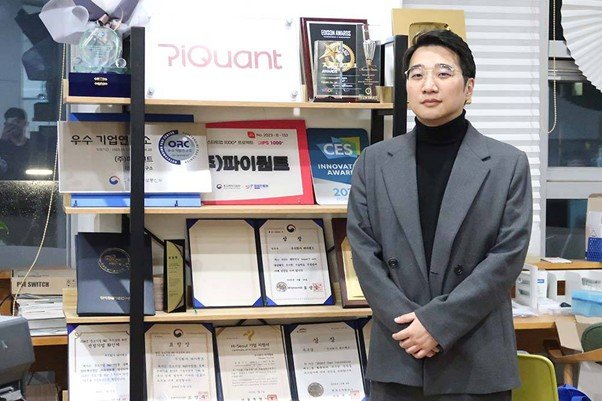
Do-yeon Pi, CEO of PiQuant / source=IT dongA
Solving Real-World Problems Through Miniaturization
Could you start by introducing yourself and what led you to found PiQuant?
I spent 15 years as a hardware and software developer before founding PiQuant in July 2015. My goal was to create spectroscopy-based solutions that solve immediate field problems in environmental and health sectors.
For those unfamiliar, what exactly is spectroscopy?
It’s a technique that identifies the composition and concentration of a substance by analyzing how light interacts with it. Since it doesn’t require physical contact and doesn’t damage the sample, it’s ideal for non-destructive testing. We apply this to everything from air quality to food safety.
What inspired you to focus on this specific technology?
It started with smart farming. I realized we lacked precise data on plant health and mostly relied on internet searches rather than direct analysis. I wanted a way to "ask" the plant directly. I discovered spectroscopy, but at the time, the equipment was massive and expensive, confined to elite laboratories. I saw a massive market gap: if I could miniaturize this technology, anyone could use it anywhere. We were among the first globally to successfully commercialize a miniaturized software-hardware integrated spectroscopy solution.
A Growing Ecosystem of Analysis Solutions
Tell us more about the products you’ve developed.
Our name combines my surname 'Pi' with 'Quant' (quantitative analysis). It also plays on the French word piquant, meaning 'interesting' or 'stimulating.' Our core products include:
• AirQuant: Simultaneously measures 14 different factors, including harmful gases, fine dust, and CO2. It integrates with HVAC systems to optimize energy efficiency and sterilization.
• Water Scanner: A portable device that detects bacteria and viruses in water in under 10 seconds—a process that traditionally takes over 24 hours. This led to a partnership with the Bill & Melinda Gates Foundation for water improvement projects in developing nations.
• Foreign Object Detection: High-speed sensors for food production and semiconductor lines that detect contaminants without slowing down the conveyor belt.
AirQuant(left) and Water Scanner(right) of PiQuant / source=PiQuant
Your latest innovation is the Turbidity Scanner. How does it differ from existing equipment?
Traditional turbidity meters require complex plumbing, pumps, or manual sampling in glass jars. Our scanner requires no additional infrastructure. It’s a "clamp-on" design that attaches like a clothespin to any existing pipe or tank. It provides lab-grade accuracy in flowing water, unaffected by debris or bubbles, and allows for remote monitoring via a dedicated app.
What were the biggest challenges in developing the Turbidity Scanner?
Since there was no existing reference for such a portable, continuous-measurement device, the design phase was difficult. Optical technology is extremely sensitive to noise. We overcame this by collaborating with professors from Gachon, Sejong, and Hanyang Universities to apply fluid dynamics to our noise-reduction design. We also refined the product through Proof of Concept (PoC) trials at actual water treatment plants provided by K-water (Korea Water Resources Corporation) and supported by the KEITI (Korea Environmental Industry & Technology Institute) and SBA.
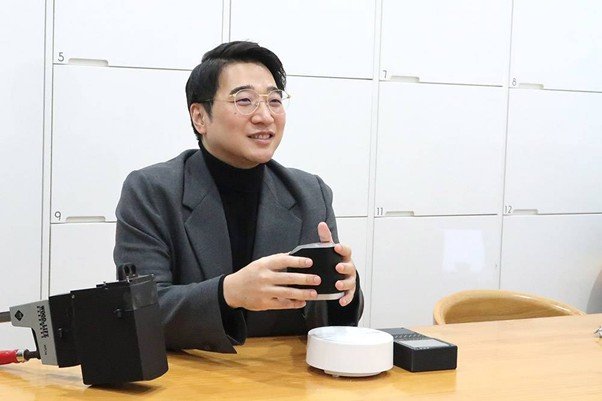
Do-yeon Pi, CEO of PiQuant / source=IT dongA
How has the SBA influenced PiQuant’s growth?
Beyond R&D funding for the Turbidity Scanner, the SBA has been a vital matchmaker. They connected us with Mercedes-Benz for breathalyzer development and Hyundai Engineering & Construction for toxic gas detection at construction sites. Furthermore, through their youth employment programs, we’ve recruited top-tier developers who are now core members of our team.
What is the ultimate goal for PiQuant?
We aim for a full-scale global launch in 2026. After showcasing at CES 2026, we will aggressively target the global water and food safety markets. Our mission is to quantify every substance in the world, providing data that can't be found on a search engine. We want PiQuant’s technology to be the invisible guardian of health and safety in every corner of the globe.
By Man-hyuk Han (mh@itdonga.com)
* This article was written with support from SBA and Seoul City.


![[사설]“尹 계엄 하려 北 도발 유도”… 무지한 건지, 무모한 건지](https://dimg.donga.com/c/138/175/90/1/wps/NEWS/IMAGE/2026/06/12/134104085.1.jpg)




 About Dong-A Ilbo