

South Korea faces AI talent shortage in science
South Korea faces AI talent shortage in science
Posted December. 12, 2025 08:34,
Updated December. 12, 2025 08:34
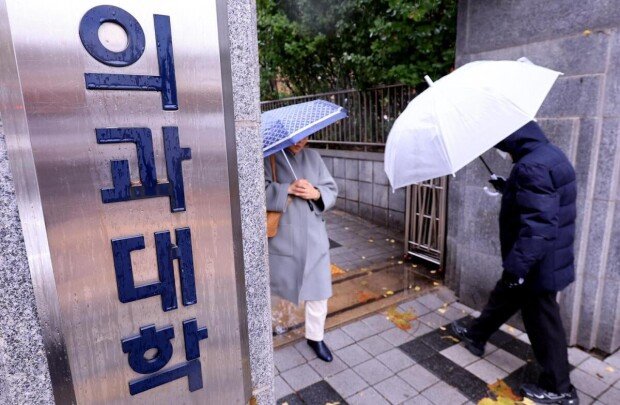
A new forecast shows South Korea will face a shortage of at least 580,000 skilled workers in advanced industries, including artificial intelligence, over the next five years. The study also found that the average salary for science and engineering professionals in the country amounts to only one third of physicians’ pay, highlighting weak incentives for top talent to pursue careers in these fields.
The report, released Dec. 11 by the Korea Chamber of Commerce and Industry and authored by Kim In-ja of the Korea Institute of Science and Technology Evaluation and Planning, projects that between 2025 and 2029, South Korea will lack 580,000 science and engineering specialists. The shortfall includes 287,000 high-skilled workers and 292,000 mid-skilled professionals in sectors such as artificial intelligence, cloud computing, and big data.
The chamber stressed that the projected shortfall represents a minimum estimate, warning that the gap could widen as investment in artificial intelligence grows at an exponential pace. It noted that major U.S. tech companies, including Microsoft, Amazon, Google, and Oracle, plan to invest a combined $520 billion next year, or roughly 765 trillion won, potentially intensifying global competition for talent.
The report cited two main causes for the domestic shortage: a declining school-age population due to low birth rates and a shrinking inflow of high-skilled talent into science and engineering fields. In the 2025 academic year, 76.9 percent of students in the top 1 percent of natural science tracks chose to enter schools of medicine, while only 10.3 percent pursued natural science majors. Kim noted that between 2021 and 2023, 182 students left KAIST to seek admission to medical or dental schools.
The study emphasized the need to raise compensation for science and engineering professionals. Drawing on data from the Bank of Korea and the Ministry of Health and Welfare, it found that a worker with 10 years of experience in these fields earns an average of 97.4 million won, roughly one third of the 300 million won average for physicians. The figure is also just one quarter of the 390 million won earned by science and engineering professionals with a decade of experience working overseas.
Job stability also varies sharply between the two fields. A survey by the Korea Research Institute for Vocational Education and Training found that 30 percent of new Ph.D. holders in science and engineering remained unemployed, while 21.3 percent were in temporary positions. By contrast, physicians maintained full employment across all age groups.
Lee Jong-myeong, head of industrial innovation at the Korea Chamber of Commerce and Industry, said South Korea must prioritize artificial intelligence to secure the future of its manufacturing sector. He added that the most urgent task is to create an incentive system that draws both domestic and international talent to emerging technologies.
박현익 기자 beepark@donga.com

![[오늘의 운세/7월 8일]](https://dimg.donga.com/c/138/175/90/1/wps/NEWS/IMAGE/2026/07/07/134255552.1.jpg)

![매년 30억 쓰며 노화 막던 억만장자, 완치법 없는 자가면역질환 진단 [노화설계]](https://dimg.donga.com/c/138/175/90/1/wps/NEWS/IMAGE/2026/07/07/134249064.3.jpg)


 About Dong-A Ilbo