

Taiwan emerges as focus in Trump-Xi phone call
Taiwan emerges as focus in Trump-Xi phone call
Posted November. 26, 2025 07:40,
Updated November. 26, 2025 07:40
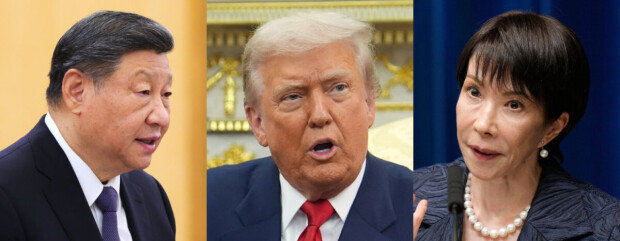
Chinese President Xi Jinping held a roughly one-hour phone call with U.S. President Donald Trump on November 24. During the call, Xi said, “Taiwan’s return to China is an important component of the postwar international order,” according to the state-run Xinhua News Agency. He added, “China and the United States have historically stood together against fascism and militarism, and now must jointly safeguard the achievements of victory in World War II.”
Amid rising tensions between China and Japan following Japanese Prime Minister Sanae Takaichi’s remarks about intervening in a potential Taiwan contingency, analysts said Xi used the call to clearly explain China’s stance on Taiwan and manage the situation to Beijing’s advantage. According to The Wall Street Journal, Xi unusually initiated the conversation, marking one of the rare occasions in recent decades that a Chinese top leader contacted a U.S. president first. The previous instance was during the September 11 attacks in 2001.
Xinhua reported that Trump told Xi, “The United States understands that Taiwan is very important to China.” Analysts interpreted the comment as signaling Trump’s willingness to prioritize relations with China over supporting a key U.S. ally, Japan, amid ongoing strategic competition. Some observers suggested Trump may be signaling a readiness to yield on Taiwan in order to extract further concessions from China on trade negotiations or gain cooperation on security matters, including ending the war in Ukraine.
After speaking with Xi, Trump also held a roughly 20-minute phone call with Prime Minister Takaichi. On November 25, Takaichi told reporters, “The call took place at the request of President Trump. We exchanged broad views on strengthening the alliance and the Indo-Pacific situation, and he also explained the content of the U.S.-China leaders’ conversation.” She emphasized that Trump told her, “We are close friends. Call anytime.”
Trump posted on Truth Social that he discussed a wide range of topics with Xi, including Ukraine and Russia, fentanyl, soybeans and other agricultural products. He also said Xi invited him to visit Beijing in April next year, which he accepted, and that he plans to host Xi in the United States for a state visit. Xi previously visited the United States in April 2017 during Trump’s first term, but that trip was not an official state visit. The Wall Street Journal noted that Trump’s decision not to mention Taiwan during the call could increase concerns among U.S. regional allies about America’s commitment to its alliances.
Jin-Woo Shin niceshin@donga.com








 About Dong-A Ilbo