

Samsung foundry secures Tesla AI chip production orders
Samsung foundry secures Tesla AI chip production orders
Posted October. 24, 2025 07:23,
Updated October. 24, 2025 07:23
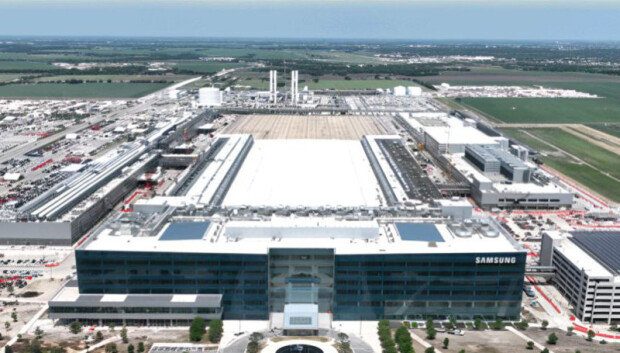
Samsung Electronics has broken TSMC’s dominance over Tesla chip supply by joining production of the automaker’s next-generation AI5 semiconductor for autonomous driving. The win marks a revival for Samsung’s foundry business, long considered a weak spot, as it lands contracts with global tech firms and is expected to equip the Galaxy S26 with its Exynos 2600 processor.
On Oct. 22, Tesla CEO Elon Musk told investors that Samsung would join TSMC in producing the AI5 chip. Tesla’s AI semiconductors enable vehicle autonomy and are slated for use in humanoid robots.
Samsung currently produces Tesla’s AI4 chip. Tesla planned for TSMC to handle AI5 and return to Samsung for AI6, but Musk has confirmed Samsung will also participate in AI5 production.
Industry analysts say the move strengthens Tesla and Samsung’s manufacturing partnership. Some suggest Samsung’s foundry capabilities impressed Tesla during AI6 discussions, prompting earlier involvement in AI5 production.
A semiconductor industry official said Samsung’s involvement from AI4 through AI6 shows confidence in its foundry technology and reduces sole reliance on TSMC for AI5.
AI5 and AI6 are likely to be produced at Samsung’s new Taylor plant in Texas, scheduled to begin operations next year. AI4 is already in mass production at Samsung’s Pyeongtaek plant in South Korea.
After posting quarterly losses last year, Samsung’s system semiconductor units, including LSI and foundry divisions, are staging a comeback with consecutive contract wins.
In July, Samsung signed a 23 trillion won contract with Tesla to produce the AI6 chip. In August, it secured a design and manufacturing deal with Apple for iPhone image sensors, known as CIS.
Reports that Samsung’s Exynos 2600 will likely power next year’s Galaxy S26 have raised expectations for a performance rebound. The Galaxy S25 used only Qualcomm Snapdragon chips. Samsung’s foundry division could also benefit from the mass production of next-generation high-bandwidth memory, HBM4.
“These contracts reflect global tech firms’ lower dependence on TSMC and improving Samsung foundry yields, a trend that could expand South Korea’s semiconductor ecosystem,” said Kim Jung-ho, a professor of electrical and electronic engineering at KAIST.
이동훈 기자 dhlee@donga.com







 About Dong-A Ilbo