

Sweden Ends Two Centuries of Neutrality : “We’re Not at War, But Not in Peace Either.”
Sweden Ends Two Centuries of Neutrality : “We’re Not at War, But Not in Peace Either.”
Posted October. 18, 2025 12:16,
Updated October. 18, 2025 12:38
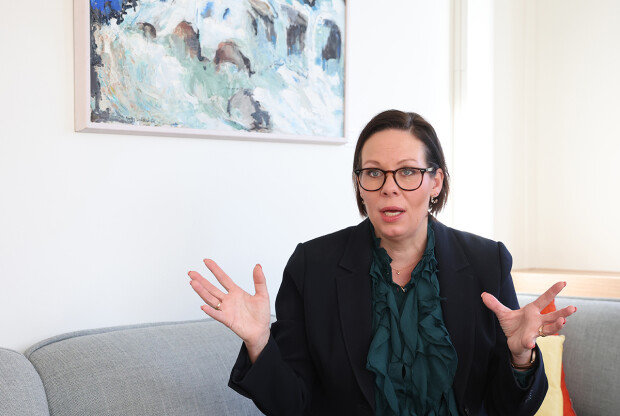
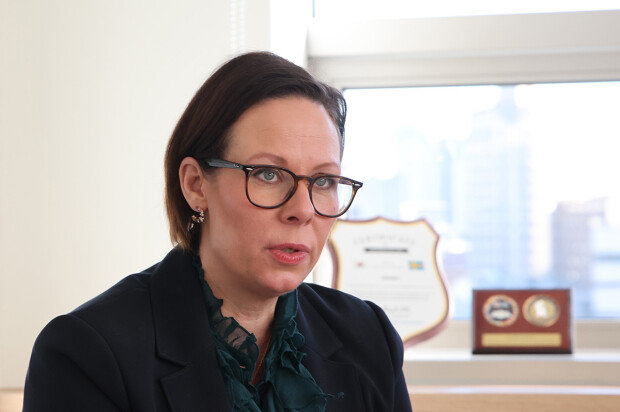
Maria Malmer Stenergard, Sweden's Foreign Minister.
"We have a historical duty to resist Russian power expansion and help Ukraine win the war."
This statement came from Maria Malmer Stenergard, Sweden's Foreign Minister, during a speech to the Swedish diplomatic corps last November. The following month, ahead of a NATO Foreign Ministers' meeting, she declared, "We must prepare for a long-term confrontation with Russia."
Sweden officially joined NATO in March last year, abandoning its 210-year neutrality policy. The newly non-neutral nation was already issuing direct and hardline messages about Russia's invasion of Ukraine.
Sweden's foreign policy—advocating for NATO unity and full support for Ukraine—is now led by this 44-year-old minister. She took over last October after her predecessor finalized NATO membership. Stenergard is now making Sweden's presence within NATO distinctly felt through her blunt statements.
● Blunt Rhetoric Asserts Presence: "Prepare for Long-Term Confrontation with Russia"
Born in 1981, Minister Stenergard followed an elite conservative political track. A member of the center-right Moderate Party, she entered parliament in 2014 and rose to foreign minister within ten years.
In October 2022, she was appointed Minister for Migration and Refugee Policy in Ulf Kristersson's cabinet, tasked with implementing strengthened immigration restrictions while cooperating with the Sweden Democrats, a party with far-right origins.
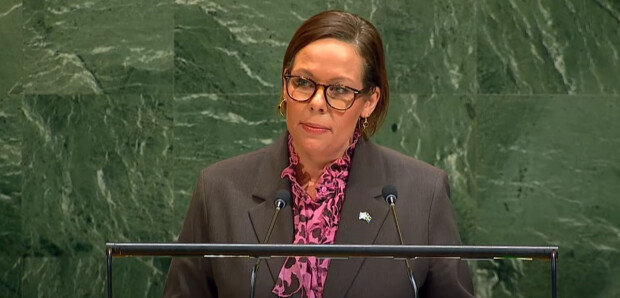
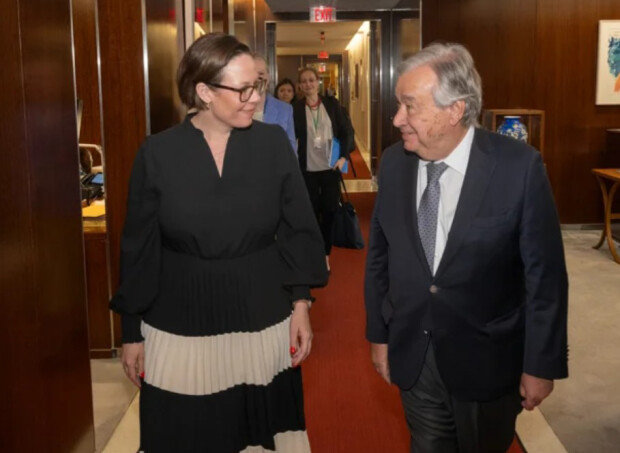
Minister Stenergard is known for her direct rhetoric. In a January defense conference speech, she stated, "There is no question what the core task of Swedish foreign and security policy is. It centres on constraining Russia, especially by supporting Ukraine."
During her September UN General Assembly speech, she declared, "Russia is the aggressor, and aggression must never be rewarded. Crimea is Ukraine. So are Donetsk, Luhansk, Kherson, and Zaporizhzhia."
● Korean and European Security Closely Linked
Minister Stenergard displayed her characteristic blunt rhetoric in an interview with The Dong-A Ilbo at the Swedish Embassy in Seoul on the 16th. "In a conflict between right and wrong, democracy and dictatorship, the answer is not neutrality or non-alignment—it's taking a stand," she stated. She visited Korea for two days coinciding with Crown Princess Victoria's official visit.
She also criticized North Korea's troop deployment to Russia at the Stockholm China Forum in May, stating that "deepened military cooperation between Russia and North Korea has consequences for both Europe and Asia." On China, she stated directly that Sweden, the EU, and NATO are critical of "China's support for Russia's war, which negatively impacts European security and China's image in Europe."
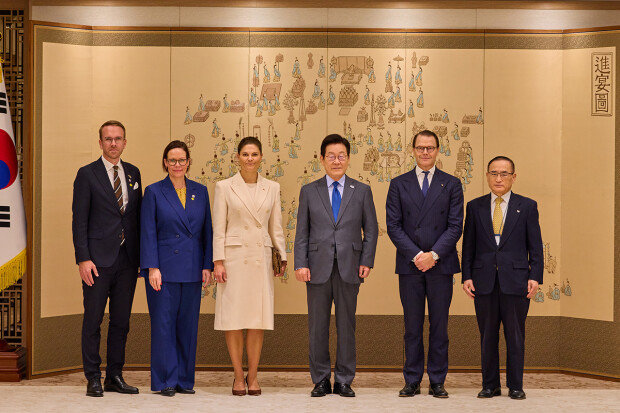
Regarding North Korea's troop deployment to Russia, she emphasized that "North Korea sending troops to Russia to fight against Ukraine shows how interlinked security is between this region and Europe." She added, "The fact that China is also a decisive enabler of Russia's war is extremely worrying."
"After the Second World War, the world decided to create new frameworks for how countries should behave toward each other, with the UN Charter as the base," she noted. "Now we have a permanent member of the UN Security Council that has, without any provocation, attacked another UN member." She continued, "Countries like South Korea who are like-minded and standing up for international law and the rules-based world order really have to be strong in this very difficult time."
"I think it's the right thing to do to collaborate with other democracies to promote peace and freedom in the world," she said, emphasizing that "Russia will pose long-term threats to Europe for at least a generation." She added, "We're not at war, but we're not in peace either."
"A lot of my time at work is spent persuading other countries to contribute more," she stressed. "We need a mechanism for the long term." She emphasized, "Ukrainians are not only fighting for their freedom but also for our freedom."
● "Neither at War Nor at Peace"
Regarding Sweden's NATO membership, she explained that the Swedish people and Northern Europe were shocked by Russia's invasion. She emphasized the importance of nations participating in common alliances.
Sweden maintained neutrality for 210 years since 1814, avoiding Nazi invasion during World Wars I and II and maintaining this stance during the Cold War. It was regarded as genuinely neutral in Cold War Europe. After the Cold War, Sweden reduced its army by 90% in the 1990s. Russia's February 2022 invasion of Ukraine changed everything.
With Sweden's NATO accession following Finland, the Baltic Sea has effectively become "NATO's lake." Eight NATO countries now completely surround Russia's key Baltic naval stronghold, including the exclave of Kaliningrad and St. Petersburg.
NATO is expected to rebuild its defense line centered on Sweden's southeastern Gotland island. Foreign Minister Stenergard sees Sweden's strategic position playing a major role in NATO cooperation. Sweden aims to increase military investment to 3.5% of GDP by 2030.
Sweden's NATO accession marks not just a military realignment but a fundamental shift in national identity. While the government emphasizes collective defense, the country now faces the challenge of balancing its new commitments with traditional Swedish values of dialogue and mediation.
While NATO membership enjoys broad public support among Swedes, many still hold a deep attachment to their country's legacy as a neutral nation that championed peace and embodied a spirit of respect toward all nations.
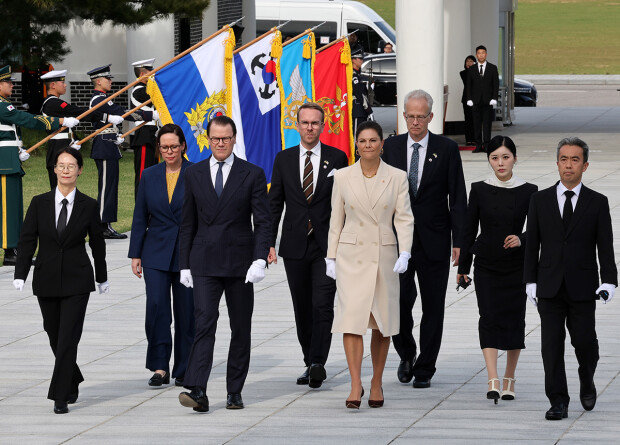
On the 15th, Minister Stenergard joined Crown Princess Victoria of Sweden at the Neutral Nations Supervisory Commission at Panmunjom, where Sweden has served as a neutral observer since the 1953 Korean War armistice—a symbol of Sweden's longstanding role as an international mediator. "It shows that we have a unique role," Minister Stenergard noted.
● Security and Industrial Cooperation with Korea
Sweden is a defense industry powerhouse with advanced weapons systems including Saab's Gripen fighter jets and submarines. "We provide good geography for NATO but also unique capabilities in the marine sector and defense," she said.
During her meeting with Foreign Minister Cho Hyun on the 16th, Stenergard mentioned mutual cooperation in various manufacturing sectors including the defense industry.
She mentioned Korea's semiconductor industry, stating that semiconductors are "of course something that should be put in a security context." She explained, "We need to diversify the supply chains for the development of new technologies and green transition. That is something we could definitely collaborate on."
Regarding the Trump administration's push for European defense spending increases, she stated that "in every single statement by every representative of the administration, they have been very clear that they are military allies and will stand up for Article 5." She added, "Since Eisenhower, they have tried to have Europe spend more on defense and take a bigger share of responsibility in defending the alliance. I think they're actually right, and it's a bit sad that we haven't invested more at an earlier stage."
Hyun-Seok Lim lhs@donga.com




 About Dong-A Ilbo