

Seoul, southern Gyeonggi hit by strict housing rules
Seoul, southern Gyeonggi hit by strict housing rules
Posted October. 16, 2025 07:40,
Updated October. 16, 2025 07:40
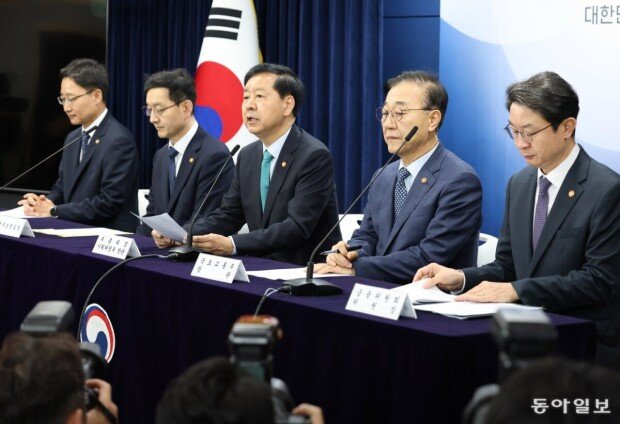
Seoul and 12 southern Gyeonggi regions have been designated as land transaction permission zones and regulatory areas, including speculative overheating and adjustment zones. The government introduced the measures after previous policies failed to stabilize prices along the Han River belt, aiming to block purchases using loans or jeonse deposits.
On Oct. 15, the government announced its Housing Market Stabilization Measures, designating all 25 Seoul districts and 12 areas in southern Gyeonggi as regulatory zones, effective Oct. 16. The Gyeonggi areas include Gwacheon, Gwangmyeong, Bundang, Sujeong and Jungwon districts in Seongnam; Yeongtong, Jangan and Paldal districts in Suwon; Dongan District in Anyang; Suji District in Yongin; Uiwang; and Hanam. From Oct. 20, apartments and apartment-inclusive multi-unit homes in these zones will also require local government approval to buy. While past administrations designated parts of the Seoul metropolitan area and major cities as regulatory zones, this is the first time such measures cover all of Seoul and southern Gyeonggi.
Under the land transaction permission rules, properties can only be purchased for actual residence, effectively banning “gap investments” that use jeonse deposits. Loan limits have also been tightened. Mortgages for homes over 1.5 billion won are capped at 400 million won, and those over 2.5 billion won are limited to 200 million won. Loans for homes under 1.5 billion won remain at 600 million won, but the loan-to-value ratio in regulatory areas has been cut from 70 percent to 40 percent, reducing borrowing even for mid- and low-priced homes under 900 million won.
Jeonse loans are also restricted. Single homeowners in regulatory areas are limited to 200 million won, with guarantees capped at 80 percent. Interest payments on these loans will now count toward the debt service ratio for residents in Seoul and other regulatory zones. Acquisition taxes for multi-homeowners have been raised, with two-homeowners paying 8 percent and three-homeowners 12 percent.
The measures also include a real estate tax rationalization plan to adjust holding and transaction taxes. Property taxes, including comprehensive real estate and local taxes, are expected to rise, while transaction taxes may be reduced. The government also signaled possible tax increases in certain areas to curb concentrated demand.
The plan does not include new housing supply initiatives. A Ministry of Land, Infrastructure and Transport official said detailed plans for redeveloping aging government buildings and public land, along with key candidate sites, will be announced later this year.
윤명진 기자 mjlight@donga.com

![[오늘의 운세/7월 8일]](https://dimg.donga.com/c/138/175/90/1/wps/NEWS/IMAGE/2026/07/07/134255552.1.jpg)
![매년 30억 쓰며 노화 막던 억만장자, 완치법 없는 자가면역질환 진단 [노화설계]](https://dimg.donga.com/c/138/175/90/1/wps/NEWS/IMAGE/2026/07/07/134249064.3.jpg)





 About Dong-A Ilbo