

Munich Turns into World’s Largest Mobility Showroom
Munich Turns into World’s Largest Mobility Showroom
Posted September. 10, 2025 07:30,
Updated September. 10, 2025 07:30
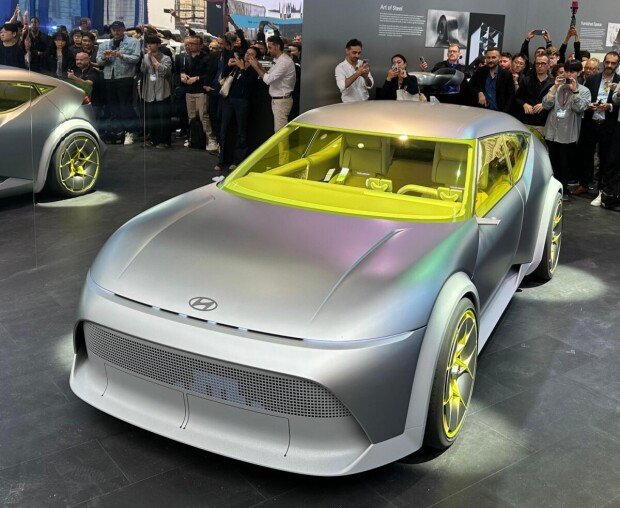
On Sept. 9 local time, a spectacle not seen at traditional motor shows unfolded in Munich, Germany. The latest electric vehicles appeared at Marienplatz in the old town, while new models from BMW and Mercedes-Benz lined subway station entrances, making the entire city feel like a vast showroom.
This was the result of IAA Mobility’s bold transformation as it sought new paths amid an unprecedented crisis for international motor shows. In January, the North American International Auto Show in Detroit was diminished by the absence of major brands, while the Geneva International Motor Show ended its 119-year history by announcing permanent closure last year.
Recognizing that survival was no longer possible through the conventional format of new-car debuts, organizers moved the venue to Munich in 2021, added “Mobility” to the name and revamped the event’s structure. A striking feature was the Open Space strategy in the city center. IAA Mobility turned areas such as Marienplatz, Odeonsplatz, and Königsplatz into free exhibition zones, allowing citizens to view and test drive new cars without paying admission.
This strategy has established the event as Germany’s largest city-center festival. In 2023, more than 500,000 visitors attended, 30% of them from 109 countries. A total of 750 companies from 38 nations showcased more than 300 world premieres and innovative technologies. In 2025, more than 55% of exhibitors are from outside Germany, with Chinese brands making inroads and Hyundai Motor and Kia expanding their booths.
South Korea hosts mobility shows alternately in Seoul and Busan, but debates continue over their viability. Kim Pil-soo, professor of future automotive studies at Daelim University, said, “It has become difficult for mobility shows in traditional formats to survive. One way forward is to reimagine the shows by incorporating globally popular K-culture.”
Jae-Hyeng Kim monami@donga.com

![[사설]2026 월드컵 참사… ‘카르텔과 독단’에 무너진 한국 축구](https://dimg.donga.com/c/138/175/90/1/wps/NEWS/IMAGE/2026/06/28/134198330.1.jpg)


 About Dong-A Ilbo