

Raids shock Koreans, halt Georgia factory projects
Raids shock Koreans, halt Georgia factory projects
Posted September. 08, 2025 08:10,
Updated September. 08, 2025 08:10
“We were deeply shocked by the sudden and opaque raids that appeared to target Korean nationals.”
Kim Gap-song, head of the Korean American Service and Education Consortium (KASEC) in New York, told the Dong-A Ilbo in a phone interview on Sept. 6 local time that fear and anger were sweeping the Korean community.
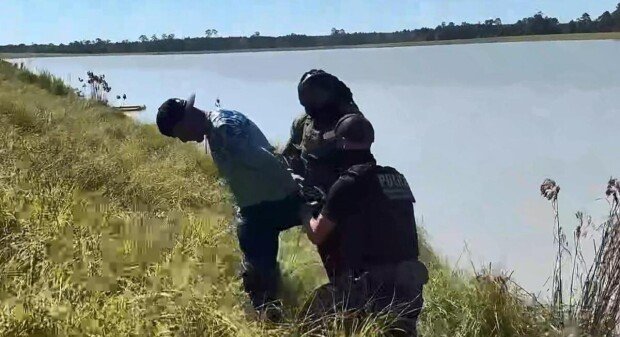
After U.S. immigration authorities stormed the Hyundai Motor-LG Energy Solution battery joint venture plant (HL-GA) in Savannah, Georgia, on Sept. 4 and detained more than 300 Korean employees, a sense that there is “no safe zone,” even for allies, spread quickly. The plant has been cited as one of the largest U.S. investment projects by a global company.
Kim Gap-song, who dispatched staff to Savannah to provide interpretation and other support for the detained HL-GA workers, said, “This raid has caused major disruptions to new factory construction across Georgia. I understand some Korean companies have decided to preemptively suspend construction in case of further incidents.”
Heavy blow as Georgia hosts many Korean firms
Georgia is considered a hub for Korean investment in the United States. More than 110 Korean companies, including Hyundai Motor Group in Savannah, SK On in Commerce, and Hanwha Qcells in Dalton, have set up operations. In a state where Korean firms contribute significantly to local communities, a large, coordinated immigration crackdown by the Department of Homeland Security’s Immigration and Customs Enforcement, the FBI, and the Drug Enforcement Administration has left many Koreans feeling betrayed.
A local resident said, “Costco and downtown restaurants, once packed with Koreans before the weekend, are now empty.” The resident added, “Many people are avoiding going out at all, worried they could be harmed by unfair raids. Areas that had revived thanks to Korean corporate investment could take a direct hit.”
With Atlanta as its anchor, Georgia has the seventh-largest Korean population among U.S. states, after California, New York, Texas, Washington, New Jersey, and Illinois. According to 2023 data on overseas Koreans, an estimated 102,061 Korean Americans, permanent residents, students, and expatriates live in Georgia, about 1 percent of the state’s population.
State Democratic lawmakers, including state Rep. Sam Park, called the raids “Trump-style politics of fear and division,” saying, “Nonwhite workers risking their lives to build factories that promote Georgia’s prosperity were deliberately targeted.” Korean American members of Congress in the Congressional Asian Pacific American Caucus, including Sen. Andy Kim, Rep. Dave Min, and Rep. Marilyn Strickland, also criticized the actions, saying the Trump administration is “going after nonwhite immigrant workers to meet deportation quotas.”
● Fears grow that raids could spread to other Korean businesses
There is growing concern that the Trump administration’s sweeping immigration enforcement could extend to other Korean-owned businesses. A day before the Savannah raid, on Sept. 3, immigration officers carried out a surprise operation in Los Angeles’ Koreatown. Masked U.S. Customs and Border Protection officers reportedly entered a Korean-owned car wash and, within minutes, arrested five Latino employees. The Koreatown Immigrant Workers Alliance condemned the action, saying, “These inhumane and abrupt raids are plunging local communities into extreme anxiety.”
The rough and sudden methods have deepened public fear. Videos shared on social media showed Korean workers with their hands bound by zip-tie restraints, lined up as officers searched their bags. President Donald Trump’s remark on Sept. 5 that “the arrested Koreans are illegal immigrants” further fueled a racist perception among some supporters that “foreigners are criminals.”
Kim Gap-song said, “Recent immigration raids and arrests have focused on nonwhite immigrant communities. The HL-GA case also reflects the character of immigration enforcement under Trump’s second term, often described as ‘Make America White Again.’”
이지윤기자 asap@donga.com





 About Dong-A Ilbo