

Foreign firm first punished over tech theft in Korea
Foreign firm first punished over tech theft in Korea
Posted September. 08, 2025 08:10,
Updated September. 08, 2025 08:10
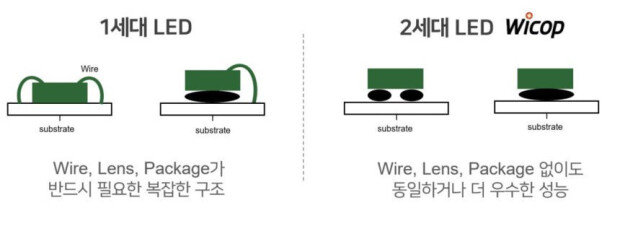
The Supreme Court issued its first ruling that foreign companies can be punished in Korea for illegally using industrial technology stolen domestically. It also set specific criteria for how Korea’s criminal jurisdiction applies to overseas corporations subject to the dual punishment rule.
The Supreme Court’s Second Division, presided over by Justice Um Sang-pil, said on Sept. 7 that it had upheld on Aug. 14 a lower court ruling fining Taiwanese light-emitting diode (LED) maker Everlight 60 million won for violating the Industrial Technology Protection Act.
Everlight was indicted in 2016 after hiring three former employees of rival Seoul Semiconductor, who had taken LED-related trade secrets by photographing them while employed or by copying them onto USB drives when leaving the company. Under the dual punishment rule, which penalizes not only the individuals who committed the offense but also their corporations or employers, Everlight stood trial alongside the former Seoul Semiconductor employees accused of the unauthorized taking out of trade secrets. The dual punishment rule applies to violations of the Labor Standards Act or the Unfair Competition Prevention Act.
Everlight argued that because the acquisition of the trade secrets occurred in Taiwan, Korean courts lacked jurisdiction. The trial court rejected the claim and imposed a 50 million won fine. On appeal, the court reversed a not-guilty finding on a charge that had held the material was not industrial technology under the statute and increased the fine to 60 million won.
The Supreme Court held that if the photographing and unauthorized removal of industrial technology and trade secrets occurred in Korea, the acts of acquiring and using that technology abroad can still be deemed crimes committed in Korea. It concluded that the company, Everlight, also committed its offense within Korean territory.
여근호기자 yeoroot@donga.com

![[단독]사전 투표용지는 실제 선거인수 2배, 2390만명분 준비했다](https://dimg.donga.com/c/138/175/90/1/wps/NEWS/IMAGE/2026/06/23/134165514.1.jpg)




 About Dong-A Ilbo